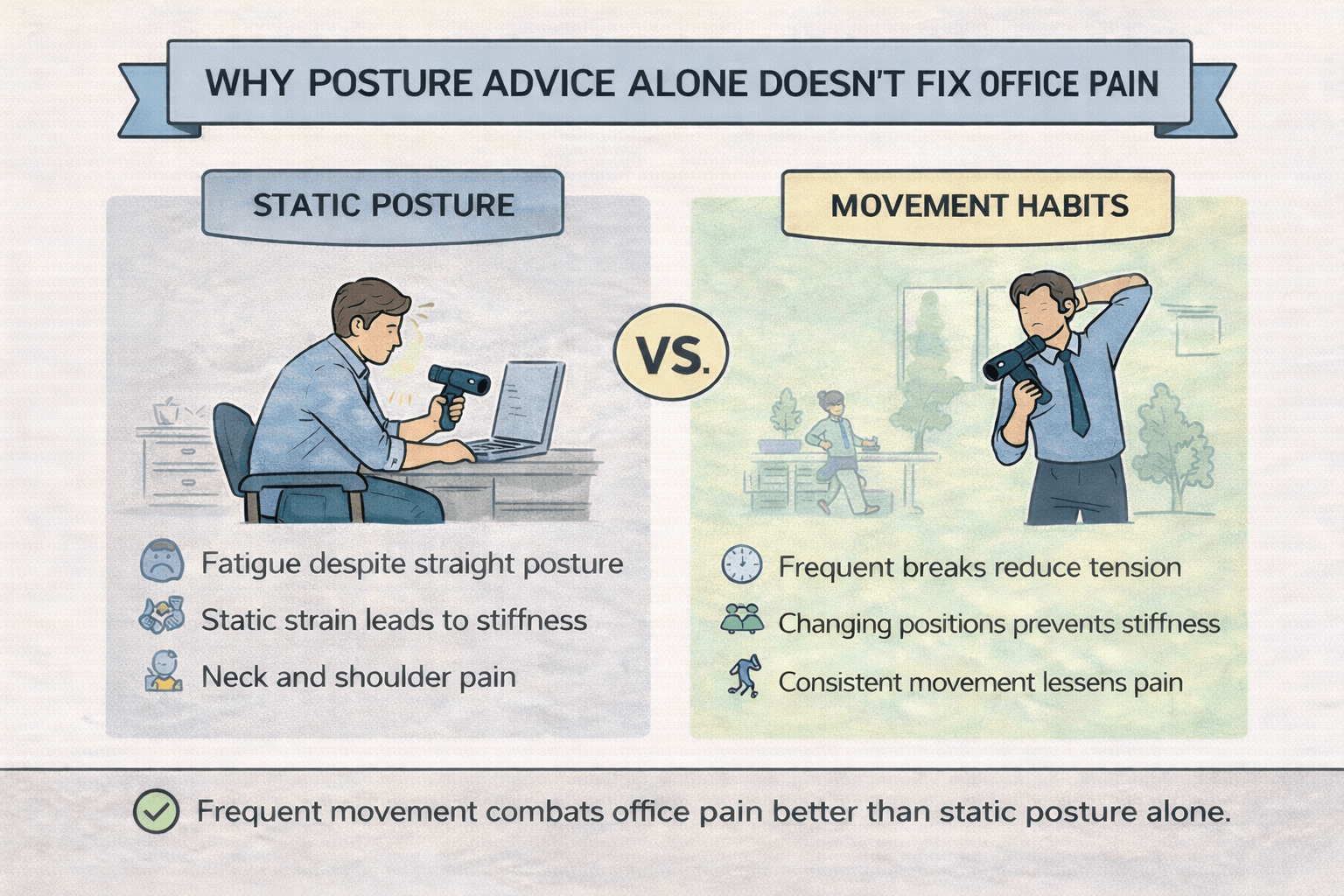
Why posture advice alone doesn’t fix office pain
Posture advice is everywhere. Sit straight, keep your shoulders back, adjust your chair — yet many professionals still experience neck tension, shoulder pain, and stiffness after long workdays. The problem is not posture awareness itself, but the idea that posture alone can solve discomfort.
Office pain usually comes from prolonged static positions rather than a single “bad posture.” Understanding this shift is essential for long-term comfort and sustainable performance.
Longevity framework
- Affordable longevity habits for office professionals
- Daily movement baseline for desk professionals
- Best massage gun for office neck pain
Posture is dynamic, not fixed
Many posture recommendations assume there is one ideal sitting position. In reality, the human body is designed for movement and variation. Staying perfectly upright for hours can be just as uncomfortable as slouching.
Long-term comfort comes from changing positions regularly rather than maintaining a rigid posture.
Movement baseline matters more than perfect posture
The strongest predictor of reduced office discomfort is consistent daily movement. Small changes — standing briefly, walking between tasks, or stretching lightly — help reduce accumulated tension.
If you want to understand this foundation, start here: Movement baseline for professionals.
Why posture advice often fails
- Static positions create fatigue regardless of alignment
- Muscles adapt to movement, not fixed positions
- Stress and workload influence tension as much as ergonomics
- Over-focusing on posture can increase unnecessary effort
Instead of chasing the “perfect” position, it is more effective to build habits that reduce continuous strain.
Where ergonomics actually helps
Ergonomic adjustments still matter. A comfortable chair, appropriate screen height, and supportive desk setup reduce friction — but they work best alongside regular movement and recovery habits.
When recovery tools can support posture habits
Recovery tools may help reduce temporary tension and encourage movement by making the body feel more comfortable. They should support daily habits rather than replace them.
For example, short sessions with recovery devices can reduce stiffness after long work sessions. See our guide here: Best massage guns for office neck pain.
Posture within the longevity framework
Posture is only one piece of a larger system that includes sleep consistency, stress management, and daily movement. These elements work together to support long-term resilience.
Explore the full framework here: Affordable longevity habits for office professionals.
Final takeaway
Posture advice alone rarely solves office pain because discomfort comes from prolonged stillness rather than a single position. Focus on movement, recovery, and sustainable habits instead of chasing perfect alignment.
Leave a Reply