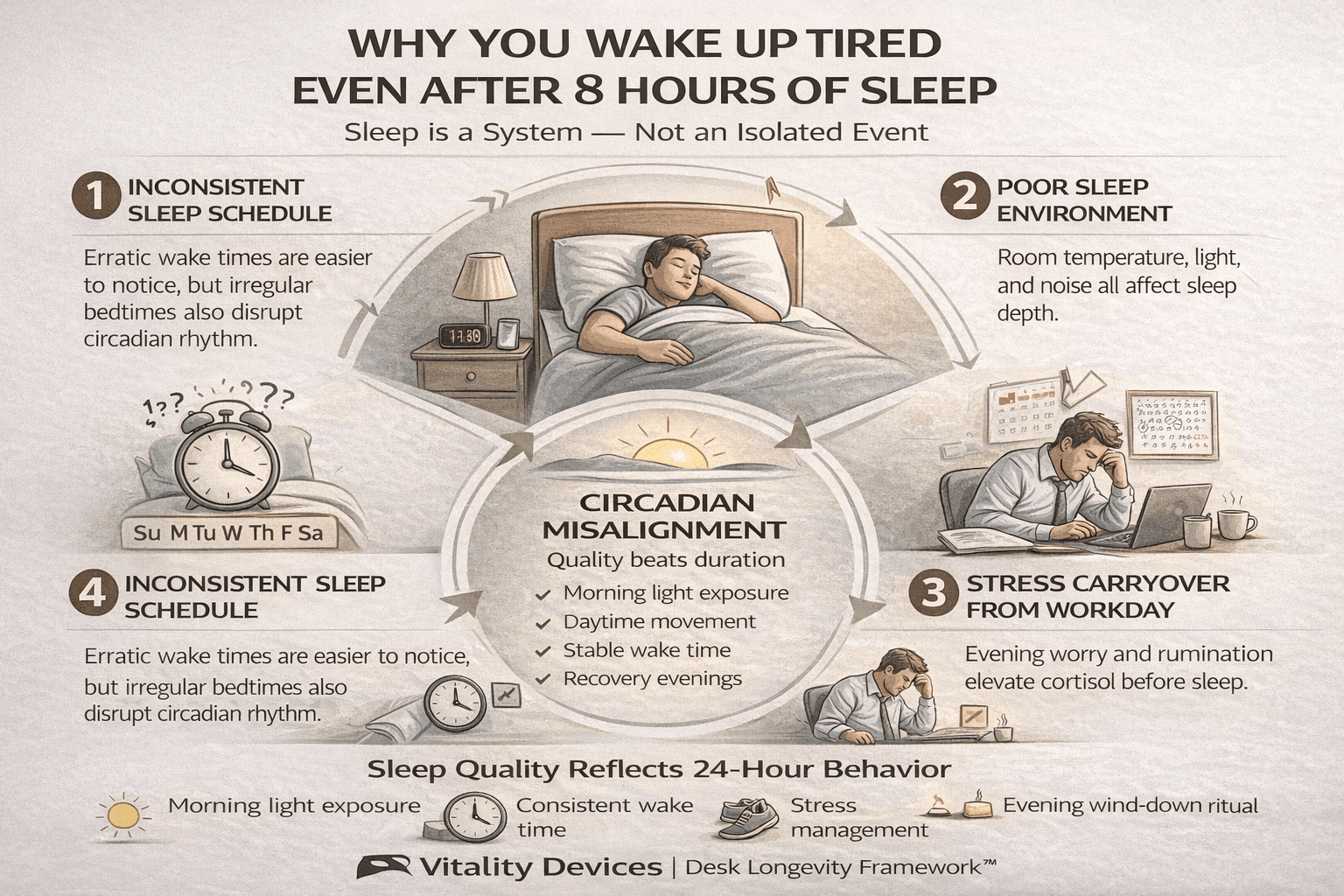
Why You Wake Up Tired Even After 8 Hours of Sleep
Many professionals believe that sleeping 7–8 hours automatically guarantees energy. Yet countless desk-based workers wake up tired despite technically “getting enough sleep.”
The problem is not always duration. It is often quality, consistency, and rhythm.
Sleep Duration vs Sleep Quality
Eight hours of fragmented, irregular, or misaligned sleep does not equal eight hours of restorative sleep.
This is why “catching up” on sleep rarely solves long-term fatigue. The body values rhythm and recovery cycles more than raw hours.
1. Inconsistent Sleep Schedule
Your circadian rhythm functions like an internal clock. When bedtimes and wake times shift frequently, your body cannot regulate hormones effectively.
Consistent sleep timing — explained in our Sleep Consistency Guide — is more important than extending weekend sleep.
2. Poor Sleep Environment
Light exposure, temperature, and noise directly affect sleep depth.
- Room too warm
- Late-night screen exposure
- Unstable lighting patterns
- Noise disturbances
Even subtle environmental issues reduce deep sleep cycles.
3. Stress Carryover from the Workday
Chronic desk stress elevates cortisol levels late into the evening.
If you go to bed mentally activated, sleep becomes shallow and fragmented. This is why stress regulation practices matter for recovery.
See our Stress Baseline Framework for foundational regulation strategies.
4. Lack of Daytime Movement
Sedentary days reduce sleep pressure. The body accumulates less physical fatigue, making sleep lighter.
Our Daily Movement Baseline explains why frequent low-intensity movement improves nighttime recovery.
Sleep Is a System, Not an Isolated Event
Sleep quality reflects your entire 24-hour behavior cycle.
- Morning light exposure
- Consistent wake time
- Movement frequency
- Stress management
- Evening wind-down rituals
This integrated structure is outlined in the Desk Longevity Framework.
The Bottom Line
If you wake up tired after 8 hours, the issue is rarely “not enough time.” It is usually rhythm misalignment, stress load, or inconsistent habits.
Optimize the system, not just the clock.