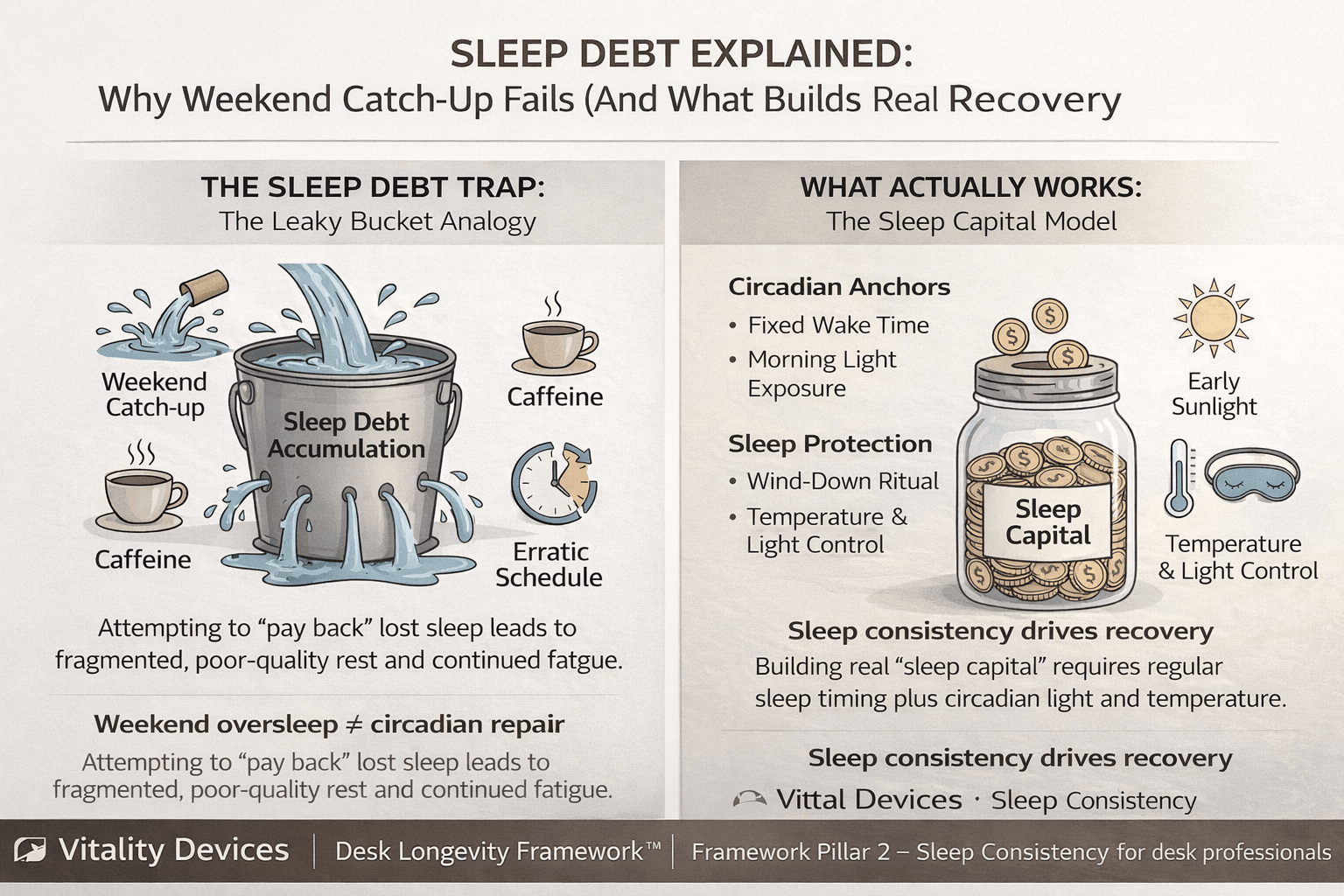
Sleep Debt: Why “Catching Up” on Sleep Doesn’t Fully Work (and What Actually Helps)
Framework Pillar — Sleep Consistency
Part of the Desk Longevity Framework™.
Many professionals believe they can recover from poor sleep by simply sleeping longer on weekends. This idea — often called “catching up on sleep” — is appealing but incomplete. Sleep debt is real, but the way recovery works is more complex than just adding extra hours.
What is sleep debt?
Sleep debt describes the accumulated difference between how much sleep your body needs and how much you actually get. Missing sleep occasionally is normal, but repeated sleep loss can affect recovery, mood, cognitive performance, and long-term health.
For desk professionals, sleep debt often builds slowly due to late work hours, screen exposure, and inconsistent schedules.
Why you cannot fully repay sleep debt
Extra sleep can improve short-term fatigue, but it does not instantly reset biological rhythms. Your circadian system — the internal clock regulating sleep and wakefulness — responds more strongly to consistency than to occasional long sleep sessions.
- Weekend sleep-ins can disrupt circadian timing.
- Irregular sleep schedules reduce sleep efficiency.
- Recovery processes depend on rhythm, not just duration.
Within the Desk Longevity Framework™, sleep consistency is prioritized over occasional recovery attempts.
The real problem for desk workers
Most knowledge workers are not severely sleep deprived — they are inconsistently rested. Small shifts in bedtime and wake time create ongoing fatigue even when total weekly sleep appears adequate.
This explains why many people feel tired despite sleeping longer on certain days.
What actually helps reduce sleep debt
1. Stabilize your wake time
Wake time is the strongest anchor for circadian rhythm. Maintaining a consistent wake window supports hormone regulation and energy stability.
2. Build a sleep baseline
Instead of drastic changes, aim for gradual improvements in sleep duration across multiple nights.
3. Reduce evening stimulation
Late work sessions, screens, and mental stimulation delay sleep onset. Even small adjustments can improve sleep quality.
4. Support recovery with daytime habits
Movement, light exposure, and stress regulation all influence sleep pressure. See the daily movement baseline for supporting habits.
Where recovery tools fit
Devices such as sleep trackers can help identify patterns, but tools are only effective when basic sleep consistency is established. Within the framework, tools are considered a support layer rather than a primary solution.
Key takeaway
You cannot fully erase sleep debt in one night. Long-term recovery comes from consistent sleep timing combined with supportive daily habits.
Continue building your system:
- Desk Longevity Framework™
- Stress baseline for desk professionals
- Why recovery routines fail for desk professionals
This content is informational and does not replace medical advice.
Leave a Reply