Best Standing Desks for Desk Professionals: Move More, Work Better
Why Stand at Your Desk?
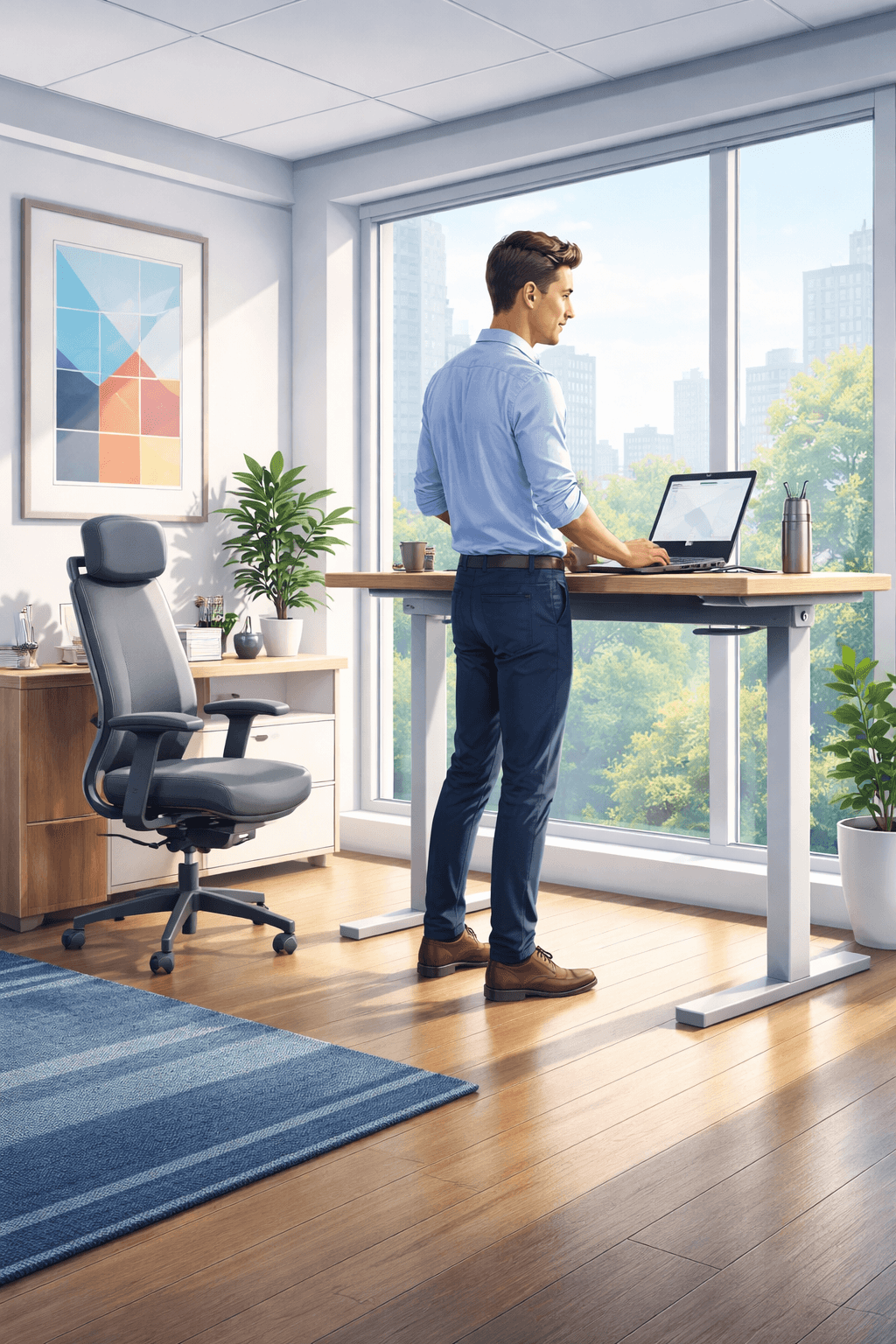
Alternating between sitting and standing helps you avoid the health risks of prolonged sedentary work. Adjustable standing desks let you change position throughout the day, encouraging better posture and circulation while reducing back pain and fatigue. Studies have shown that desk workers who used sit‑stand workstations reported less musculoskeletal discomfort and greater energy compared with those who sat all day. This guide reviews the essential features to consider and highlights top desks that balance ergonomics, stability and value.
Key Features of a Quality Standing Desk
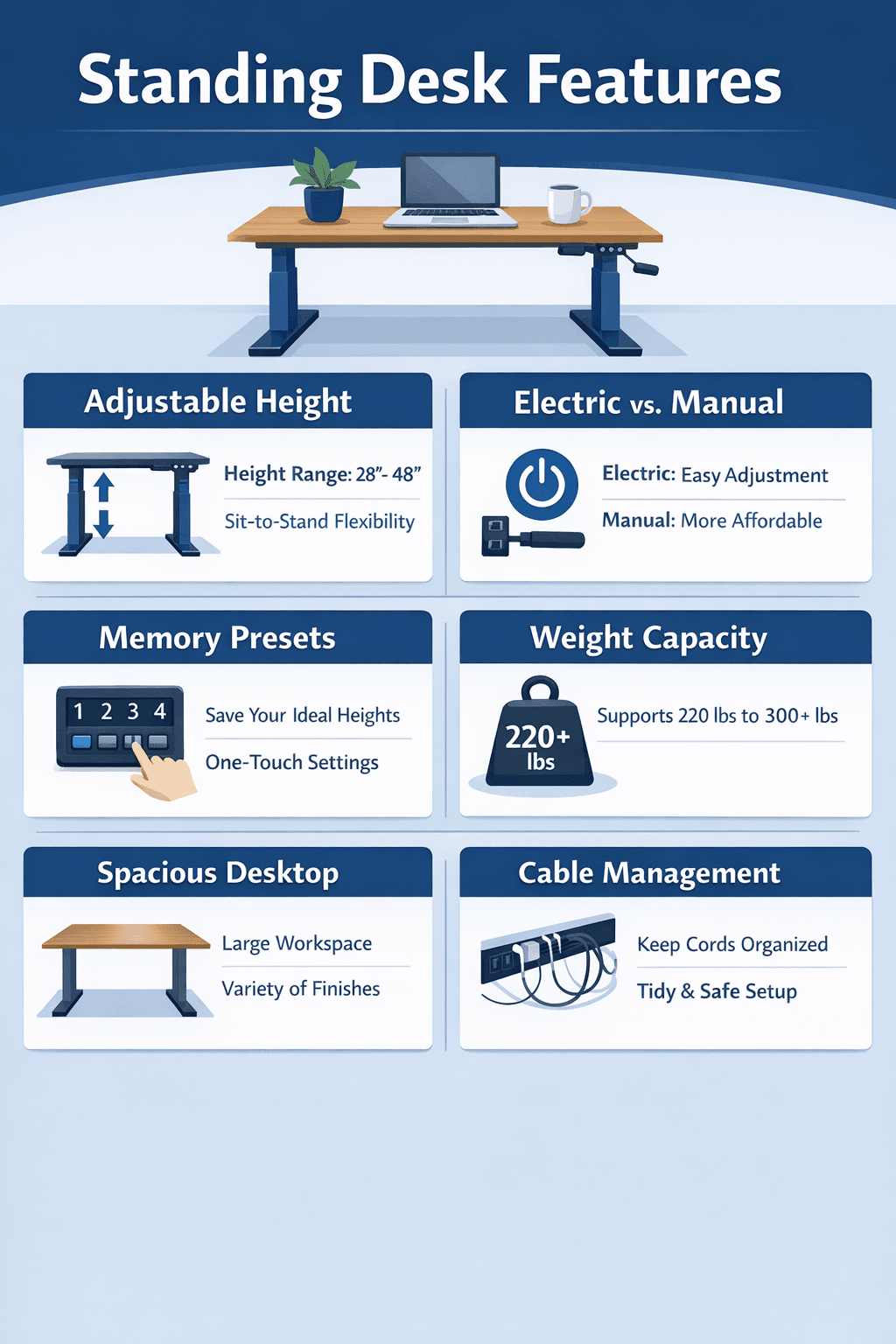
Height range & mechanism – Look for desks that adjust high enough for your stature and low enough for a seated position. Electric motors offer smooth adjustments; crank or pneumatic lifts can work for lighter setups.
Stability & weight capacity – A sturdy frame prevents wobble at full height. Check the maximum load; most quality desks support 100–150 kg of equipment.
Memory presets – Desks with programmable presets make it easy to switch between sitting and standing heights at the touch of a button.
Desktop size & materials – Consider how much surface area you need for monitors and peripherals. High‑pressure laminate, bamboo or solid wood tops offer durability and style.
Cable management – Built‑in grommets or trays keep cords organised and out of the way.
Top Standing Desks & Features
Uplift V2 – Widely praised for its stability and range (62 cm to 128 cm). Dual motors lift up to 160 kg, and the desk includes two built‑in grommets, an anti‑collision system and a keypad with memory presets. Buy on Amazon
Fully Jarvis – Features a durable steel frame and a height range of 65 cm to 128 cm. Offers four programmable presets and a clean design. Available with bamboo, laminate or hardwood tops. Buy on Amazon
FlexiSpot E7 – A value‑oriented electric desk with a dual‑motor system, 125 kg load capacity and 4‑button memory controller. The frame includes cable management and anti‑collision. Buy on Amazon
Autonomous SmartDesk Pro – Provides a height range of 66 cm to 120 cm with a dual‑motor lift and four programmable settings. The sturdy steel frame handles up to 136 kg. Buy on Amazon
IKEA Bekant – A budget friendly sit‑stand desk with a single electric motor, adjustable from 65 cm to 125 cm. It includes a cable net under the desktop for organisation. Buy on Amazon
Standing Desk Comparison
Desk
Height Range & Mechanism
Stability & Capacity
Extras
Approx. Price*
Uplift V2
62–128 cm; dual‑motor electric
Supports 160 kg; stable C‑frame
4‑preset keypad, anti‑collision, grommets
€700–€900
Fully Jarvis
65–128 cm; dual‑motor electric
Supports 150 kg; steel frame
4 presets, eco‑friendly desktop options
€650–€850
FlexiSpot E7
58–123 cm; dual‑motor electric
Supports 125 kg; sturdy base
4 presets, cable tray, anti‑collision
€450–€600
Autonomous SmartDesk Pro
66‑120 cm; dual‑motor electric
Supports 136 kg; reinforced steel
4 presets, silent lift
€500–€650
IKEA Bekant
65‑125 cm; single‑motor electric
Supports 70 kg; basic stability
Cable net underneath
€300–€450
*Prices are approximate and may vary by retailer or region.
Visual Guide
Why Standing Desks Matter for Desk Professionals
Prolonged sitting is linked to increased risk of back pain, metabolic issues and reduced energy. Switching between sitting and standing throughout your workday encourages movement and can alleviate stiffness and fatigue. A quality standing desk allows you to find your ideal height at the press of a button while keeping monitors and keyboards at eye level to maintain good posture.
For the best results, combine a sit‑stand desk with an ergonomic chair, take short breaks to stretch and walk, and ensure your monitors and keyboard are positioned correctly. Our membership programme offers personalised workspace consultations and protocols to help you build healthy habits. Businesses can benefit from our corporate wellness solutions, which include analytics dashboards and workshops to boost productivity and wellbeing.
Ready to move more while you work? Join our membership for exclusive guides and tools, or explore our corporate programmes to support your entire team.
Choosing the right chair can mean the difference between chronic back pain and sustained productivity. Desk professionals spend hours seated, and research shows that poorly designed workstations contribute to discomfort and musculoskeletal disorders. An ergonomic chair with adjustable features supports the natural curve of your spine, keeps your feet flat and helps distribute weight evenly. This guide reviews the most important features to look for and recommends some of the best chairs for your home office or workplace.
Key Features of an Ergonomic Chair
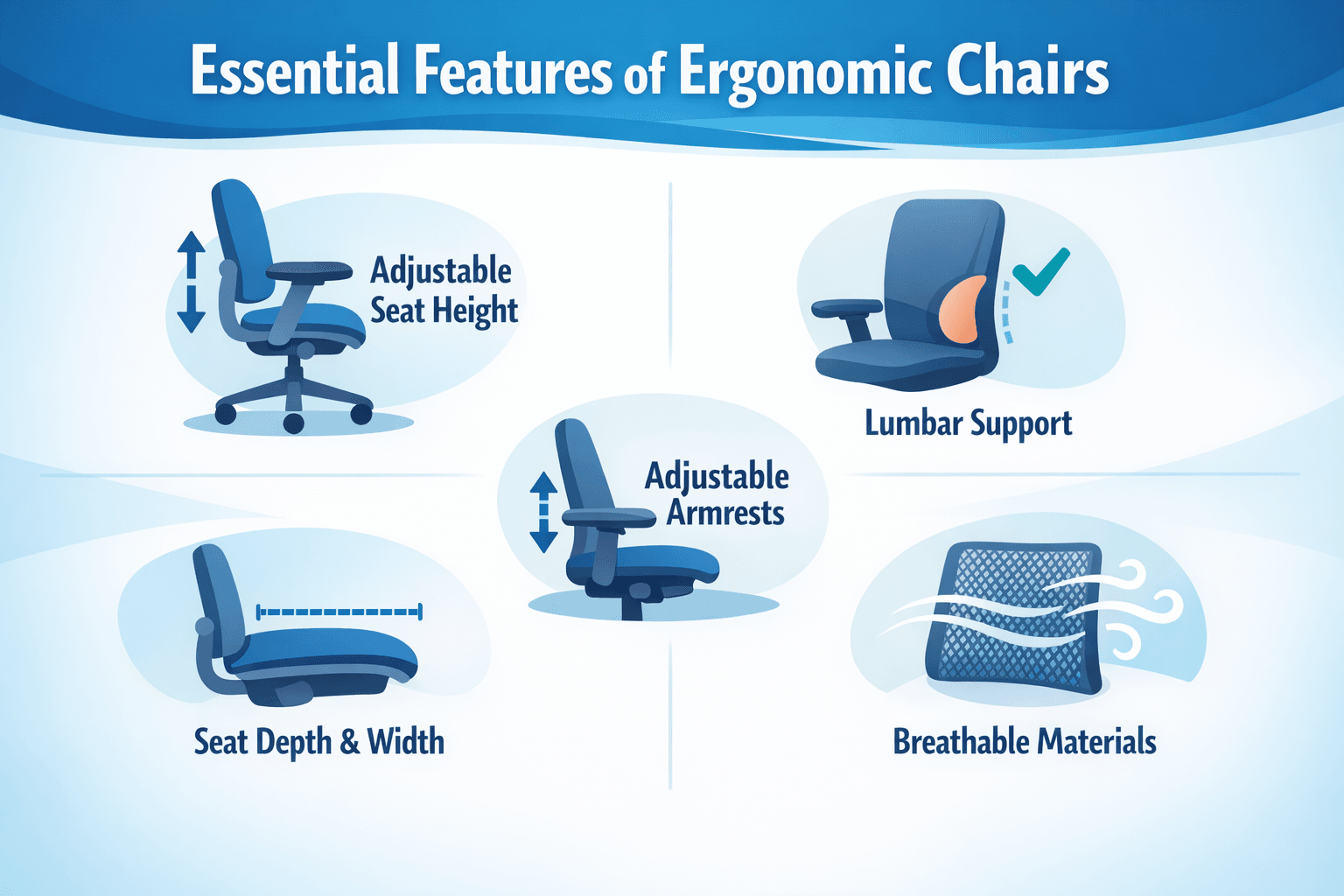
Adjustable seat height – Your feet should rest flat on the floor with knees at a 90° angle. A pneumatic lift allows you to fine‑tune height and relieve pressure on your lower back.
Lumbar support – A chair should reinforce the natural S‑curve of your spine. Adjustable lumbar support reduces slouching and alleviates lower‑back strain.
Seat depth and width – Adjustable seat depth lets you sit with your back against the backrest while leaving a gap between the front of the seat and the back of your knees. Adequate width prevents pinching and accommodates different body sizes.
Adjustable armrests – Arms should rest comfortably with shoulders relaxed. Height‑adjustable armrests reduce tension in the neck and shoulders.
Breathable materials – Mesh backs and high‑density foam cushions promote airflow and comfort during long sessions. Durable upholstery keeps its shape over time.
Top Ergonomic Chairs & Features
Herman Miller Aeron – A classic mesh chair with excellent lumbar support and three sizes to fit different body types. Fully adjustable armrests, seat height, tilt tension and recline limiter. Built to last and backed by a 12‑year warranty.
Steelcase Leap – Features a flexible backrest that conforms to your spine, adjustable lumbar support and 4‑way armrests. The seat depth and height are easy to customise, and the chair supports active sitting with a natural recline.
Autonomous ErgoChair Pro – A budget‑friendly chair with adjustable seat height, headrest, backrest tilt, lumbar support and armrests. The mesh back improves breathability, and the chair accommodates users up to 136 kg.
Secretlab Titan Evo – A gaming‑inspired chair suited for long work sessions. It has a memory‑foam lumbar pillow, 4‑way armrests, and a multi‑tilt mechanism. Upholstery options include breathable fabric or hybrid leatherette.
IKEA Markus – An affordable high‑back chair with built‑in lumbar support, adjustable height and tilt. Its mesh back keeps you cool and the backrest locks in place to provide support during focused work.
Prices are approximate and may vary by retailer or region.
Why Ergonomic Chairs Matter for Desk Professionals
Slouching over a dining‑room chair might not hurt after an hour, but over months it can lead to neck stiffness, back pain and reduced productivity. Adjustable ergonomic chairs allow you to maintain a neutral posture, improve circulation and prevent fatigue. By investing in a chair with lumbar support and proper adjustability, you reduce the risk of repetitive‑strain injuries and work more comfortably for longer periods.
To get the most from your chair, combine it with other healthy habits: take micro‑breaks to stand and stretch, use a sit‑stand desk if possible, and maintain a daily movement baseline. Our membership programme includes personalised protocols and coaching to help you design an optimal workspace, improve posture and integrate movement into your day. For companies, our corporate wellness solutions provide analytics, education and customised workshops to reduce burnout and boost performance across your team.
Ready to upgrade your workspace? Explore our membership options for exclusive protocols and tools, or contact us about our corporate packages to bring science‑backed wellbeing to your entire organisation.
Whoop Strap – Whoop is a fabric wrist or biceps band that continuously measures HRV, resting heart rate, SpO₂ and skin temperature. Its Strain and Recovery scores help you balance workload and recovery, and the app delivers detailed sleep and stress coaching. You don’t buy the device outright; instead you pay a monthly membership (≈€24) that includes the strap, analytics and firmware updates.
Apple Watch – Recent Apple Watches (Series 8 and beyond) monitor heart rate, HRV, SpO₂ and even perform ECG readings. They track sleep stages and integrate with Apple Health, Fitness+ and a wide ecosystem of third-party apps. While larger than a band or ring, an Apple Watch doubles as a smartwatch for productivity and communication. Battery life is about 18–24 hours and prices start around €429.
c
Whoop Strap – Whoop is a fabric wrist or biceps band that continuously measures HRV, resting heart rate, SpO₂ and skin temperature. Its Strain and Recovery scores help you balance workload and recovery, and the app delivers detailed sleep and stress coaching. You don’t buy the device outright; instead you pay a monthly membership (≈€24) that includes the strap, analytics and firmware updates.
Apple Watch – Recent Apple Watches (Series 8 and beyond) monitor heart rate, HRV, SpO₂ and even perform ECG readings. They track sleep stages and integrate with Apple Health, Fitness+ and a wide ecosystem of third-party apps. While larger than a band or ring, an Apple Watch doubles as a smartwatch for productivity and communication. Battery life is about 18–24 hours and prices start around €429.Garmin Vivosmart / Fenix – Garmin’s fitness bands and multisport watches combine HR, HRV, respiration and SpO₂ sensors with Body Battery and Sleep Score metrics. They cater to athletes and professionals seeking durability and long battery life (often seven or more days). Devices such as the Vivosmart 5 and Fenix series start around €150.
WithingsSleep – For those who dislike wearing devices, the Withings Sleep analyzer is a pad that slips under your mattress. It tracks sleep cycles, heart rate, breathing and snoring without touching your skin and integrates with the Health Mate app and smart‑home systems. Priced around €99, it’s a simple way to monitor sleep without charging or wearing anything.
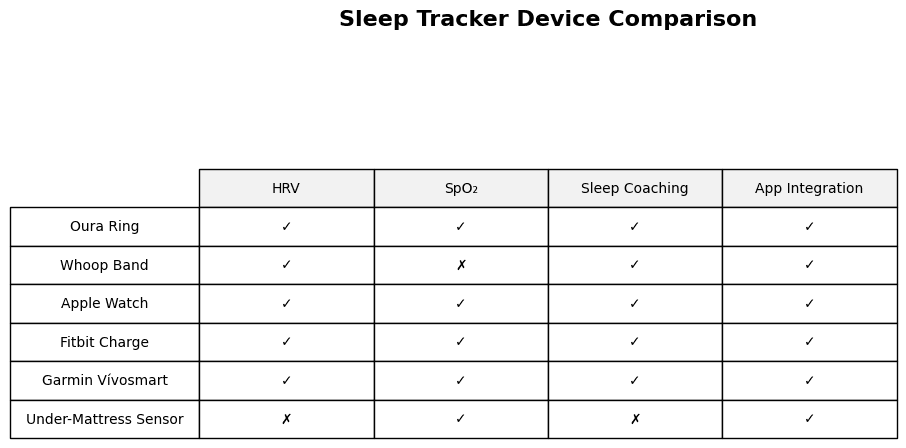
Comparison Table
Device
Form factor
Key sensors
Coaching & app
Comfort & battery
Price*
Oura Ring
Smart ring
HRV, SpO₂, temperature
Sleep, Activity & Readiness scores in Oura app
Very comfortable; 4–7‑day battery
≈€329 + subscription
Whoop Strap
Fabric band
HRV, SpO₂, skin temperature
Strain & Recovery coaching in Whoop app
Soft strap; 4–5‑day battery
≈€24/month membership
Apple Watch
Smart watch
HR, HRV, SpO₂, ECG
Sleep stages & Fitness+; many third‑party apps
Versatile but larger; 1‑day battery
≈€429+
Fitbit Sense / Charge
Watch or band
HR, HRV, SpO₂, skin temperature
Sleep Score & Daily Readiness (Premium)
Lightweight; ~6‑day battery
≈€149–€299
Garmin Vivosmart / Fenix
Band or watch
HR, HRV, SpO₂, respiration
Body Battery & Sleep Score in Garmin Connect
Durable; 7‑day battery
≈€150–€349+
Withings Sleep
Under‑mattress pad
HR, sleep cycles, breathing
Sleep coaching & smart‑home integration
No wearable; no charging needed
≈€99–€129
*Prices are approximate and may vary by retailer or region.
Recommendations for Desk Professionals
If you value comfort and accurate recovery insights, the Oura Ring and Whoop Strap stand out. Oura’s ring is unobtrusive and provides comprehensive readiness scores, while Whoop’s membership model delivers deep recovery coaching. Professionals who want a full‑featured smartwatch may prefer an Apple Watch, and those seeking value should consider Fitbit devices or Garmin bands. If you hate wearing devices, Withings Sleep offers meaningful data without anything on your wrist.
To make the most of any device, combine your data with personalised protocols and expert guidance. Our /membership teaches you how to interpret your sleep metrics, build consistent routines and integrate stress‑management and movement into your day. For teams, our corporate wellness solutions combine sleep and recovery education with analytics and reporting to boost productivity and wellbeing across your organisation.
Ready to take your sleep and recovery to the next level? Scroll down and discover how you can join our community and transform your performance.
Whoop Strap – Whoop is a fabric wrist or biceps band that continuously measures HRV, resting heart rate, SpO₂ and skin temperature. Its Strain and Recovery scores help you balance workload and recovery, and the app delivers detailed sleep and stress coaching. You don’t buy the device outright; instead you pay a monthly membership (≈€24) that includes the strap, analytics and firmware updates.
Apple Watch – Recent Apple Watches (Series 8 and beyond) monitor heart rate, HRV, SpO₂ and even perform ECG readings. They track sleep stages and integrate with Apple Health, Fitness+ and a wide ecosystem of third-party apps. While larger than a band or ring, an Apple Watch doubles as a smartwatch for productivity and communication. Battery life is about 18–24 hours and prices start around €429.
c
Garmin Vivosmart / Fenix – Garmin’s fitness bands and multisport watches combine HR, HRV, respiration and SpO₂ sensors with Body Battery and Sleep Score metrics. They cater to athletes and professionals seeking durability and long battery life (often seven or more days). Devices such as the Vivosmart 5 and Fenix series start around €150.
WithingsSleep – For those who dislike wearing devices, the Withings Sleep analyzer is a pad that slips under your mattress. It tracks sleep cycles, heart rate, breathing and snoring without touching your skin and integrates with the Health Mate app and smart‑home systems. Priced around €99, it’s a simple way to monitor sleep without charging or wearing anything.
Comparison Table
Device
Form factor
Key sensors
Coaching & app
Comfort & battery
Price*
Oura Ring
Smart ring
HRV, SpO₂, temperature
Sleep, Activity & Readiness scores in Oura app
Very comfortable; 4–7‑day battery
≈€329 + subscription
Whoop Strap
Fabric band
HRV, SpO₂, skin temperature
Strain & Recovery coaching in Whoop app
Soft strap; 4–5‑day battery
≈€24/month membership
Apple Watch
Smart watch
HR, HRV, SpO₂, ECG
Sleep stages & Fitness+; many third‑party apps
Versatile but larger; 1‑day battery
≈€429+
Fitbit Sense / Charge
Watch or band
HR, HRV, SpO₂, skin temperature
Sleep Score & Daily Readiness (Premium)
Lightweight; ~6‑day battery
≈€149–€299
Garmin Vivosmart / Fenix
Band or watch
HR, HRV, SpO₂, respiration
Body Battery & Sleep Score in Garmin Connect
Durable; 7‑day battery
≈€150–€349+
Withings Sleep
Under‑mattress pad
HR, sleep cycles, breathing
Sleep coaching & smart‑home integration
No wearable; no charging needed
≈€99–€129
*Prices are approximate and may vary by retailer or region.
Recommendations for Desk Professionals
If you value comfort and accurate recovery insights, the Oura Ring and Whoop Strap stand out. Oura’s ring is unobtrusive and provides comprehensive readiness scores, while Whoop’s membership model delivers deep recovery coaching. Professionals who want a full‑featured smartwatch may prefer an Apple Watch, and those seeking value should consider Fitbit devices or Garmin bands. If you hate wearing devices, Withings Sleep offers meaningful data without anything on your wrist.
To make the most of any device, combine your data with personalised protocols and expert guidance. Our /membership teaches you how to interpret your sleep metrics, build consistent routines and integrate stress‑management and movement into your day. For teams, our corporate wellness solutions combine sleep and recovery education with analytics and reporting to boost productivity and wellbeing across your organisation.
Ready to take your sleep and recovery to the next level? Scroll down and discover how you can join our community and transform your performance.
As remote and desk‑based professionals, understanding your sleep is essential for energy, cognitive performance and longevity. Sleep trackers have evolved from simple step counters to AI‑powered coaching platforms. According to Precedence Research, the global sleep trackers market size was calculated at USD 7.02 billion in 2025 and is predicted to increase from USD 7.73 billion in 2026 to approximately USD 18.37 billion by 2035, expanding at a compound annual growth rate of about 10%【963704960363772†L182-L184】. That rapid growth reflects rising awareness of sleep health and advances in sensors and AI【963704960363772†L219-L239】.
Why Sleep Tracking Matters for Desk Professionals
Sleep tracking is more than just counting hours. Modern devices monitor heart‑rate variability (HRV), blood‑oxygen saturation (SpO₂), breathing patterns, body temperature and movement. By translating this data into actionable insights, sleep trackers show how habits like late‑night screen time, caffeine intake or inconsistent schedules affect your energy, focus and long‑term health. This information is especially valuable for professionals who need to manage stress, prevent burnout and maximize cognitive performance./
Top Sleep Trackers & Features
Oura Ring – This discreet smart ring uses infrared and green LEDs and temperature sensors to track resting heart rate, HRV, body‑temperature trends and blood‑oxygen levels. The Oura app distills the data into Sleep, Activity and Readiness scores and offers personalised coaching. Battery life is four to seven days and the ring is comfortable enough to wear at night. The Gen 3 model costs around €329 and requires a small monthly subscription.
Whoop Strap – Whoop is a fabric wrist or biceps band that continuously measures HRV, resting heart rate, SpO₂ and skin temperature. Its Strain and Recovery scores help you balance workload and recovery, and the app delivers detailed sleep and stress coaching. You don’t buy the device outright; instead you pay a monthly membership (≈€24) that includes the strap, analytics and firmware updates.
Apple Watch – Recent Apple Watches (Series 8 and beyond) monitor heart rate, HRV, SpO₂ and even perform ECG readings. They track sleep stages and integrate with Apple Health, Fitness+ and a wide ecosystem of third-party apps. While larger than a band or ring, an Apple Watch doubles as a smartwatch for productivity and communication. Battery life is about 18–24 hours and prices start around €429.
c
Garmin Vivosmart / Fenix – Garmin’s fitness bands and multisport watches combine HR, HRV, respiration and SpO₂ sensors with Body Battery and Sleep Score metrics. They cater to athletes and professionals seeking durability and long battery life (often seven or more days). Devices such as the Vivosmart 5 and Fenix series start around €150.
WithingsSleep – For those who dislike wearing devices, the Withings Sleep analyzer is a pad that slips under your mattress. It tracks sleep cycles, heart rate, breathing and snoring without touching your skin and integrates with the Health Mate app and smart‑home systems. Priced around €99, it’s a simple way to monitor sleep without charging or wearing anything.
Comparison Table
Device
Form factor
Key sensors
Coaching & app
Comfort & battery
Price*
Oura Ring
Smart ring
HRV, SpO₂, temperature
Sleep, Activity & Readiness scores in Oura app
Very comfortable; 4–7‑day battery
≈€329 + subscription
Whoop Strap
Fabric band
HRV, SpO₂, skin temperature
Strain & Recovery coaching in Whoop app
Soft strap; 4–5‑day battery
≈€24/month membership
Apple Watch
Smart watch
HR, HRV, SpO₂, ECG
Sleep stages & Fitness+; many third‑party apps
Versatile but larger; 1‑day battery
≈€429+
Fitbit Sense / Charge
Watch or band
HR, HRV, SpO₂, skin temperature
Sleep Score & Daily Readiness (Premium)
Lightweight; ~6‑day battery
≈€149–€299
Garmin Vivosmart / Fenix
Band or watch
HR, HRV, SpO₂, respiration
Body Battery & Sleep Score in Garmin Connect
Durable; 7‑day battery
≈€150–€349+
Withings Sleep
Under‑mattress pad
HR, sleep cycles, breathing
Sleep coaching & smart‑home integration
No wearable; no charging needed
≈€99–€129
*Prices are approximate and may vary by retailer or region.
Recommendations for Desk Professionals
If you value comfort and accurate recovery insights, the Oura Ring and Whoop Strap stand out. Oura’s ring is unobtrusive and provides comprehensive readiness scores, while Whoop’s membership model delivers deep recovery coaching. Professionals who want a full‑featured smartwatch may prefer an Apple Watch, and those seeking value should consider Fitbit devices or Garmin bands. If you hate wearing devices, Withings Sleep offers meaningful data without anything on your wrist.
To make the most of any device, combine your data with personalised protocols and expert guidance. Our /membership teaches you how to interpret your sleep metrics, build consistent routines and integrate stress‑management and movement into your day. For teams, our corporate wellness solutions combine sleep and recovery education with analytics and reporting to boost productivity and wellbeing across your organisation.
Ready to take your sleep and recovery to the next level? Scroll down and discover how you can join our community and transform your performance.
Whoop Strap – Whoop is a fabric wrist or biceps band that continuously measures HRV, resting heart rate, SpO₂ and skin temperature. Its Strain and Recovery scores help you balance workload and recovery, and the app delivers detailed sleep and stress coaching. You don’t buy the device outright; instead you pay a monthly membership (≈€24) that includes the strap, analytics and firmware updates.
Apple Watch – Recent Apple Watches (Series 8 and beyond) monitor heart rate, HRV, SpO₂ and even perform ECG readings. They track sleep stages and integrate with Apple Health, Fitness+ and a wide ecosystem of third-party apps. While larger than a band or ring, an Apple Watch doubles as a smartwatch for productivity and communication. Battery life is about 18–24 hours and prices start around €429.
c
Garmin Vivosmart / Fenix – Garmin’s fitness bands and multisport watches combine HR, HRV, respiration and SpO₂ sensors with Body Battery and Sleep Score metrics. They cater to athletes and professionals seeking durability and long battery life (often seven or more days). Devices such as the Vivosmart 5 and Fenix series start around €150.
WithingsSleep – For those who dislike wearing devices, the Withings Sleep analyzer is a pad that slips under your mattress. It tracks sleep cycles, heart rate, breathing and snoring without touching your skin and integrates with the Health Mate app and smart‑home systems. Priced around €99, it’s a simple way to monitor sleep without charging or wearing anything.
Comparison Table
Device
Form factor
Key sensors
Coaching & app
Comfort & battery
Price*
Oura Ring
Smart ring
HRV, SpO₂, temperature
Sleep, Activity & Readiness scores in Oura app
Very comfortable; 4–7‑day battery
≈€329 + subscription
Whoop Strap
Fabric band
HRV, SpO₂, skin temperature
Strain & Recovery coaching in Whoop app
Soft strap; 4–5‑day battery
≈€24/month membership
Apple Watch
Smart watch
HR, HRV, SpO₂, ECG
Sleep stages & Fitness+; many third‑party apps
Versatile but larger; 1‑day battery
≈€429+
Fitbit Sense / Charge
Watch or band
HR, HRV, SpO₂, skin temperature
Sleep Score & Daily Readiness (Premium)
Lightweight; ~6‑day battery
≈€149–€299
Garmin Vivosmart / Fenix
Band or watch
HR, HRV, SpO₂, respiration
Body Battery & Sleep Score in Garmin Connect
Durable; 7‑day battery
≈€150–€349+
Withings Sleep
Under‑mattress pad
HR, sleep cycles, breathing
Sleep coaching & smart‑home integration
No wearable; no charging needed
≈€99–€129
*Prices are approximate and may vary by retailer or region.
Recommendations for Desk Professionals
If you value comfort and accurate recovery insights, the Oura Ring and Whoop Strap stand out. Oura’s ring is unobtrusive and provides comprehensive readiness scores, while Whoop’s membership model delivers deep recovery coaching. Professionals who want a full‑featured smartwatch may prefer an Apple Watch, and those seeking value should consider Fitbit devices or Garmin bands. If you hate wearing devices, Withings Sleep offers meaningful data without anything on your wrist.
To make the most of any device, combine your data with personalised protocols and expert guidance. Our /membership teaches you how to interpret your sleep metrics, build consistent routines and integrate stress‑management and movement into your day. For teams, our corporate wellness solutions combine sleep and recovery education with analytics and reporting to boost productivity and wellbeing across your organisation.
Ready to take your sleep and recovery to the next level? Scroll down and discover how you can join our community and transform your performance.
As remote and desk‑based professionals, understanding your sleep is essential for energy, cognitive performance and longevity. Sleep trackers have evolved from simple step counters to AI‑powered coaching platforms. According to Precedence Research, the global sleep trackers market size was calculated at USD 7.02 billion in 2025 and is predicted to increase from USD 7.73 billion in 2026 to approximately USD 18.37 billion by 2035, expanding at a compound annual growth rate of about 10%【963704960363772†L182-L184】. That rapid growth reflects rising awareness of sleep health and advances in sensors and AI【963704960363772†L219-L239】.
Why Sleep Tracking Matters for Desk Professionals
Sleep tracking is more than just counting hours. Modern devices monitor heart‑rate variability (HRV), blood‑oxygen saturation (SpO₂), breathing patterns, body temperature and movement. By translating this data into actionable insights, sleep trackers show how habits like late‑night screen time, caffeine intake or inconsistent schedules affect your energy, focus and long‑term health. This information is especially valuable for professionals who need to manage stress, prevent burnout and maximize cognitive performance./
Top Sleep Trackers & Features
Oura Ring – This discreet smart ring uses infrared and green LEDs and temperature sensors to track resting heart rate, HRV, body‑temperature trends and blood‑oxygen levels. The Oura app distills the data into Sleep, Activity and Readiness scores and offers personalised coaching. Battery life is four to seven days and the ring is comfortable enough to wear at night. The Gen 3 model costs around €329 and requires a small monthly subscription.
Whoop Strap – Whoop is a fabric wrist or biceps band that continuously measures HRV, resting heart rate, SpO₂ and skin temperature. Its Strain and Recovery scores help you balance workload and recovery, and the app delivers detailed sleep and stress coaching. You don’t buy the device outright; instead you pay a monthly membership (≈€24) that includes the strap, analytics and firmware updates.
Apple Watch – Recent Apple Watches (Series 8 and beyond) monitor heart rate, HRV, SpO₂ and even perform ECG readings. They track sleep stages and integrate with Apple Health, Fitness+ and a wide ecosystem of third-party apps. While larger than a band or ring, an Apple Watch doubles as a smartwatch for productivity and communication. Battery life is about 18–24 hours and prices start around €429.
c
Garmin Vivosmart / Fenix – Garmin’s fitness bands and multisport watches combine HR, HRV, respiration and SpO₂ sensors with Body Battery and Sleep Score metrics. They cater to athletes and professionals seeking durability and long battery life (often seven or more days). Devices such as the Vivosmart 5 and Fenix series start around €150.
WithingsSleep – For those who dislike wearing devices, the Withings Sleep analyzer is a pad that slips under your mattress. It tracks sleep cycles, heart rate, breathing and snoring without touching your skin and integrates with the Health Mate app and smart‑home systems. Priced around €99, it’s a simple way to monitor sleep without charging or wearing anything.
Comparison Table
Device
Form factor
Key sensors
Coaching & app
Comfort & battery
Price*
Oura Ring
Smart ring
HRV, SpO₂, temperature
Sleep, Activity & Readiness scores in Oura app
Very comfortable; 4–7‑day battery
≈€329 + subscription
Whoop Strap
Fabric band
HRV, SpO₂, skin temperature
Strain & Recovery coaching in Whoop app
Soft strap; 4–5‑day battery
≈€24/month membership
Apple Watch
Smart watch
HR, HRV, SpO₂, ECG
Sleep stages & Fitness+; many third‑party apps
Versatile but larger; 1‑day battery
≈€429+
Fitbit Sense / Charge
Watch or band
HR, HRV, SpO₂, skin temperature
Sleep Score & Daily Readiness (Premium)
Lightweight; ~6‑day battery
≈€149–€299
Garmin Vivosmart / Fenix
Band or watch
HR, HRV, SpO₂, respiration
Body Battery & Sleep Score in Garmin Connect
Durable; 7‑day battery
≈€150–€349+
Withings Sleep
Under‑mattress pad
HR, sleep cycles, breathing
Sleep coaching & smart‑home integration
No wearable; no charging needed
≈€99–€129
*Prices are approximate and may vary by retailer or region.
Recommendations for Desk Professionals
If you value comfort and accurate recovery insights, the Oura Ring and Whoop Strap stand out. Oura’s ring is unobtrusive and provides comprehensive readiness scores, while Whoop’s membership model delivers deep recovery coaching. Professionals who want a full‑featured smartwatch may prefer an Apple Watch, and those seeking value should consider Fitbit devices or Garmin bands. If you hate wearing devices, Withings Sleep offers meaningful data without anything on your wrist.
To make the most of any device, combine your data with personalised protocols and expert guidance. Our /membership teaches you how to interpret your sleep metrics, build consistent routines and integrate stress‑management and movement into your day. For teams, our corporate wellness solutions combine sleep and recovery education with analytics and reporting to boost productivity and wellbeing across your organisation.
Ready to take your sleep and recovery to the next level? Scroll down and discover how you can join our community and transform your performance.
As remote and desk‑based professionals, understanding your sleep is essential for energy, cognitive performance and longevity. Sleep trackers have evolved from simple step counters to AI‑powered coaching platforms. According to Precedence Research, the global sleep trackers market size was calculated at USD 7.02 billion in 2025 and is predicted to increase from USD 7.73 billion in 2026 to approximately USD 18.37 billion by 2035, expanding at a compound annual growth rate of about 10%【963704960363772†L182-L184】. That rapid growth reflects rising awareness of sleep health and advances in sensors and AI【963704960363772†L219-L239】.
Why Sleep Tracking Matters for Desk Professionals
Sleep tracking is more than just counting hours. Modern devices monitor heart‑rate variability (HRV), blood‑oxygen saturation (SpO₂), breathing patterns, body temperature and movement. By translating this data into actionable insights, sleep trackers show how habits like late‑night screen time, caffeine intake or inconsistent schedules affect your energy, focus and long‑term health. This information is especially valuable for professionals who need to manage stress, prevent burnout and maximize cognitive performance./
Top Sleep Trackers & Features
Oura Ring – This discreet smart ring uses infrared and green LEDs and temperature sensors to track resting heart rate, HRV, body‑temperature trends and blood‑oxygen levels. The Oura app distills the data into Sleep, Activity and Readiness scores and offers personalised coaching. Battery life is four to seven days and the ring is comfortable enough to wear at night. The Gen 3 model costs around €329 and requires a small monthly subscription.
Whoop Strap – Whoop is a fabric wrist or biceps band that continuously measures HRV, resting heart rate, SpO₂ and skin temperature. Its Strain and Recovery scores help you balance workload and recovery, and the app delivers detailed sleep and stress coaching. You don’t buy the device outright; instead you pay a monthly membership (≈€24) that includes the strap, analytics and firmware updates.
Apple Watch – Recent Apple Watches (Series 8 and beyond) monitor heart rate, HRV, SpO₂ and even perform ECG readings. They track sleep stages and integrate with Apple Health, Fitness+ and a wide ecosystem of third-party apps. While larger than a band or ring, an Apple Watch doubles as a smartwatch for productivity and communication. Battery life is about 18–24 hours and prices start around €429.
c
Garmin Vivosmart / Fenix – Garmin’s fitness bands and multisport watches combine HR, HRV, respiration and SpO₂ sensors with Body Battery and Sleep Score metrics. They cater to athletes and professionals seeking durability and long battery life (often seven or more days). Devices such as the Vivosmart 5 and Fenix series start around €150.
WithingsSleep – For those who dislike wearing devices, the Withings Sleep analyzer is a pad that slips under your mattress. It tracks sleep cycles, heart rate, breathing and snoring without touching your skin and integrates with the Health Mate app and smart‑home systems. Priced around €99, it’s a simple way to monitor sleep without charging or wearing anything.
Comparison Table
Device
Form factor
Key sensors
Coaching & app
Comfort & battery
Price*
Oura Ring
Smart ring
HRV, SpO₂, temperature
Sleep, Activity & Readiness scores in Oura app
Very comfortable; 4–7‑day battery
≈€329 + subscription
Whoop Strap
Fabric band
HRV, SpO₂, skin temperature
Strain & Recovery coaching in Whoop app
Soft strap; 4–5‑day battery
≈€24/month membership
Apple Watch
Smart watch
HR, HRV, SpO₂, ECG
Sleep stages & Fitness+; many third‑party apps
Versatile but larger; 1‑day battery
≈€429+
Fitbit Sense / Charge
Watch or band
HR, HRV, SpO₂, skin temperature
Sleep Score & Daily Readiness (Premium)
Lightweight; ~6‑day battery
≈€149–€299
Garmin Vivosmart / Fenix
Band or watch
HR, HRV, SpO₂, respiration
Body Battery & Sleep Score in Garmin Connect
Durable; 7‑day battery
≈€150–€349+
Withings Sleep
Under‑mattress pad
HR, sleep cycles, breathing
Sleep coaching & smart‑home integration
No wearable; no charging needed
≈€99–€129
*Prices are approximate and may vary by retailer or region.
Recommendations for Desk Professionals
If you value comfort and accurate recovery insights, the Oura Ring and Whoop Strap stand out. Oura’s ring is unobtrusive and provides comprehensive readiness scores, while Whoop’s membership model delivers deep recovery coaching. Professionals who want a full‑featured smartwatch may prefer an Apple Watch, and those seeking value should consider Fitbit devices or Garmin bands. If you hate wearing devices, Withings Sleep offers meaningful data without anything on your wrist.
To make the most of any device, combine your data with personalised protocols and expert guidance. Our /membership teaches you how to interpret your sleep metrics, build consistent routines and integrate stress‑management and movement into your day. For teams, our corporate wellness solutions combine sleep and recovery education with analytics and reporting to boost productivity and wellbeing across your organisation.
Ready to take your sleep and recovery to the next level? Scroll down and discover how you can join our community and transform your performance.
Whoop Strap – Whoop is a fabric wrist or biceps band that continuously measures HRV, resting heart rate, SpO₂ and skin temperature. Its Strain and Recovery scores help you balance workload and recovery, and the app delivers detailed sleep and stress coaching. You don’t buy the device outright; instead you pay a monthly membership (≈€24) that includes the strap, analytics and firmware updates.
Apple Watch – Recent Apple Watches (Series 8 and beyond) monitor heart rate, HRV, SpO₂ and even perform ECG readings. They track sleep stages and integrate with Apple Health, Fitness+ and a wide ecosystem of third-party apps. While larger than a band or ring, an Apple Watch doubles as a smartwatch for productivity and communication. Battery life is about 18–24 hours and prices start around €429.
c
Garmin Vivosmart / Fenix – Garmin’s fitness bands and multisport watches combine HR, HRV, respiration and SpO₂ sensors with Body Battery and Sleep Score metrics. They cater to athletes and professionals seeking durability and long battery life (often seven or more days). Devices such as the Vivosmart 5 and Fenix series start around €150.
WithingsSleep – For those who dislike wearing devices, the Withings Sleep analyzer is a pad that slips under your mattress. It tracks sleep cycles, heart rate, breathing and snoring without touching your skin and integrates with the Health Mate app and smart‑home systems. Priced around €99, it’s a simple way to monitor sleep without charging or wearing anything.
Comparison Table
Device
Form factor
Key sensors
Coaching & app
Comfort & battery
Price*
Oura Ring
Smart ring
HRV, SpO₂, temperature
Sleep, Activity & Readiness scores in Oura app
Very comfortable; 4–7‑day battery
≈€329 + subscription
Whoop Strap
Fabric band
HRV, SpO₂, skin temperature
Strain & Recovery coaching in Whoop app
Soft strap; 4–5‑day battery
≈€24/month membership
Apple Watch
Smart watch
HR, HRV, SpO₂, ECG
Sleep stages & Fitness+; many third‑party apps
Versatile but larger; 1‑day battery
≈€429+
Fitbit Sense / Charge
Watch or band
HR, HRV, SpO₂, skin temperature
Sleep Score & Daily Readiness (Premium)
Lightweight; ~6‑day battery
≈€149–€299
Garmin Vivosmart / Fenix
Band or watch
HR, HRV, SpO₂, respiration
Body Battery & Sleep Score in Garmin Connect
Durable; 7‑day battery
≈€150–€349+
Withings Sleep
Under‑mattress pad
HR, sleep cycles, breathing
Sleep coaching & smart‑home integration
No wearable; no charging needed
≈€99–€129
*Prices are approximate and may vary by retailer or region.
Recommendations for Desk Professionals
If you value comfort and accurate recovery insights, the Oura Ring and Whoop Strap stand out. Oura’s ring is unobtrusive and provides comprehensive readiness scores, while Whoop’s membership model delivers deep recovery coaching. Professionals who want a full‑featured smartwatch may prefer an Apple Watch, and those seeking value should consider Fitbit devices or Garmin bands. If you hate wearing devices, Withings Sleep offers meaningful data without anything on your wrist.
To make the most of any device, combine your data with personalised protocols and expert guidance. Our /membership teaches you how to interpret your sleep metrics, build consistent routines and integrate stress‑management and movement into your day. For teams, our corporate wellness solutions combine sleep and recovery education with analytics and reporting to boost productivity and wellbeing across your organisation.
Ready to take your sleep and recovery to the next level? Scroll down and discover how you can join our community and transform your performance.
As remote and desk‑based professionals, understanding your sleep is essential for energy, cognitive performance and longevity. Sleep trackers have evolved from simple step counters to AI‑powered coaching platforms. According to Precedence Research, the global sleep trackers market size was calculated at USD 7.02 billion in 2025 and is predicted to increase from USD 7.73 billion in 2026 to approximately USD 18.37 billion by 2035, expanding at a compound annual growth rate of about 10%【963704960363772†L182-L184】. That rapid growth reflects rising awareness of sleep health and advances in sensors and AI【963704960363772†L219-L239】.
Why Sleep Tracking Matters for Desk Professionals
Sleep tracking is more than just counting hours. Modern devices monitor heart‑rate variability (HRV), blood‑oxygen saturation (SpO₂), breathing patterns, body temperature and movement. By translating this data into actionable insights, sleep trackers show how habits like late‑night screen time, caffeine intake or inconsistent schedules affect your energy, focus and long‑term health. This information is especially valuable for professionals who need to manage stress, prevent burnout and maximize cognitive performance./
Top Sleep Trackers & Features
Oura Ring – This discreet smart ring uses infrared and green LEDs and temperature sensors to track resting heart rate, HRV, body‑temperature trends and blood‑oxygen levels. The Oura app distills the data into Sleep, Activity and Readiness scores and offers personalised coaching. Battery life is four to seven days and the ring is comfortable enough to wear at night. The Gen 3 model costs around €329 and requires a small monthly subscription.
Whoop Strap – Whoop is a fabric wrist or biceps band that continuously measures HRV, resting heart rate, SpO₂ and skin temperature. Its Strain and Recovery scores help you balance workload and recovery, and the app delivers detailed sleep and stress coaching. You don’t buy the device outright; instead you pay a monthly membership (≈€24) that includes the strap, analytics and firmware updates.
Apple Watch – Recent Apple Watches (Series 8 and beyond) monitor heart rate, HRV, SpO₂ and even perform ECG readings. They track sleep stages and integrate with Apple Health, Fitness+ and a wide ecosystem of third-party apps. While larger than a band or ring, an Apple Watch doubles as a smartwatch for productivity and communication. Battery life is about 18–24 hours and prices start around €429.
c
Garmin Vivosmart / Fenix – Garmin’s fitness bands and multisport watches combine HR, HRV, respiration and SpO₂ sensors with Body Battery and Sleep Score metrics. They cater to athletes and professionals seeking durability and long battery life (often seven or more days). Devices such as the Vivosmart 5 and Fenix series start around €150.
WithingsSleep – For those who dislike wearing devices, the Withings Sleep analyzer is a pad that slips under your mattress. It tracks sleep cycles, heart rate, breathing and snoring without touching your skin and integrates with the Health Mate app and smart‑home systems. Priced around €99, it’s a simple way to monitor sleep without charging or wearing anything.
Comparison Table
Device
Form factor
Key sensors
Coaching & app
Comfort & battery
Price*
Oura Ring
Smart ring
HRV, SpO₂, temperature
Sleep, Activity & Readiness scores in Oura app
Very comfortable; 4–7‑day battery
≈€329 + subscription
Whoop Strap
Fabric band
HRV, SpO₂, skin temperature
Strain & Recovery coaching in Whoop app
Soft strap; 4–5‑day battery
≈€24/month membership
Apple Watch
Smart watch
HR, HRV, SpO₂, ECG
Sleep stages & Fitness+; many third‑party apps
Versatile but larger; 1‑day battery
≈€429+
Fitbit Sense / Charge
Watch or band
HR, HRV, SpO₂, skin temperature
Sleep Score & Daily Readiness (Premium)
Lightweight; ~6‑day battery
≈€149–€299
Garmin Vivosmart / Fenix
Band or watch
HR, HRV, SpO₂, respiration
Body Battery & Sleep Score in Garmin Connect
Durable; 7‑day battery
≈€150–€349+
Withings Sleep
Under‑mattress pad
HR, sleep cycles, breathing
Sleep coaching & smart‑home integration
No wearable; no charging needed
≈€99–€129
*Prices are approximate and may vary by retailer or region.
Recommendations for Desk Professionals
If you value comfort and accurate recovery insights, the Oura Ring and Whoop Strap stand out. Oura’s ring is unobtrusive and provides comprehensive readiness scores, while Whoop’s membership model delivers deep recovery coaching. Professionals who want a full‑featured smartwatch may prefer an Apple Watch, and those seeking value should consider Fitbit devices or Garmin bands. If you hate wearing devices, Withings Sleep offers meaningful data without anything on your wrist.
To make the most of any device, combine your data with personalised protocols and expert guidance. Our /membership teaches you how to interpret your sleep metrics, build consistent routines and integrate stress‑management and movement into your day. For teams, our corporate wellness solutions combine sleep and recovery education with analytics and reporting to boost productivity and wellbeing across your organisation.
Ready to take your sleep and recovery to the next level? Scroll down and discover how you can join our community and transform your performance.
Whoop Strap – Whoop is a fabric wrist or biceps band that continuously measures HRV, resting heart rate, SpO₂ and skin temperature. Its Strain and Recovery scores help you balance workload and recovery, and the app delivers detailed sleep and stress coaching. You don’t buy the device outright; instead you pay a monthly membership (≈€24) that includes the strap, analytics and firmware updates.
Apple Watch – Recent Apple Watches (Series 8 and beyond) monitor heart rate, HRV, SpO₂ and even perform ECG readings. They track sleep stages and integrate with Apple Health, Fitness+ and a wide ecosystem of third-party apps. While larger than a band or ring, an Apple Watch doubles as a smartwatch for productivity and communication. Battery life is about 18–24 hours and prices start around €429.
c
Garmin Vivosmart / Fenix – Garmin’s fitness bands and multisport watches combine HR, HRV, respiration and SpO₂ sensors with Body Battery and Sleep Score metrics. They cater to athletes and professionals seeking durability and long battery life (often seven or more days). Devices such as the Vivosmart 5 and Fenix series start around €150.
WithingsSleep – For those who dislike wearing devices, the Withings Sleep analyzer is a pad that slips under your mattress. It tracks sleep cycles, heart rate, breathing and snoring without touching your skin and integrates with the Health Mate app and smart‑home systems. Priced around €99, it’s a simple way to monitor sleep without charging or wearing anything.
Comparison Table
Device
Form factor
Key sensors
Coaching & app
Comfort & battery
Price*
Oura Ring
Smart ring
HRV, SpO₂, temperature
Sleep, Activity & Readiness scores in Oura app
Very comfortable; 4–7‑day battery
≈€329 + subscription
Whoop Strap
Fabric band
HRV, SpO₂, skin temperature
Strain & Recovery coaching in Whoop app
Soft strap; 4–5‑day battery
≈€24/month membership
Apple Watch
Smart watch
HR, HRV, SpO₂, ECG
Sleep stages & Fitness+; many third‑party apps
Versatile but larger; 1‑day battery
≈€429+
Fitbit Sense / Charge
Watch or band
HR, HRV, SpO₂, skin temperature
Sleep Score & Daily Readiness (Premium)
Lightweight; ~6‑day battery
≈€149–€299
Garmin Vivosmart / Fenix
Band or watch
HR, HRV, SpO₂, respiration
Body Battery & Sleep Score in Garmin Connect
Durable; 7‑day battery
≈€150–€349+
Withings Sleep
Under‑mattress pad
HR, sleep cycles, breathing
Sleep coaching & smart‑home integration
No wearable; no charging needed
≈€99–€129
*Prices are approximate and may vary by retailer or region.
Recommendations for Desk Professionals
If you value comfort and accurate recovery insights, the Oura Ring and Whoop Strap stand out. Oura’s ring is unobtrusive and provides comprehensive readiness scores, while Whoop’s membership model delivers deep recovery coaching. Professionals who want a full‑featured smartwatch may prefer an Apple Watch, and those seeking value should consider Fitbit devices or Garmin bands. If you hate wearing devices, Withings Sleep offers meaningful data without anything on your wrist.
To make the most of any device, combine your data with personalised protocols and expert guidance. Our /membership teaches you how to interpret your sleep metrics, build consistent routines and integrate stress‑management and movement into your day. For teams, our corporate wellness solutions combine sleep and recovery education with analytics and reporting to boost productivity and wellbeing across your organisation.
Ready to take your sleep and recovery to the next level? Scroll down and discover how you can join our community and transform your performance.
As remote and desk‑based professionals, understanding your sleep is essential for energy, cognitive performance and longevity. Sleep trackers have evolved from simple step counters to AI‑powered coaching platforms. According to Precedence Research, the global sleep trackers market size was calculated at USD 7.02 billion in 2025 and is predicted to increase from USD 7.73 billion in 2026 to approximately USD 18.37 billion by 2035, expanding at a compound annual growth rate of about 10%【963704960363772†L182-L184】. That rapid growth reflects rising awareness of sleep health and advances in sensors and AI【963704960363772†L219-L239】.
Why Sleep Tracking Matters for Desk Professionals
Sleep tracking is more than just counting hours. Modern devices monitor heart‑rate variability (HRV), blood‑oxygen saturation (SpO₂), breathing patterns, body temperature and movement. By translating this data into actionable insights, sleep trackers show how habits like late‑night screen time, caffeine intake or inconsistent schedules affect your energy, focus and long‑term health. This information is especially valuable for professionals who need to manage stress, prevent burnout and maximize cognitive performance./
Top Sleep Trackers & Features
Oura Ring – This discreet smart ring uses infrared and green LEDs and temperature sensors to track resting heart rate, HRV, body‑temperature trends and blood‑oxygen levels. The Oura app distills the data into Sleep, Activity and Readiness scores and offers personalised coaching. Battery life is four to seven days and the ring is comfortable enough to wear at night. The Gen 3 model costs around €329 and requires a small monthly subscription.
Whoop Strap – Whoop is a fabric wrist or biceps band that continuously measures HRV, resting heart rate, SpO₂ and skin temperature. Its Strain and Recovery scores help you balance workload and recovery, and the app delivers detailed sleep and stress coaching. You don’t buy the device outright; instead you pay a monthly membership (≈€24) that includes the strap, analytics and firmware updates.
Apple Watch – Recent Apple Watches (Series 8 and beyond) monitor heart rate, HRV, SpO₂ and even perform ECG readings. They track sleep stages and integrate with Apple Health, Fitness+ and a wide ecosystem of third-party apps. While larger than a band or ring, an Apple Watch doubles as a smartwatch for productivity and communication. Battery life is about 18–24 hours and prices start around €429.
c
Garmin Vivosmart / Fenix – Garmin’s fitness bands and multisport watches combine HR, HRV, respiration and SpO₂ sensors with Body Battery and Sleep Score metrics. They cater to athletes and professionals seeking durability and long battery life (often seven or more days). Devices such as the Vivosmart 5 and Fenix series start around €150.
WithingsSleep – For those who dislike wearing devices, the Withings Sleep analyzer is a pad that slips under your mattress. It tracks sleep cycles, heart rate, breathing and snoring without touching your skin and integrates with the Health Mate app and smart‑home systems. Priced around €99, it’s a simple way to monitor sleep without charging or wearing anything.
Comparison Table
Device
Form factor
Key sensors
Coaching & app
Comfort & battery
Price*
Oura Ring
Smart ring
HRV, SpO₂, temperature
Sleep, Activity & Readiness scores in Oura app
Very comfortable; 4–7‑day battery
≈€329 + subscription
Whoop Strap
Fabric band
HRV, SpO₂, skin temperature
Strain & Recovery coaching in Whoop app
Soft strap; 4–5‑day battery
≈€24/month membership
Apple Watch
Smart watch
HR, HRV, SpO₂, ECG
Sleep stages & Fitness+; many third‑party apps
Versatile but larger; 1‑day battery
≈€429+
Fitbit Sense / Charge
Watch or band
HR, HRV, SpO₂, skin temperature
Sleep Score & Daily Readiness (Premium)
Lightweight; ~6‑day battery
≈€149–€299
Garmin Vivosmart / Fenix
Band or watch
HR, HRV, SpO₂, respiration
Body Battery & Sleep Score in Garmin Connect
Durable; 7‑day battery
≈€150–€349+
Withings Sleep
Under‑mattress pad
HR, sleep cycles, breathing
Sleep coaching & smart‑home integration
No wearable; no charging needed
≈€99–€129
*Prices are approximate and may vary by retailer or region.
Recommendations for Desk Professionals
If you value comfort and accurate recovery insights, the Oura Ring and Whoop Strap stand out. Oura’s ring is unobtrusive and provides comprehensive readiness scores, while Whoop’s membership model delivers deep recovery coaching. Professionals who want a full‑featured smartwatch may prefer an Apple Watch, and those seeking value should consider Fitbit devices or Garmin bands. If you hate wearing devices, Withings Sleep offers meaningful data without anything on your wrist.
To make the most of any device, combine your data with personalised protocols and expert guidance. Our /membership teaches you how to interpret your sleep metrics, build consistent routines and integrate stress‑management and movement into your day. For teams, our corporate wellness solutions combine sleep and recovery education with analytics and reporting to boost productivity and wellbeing across your organisation.
Ready to take your sleep and recovery to the next level? Scroll down and discover how you can join our community and transform your performance.
As remote and desk‑based professionals, understanding your sleep is essential for energy, cognitive performance and longevity. Sleep trackers have evolved from simple step counters to AI‑powered coaching platforms. According to Precedence Research, the global sleep trackers market size was calculated at USD 7.02 billion in 2025 and is predicted to increase from USD 7.73 billion in 2026 to approximately USD 18.37 billion by 2035, expanding at a compound annual growth rate of about 10%【963704960363772†L182-L184】. That rapid growth reflects rising awareness of sleep health and advances in sensors and AI【963704960363772†L219-L239】.
Why Sleep Tracking Matters for Desk Professionals
Sleep tracking is more than just counting hours. Modern devices monitor heart‑rate variability (HRV), blood‑oxygen saturation (SpO₂), breathing patterns, body temperature and movement. By translating this data into actionable insights, sleep trackers show how habits like late‑night screen time, caffeine intake or inconsistent schedules affect your energy, focus and long‑term health. This information is especially valuable for professionals who need to manage stress, prevent burnout and maximize cognitive performance./
Top Sleep Trackers & Features
Oura Ring – This discreet smart ring uses infrared and green LEDs and temperature sensors to track resting heart rate, HRV, body‑temperature trends and blood‑oxygen levels. The Oura app distills the data into Sleep, Activity and Readiness scores and offers personalised coaching. Battery life is four to seven days and the ring is comfortable enough to wear at night. The Gen 3 model costs around €329 and requires a small monthly subscription.
Whoop Strap – Whoop is a fabric wrist or biceps band that continuously measures HRV, resting heart rate, SpO₂ and skin temperature. Its Strain and Recovery scores help you balance workload and recovery, and the app delivers detailed sleep and stress coaching. You don’t buy the device outright; instead you pay a monthly membership (≈€24) that includes the strap, analytics and firmware updates.
Apple Watch – Recent Apple Watches (Series 8 and beyond) monitor heart rate, HRV, SpO₂ and even perform ECG readings. They track sleep stages and integrate with Apple Health, Fitness+ and a wide ecosystem of third-party apps. While larger than a band or ring, an Apple Watch doubles as a smartwatch for productivity and communication. Battery life is about 18–24 hours and prices start around €429.
c
Garmin Vivosmart / Fenix – Garmin’s fitness bands and multisport watches combine HR, HRV, respiration and SpO₂ sensors with Body Battery and Sleep Score metrics. They cater to athletes and professionals seeking durability and long battery life (often seven or more days). Devices such as the Vivosmart 5 and Fenix series start around €150.
WithingsSleep – For those who dislike wearing devices, the Withings Sleep analyzer is a pad that slips under your mattress. It tracks sleep cycles, heart rate, breathing and snoring without touching your skin and integrates with the Health Mate app and smart‑home systems. Priced around €99, it’s a simple way to monitor sleep without charging or wearing anything.
Comparison Table
Device
Form factor
Key sensors
Coaching & app
Comfort & battery
Price*
Oura Ring
Smart ring
HRV, SpO₂, temperature
Sleep, Activity & Readiness scores in Oura app
Very comfortable; 4–7‑day battery
≈€329 + subscription
Whoop Strap
Fabric band
HRV, SpO₂, skin temperature
Strain & Recovery coaching in Whoop app
Soft strap; 4–5‑day battery
≈€24/month membership
Apple Watch
Smart watch
HR, HRV, SpO₂, ECG
Sleep stages & Fitness+; many third‑party apps
Versatile but larger; 1‑day battery
≈€429+
Fitbit Sense / Charge
Watch or band
HR, HRV, SpO₂, skin temperature
Sleep Score & Daily Readiness (Premium)
Lightweight; ~6‑day battery
≈€149–€299
Garmin Vivosmart / Fenix
Band or watch
HR, HRV, SpO₂, respiration
Body Battery & Sleep Score in Garmin Connect
Durable; 7‑day battery
≈€150–€349+
Withings Sleep
Under‑mattress pad
HR, sleep cycles, breathing
Sleep coaching & smart‑home integration
No wearable; no charging needed
≈€99–€129
*Prices are approximate and may vary by retailer or region.
Recommendations for Desk Professionals
If you value comfort and accurate recovery insights, the Oura Ring and Whoop Strap stand out. Oura’s ring is unobtrusive and provides comprehensive readiness scores, while Whoop’s membership model delivers deep recovery coaching. Professionals who want a full‑featured smartwatch may prefer an Apple Watch, and those seeking value should consider Fitbit devices or Garmin bands. If you hate wearing devices, Withings Sleep offers meaningful data without anything on your wrist.
To make the most of any device, combine your data with personalised protocols and expert guidance. Our /membership teaches you how to interpret your sleep metrics, build consistent routines and integrate stress‑management and movement into your day. For teams, our corporate wellness solutions combine sleep and recovery education with analytics and reporting to boost productivity and wellbeing across your organisation.
Ready to take your sleep and recovery to the next level? Scroll down and discover how you can join our community and transform your performance.
Whoop Strap – Whoop is a fabric wrist or biceps band that continuously measures HRV, resting heart rate, SpO₂ and skin temperature. Its Strain and Recovery scores help you balance workload and recovery, and the app delivers detailed sleep and stress coaching. You don’t buy the device outright; instead you pay a monthly membership (≈€24) that includes the strap, analytics and firmware updates.
Apple Watch – Recent Apple Watches (Series 8 and beyond) monitor heart rate, HRV, SpO₂ and even perform ECG readings. They track sleep stages and integrate with Apple Health, Fitness+ and a wide ecosystem of third-party apps. While larger than a band or ring, an Apple Watch doubles as a smartwatch for productivity and communication. Battery life is about 18–24 hours and prices start around €429.
c
Garmin Vivosmart / Fenix – Garmin’s fitness bands and multisport watches combine HR, HRV, respiration and SpO₂ sensors with Body Battery and Sleep Score metrics. They cater to athletes and professionals seeking durability and long battery life (often seven or more days). Devices such as the Vivosmart 5 and Fenix series start around €150.
WithingsSleep – For those who dislike wearing devices, the Withings Sleep analyzer is a pad that slips under your mattress. It tracks sleep cycles, heart rate, breathing and snoring without touching your skin and integrates with the Health Mate app and smart‑home systems. Priced around €99, it’s a simple way to monitor sleep without charging or wearing anything.
Comparison Table
Device
Form factor
Key sensors
Coaching & app
Comfort & battery
Price*
Oura Ring
Smart ring
HRV, SpO₂, temperature
Sleep, Activity & Readiness scores in Oura app
Very comfortable; 4–7‑day battery
≈€329 + subscription
Whoop Strap
Fabric band
HRV, SpO₂, skin temperature
Strain & Recovery coaching in Whoop app
Soft strap; 4–5‑day battery
≈€24/month membership
Apple Watch
Smart watch
HR, HRV, SpO₂, ECG
Sleep stages & Fitness+; many third‑party apps
Versatile but larger; 1‑day battery
≈€429+
Fitbit Sense / Charge
Watch or band
HR, HRV, SpO₂, skin temperature
Sleep Score & Daily Readiness (Premium)
Lightweight; ~6‑day battery
≈€149–€299
Garmin Vivosmart / Fenix
Band or watch
HR, HRV, SpO₂, respiration
Body Battery & Sleep Score in Garmin Connect
Durable; 7‑day battery
≈€150–€349+
Withings Sleep
Under‑mattress pad
HR, sleep cycles, breathing
Sleep coaching & smart‑home integration
No wearable; no charging needed
≈€99–€129
*Prices are approximate and may vary by retailer or region.
Recommendations for Desk Professionals
If you value comfort and accurate recovery insights, the Oura Ring and Whoop Strap stand out. Oura’s ring is unobtrusive and provides comprehensive readiness scores, while Whoop’s membership model delivers deep recovery coaching. Professionals who want a full‑featured smartwatch may prefer an Apple Watch, and those seeking value should consider Fitbit devices or Garmin bands. If you hate wearing devices, Withings Sleep offers meaningful data without anything on your wrist.
To make the most of any device, combine your data with personalised protocols and expert guidance. Our /membership teaches you how to interpret your sleep metrics, build consistent routines and integrate stress‑management and movement into your day. For teams, our corporate wellness solutions combine sleep and recovery education with analytics and reporting to boost productivity and wellbeing across your organisation.
Ready to take your sleep and recovery to the next level? Scroll down and discover how you can join our community and transform your performance.
As remote and desk‑based professionals, understanding your sleep is essential for energy, cognitive performance and longevity. Sleep trackers have evolved from simple step counters to AI‑powered coaching platforms. According to Precedence Research, the global sleep trackers market size was calculated at USD 7.02 billion in 2025 and is predicted to increase from USD 7.73 billion in 2026 to approximately USD 18.37 billion by 2035, expanding at a compound annual growth rate of about 10%【963704960363772†L182-L184】. That rapid growth reflects rising awareness of sleep health and advances in sensors and AI【963704960363772†L219-L239】.
Why Sleep Tracking Matters for Desk Professionals
Sleep tracking is more than just counting hours. Modern devices monitor heart‑rate variability (HRV), blood‑oxygen saturation (SpO₂), breathing patterns, body temperature and movement. By translating this data into actionable insights, sleep trackers show how habits like late‑night screen time, caffeine intake or inconsistent schedules affect your energy, focus and long‑term health. This information is especially valuable for professionals who need to manage stress, prevent burnout and maximize cognitive performance./
Top Sleep Trackers & Features
Oura Ring – This discreet smart ring uses infrared and green LEDs and temperature sensors to track resting heart rate, HRV, body‑temperature trends and blood‑oxygen levels. The Oura app distills the data into Sleep, Activity and Readiness scores and offers personalised coaching. Battery life is four to seven days and the ring is comfortable enough to wear at night. The Gen 3 model costs around €329 and requires a small monthly subscription.
Whoop Strap – Whoop is a fabric wrist or biceps band that continuously measures HRV, resting heart rate, SpO₂ and skin temperature. Its Strain and Recovery scores help you balance workload and recovery, and the app delivers detailed sleep and stress coaching. You don’t buy the device outright; instead you pay a monthly membership (≈€24) that includes the strap, analytics and firmware updates.
Apple Watch – Recent Apple Watches (Series 8 and beyond) monitor heart rate, HRV, SpO₂ and even perform ECG readings. They track sleep stages and integrate with Apple Health, Fitness+ and a wide ecosystem of third-party apps. While larger than a band or ring, an Apple Watch doubles as a smartwatch for productivity and communication. Battery life is about 18–24 hours and prices start around €429.
c
Garmin Vivosmart / Fenix – Garmin’s fitness bands and multisport watches combine HR, HRV, respiration and SpO₂ sensors with Body Battery and Sleep Score metrics. They cater to athletes and professionals seeking durability and long battery life (often seven or more days). Devices such as the Vivosmart 5 and Fenix series start around €150.
WithingsSleep – For those who dislike wearing devices, the Withings Sleep analyzer is a pad that slips under your mattress. It tracks sleep cycles, heart rate, breathing and snoring without touching your skin and integrates with the Health Mate app and smart‑home systems. Priced around €99, it’s a simple way to monitor sleep without charging or wearing anything.
Comparison Table
Device
Form factor
Key sensors
Coaching & app
Comfort & battery
Price*
Oura Ring
Smart ring
HRV, SpO₂, temperature
Sleep, Activity & Readiness scores in Oura app
Very comfortable; 4–7‑day battery
≈€329 + subscription
Whoop Strap
Fabric band
HRV, SpO₂, skin temperature
Strain & Recovery coaching in Whoop app
Soft strap; 4–5‑day battery
≈€24/month membership
Apple Watch
Smart watch
HR, HRV, SpO₂, ECG
Sleep stages & Fitness+; many third‑party apps
Versatile but larger; 1‑day battery
≈€429+
Fitbit Sense / Charge
Watch or band
HR, HRV, SpO₂, skin temperature
Sleep Score & Daily Readiness (Premium)
Lightweight; ~6‑day battery
≈€149–€299
Garmin Vivosmart / Fenix
Band or watch
HR, HRV, SpO₂, respiration
Body Battery & Sleep Score in Garmin Connect
Durable; 7‑day battery
≈€150–€349+
Withings Sleep
Under‑mattress pad
HR, sleep cycles, breathing
Sleep coaching & smart‑home integration
No wearable; no charging needed
≈€99–€129
*Prices are approximate and may vary by retailer or region.
Recommendations for Desk Professionals
If you value comfort and accurate recovery insights, the Oura Ring and Whoop Strap stand out. Oura’s ring is unobtrusive and provides comprehensive readiness scores, while Whoop’s membership model delivers deep recovery coaching. Professionals who want a full‑featured smartwatch may prefer an Apple Watch, and those seeking value should consider Fitbit devices or Garmin bands. If you hate wearing devices, Withings Sleep offers meaningful data without anything on your wrist.
To make the most of any device, combine your data with personalised protocols and expert guidance. Our /membership teaches you how to interpret your sleep metrics, build consistent routines and integrate stress‑management and movement into your day. For teams, our corporate wellness solutions combine sleep and recovery education with analytics and reporting to boost productivity and wellbeing across your organisation.
Ready to take your sleep and recovery to the next level? Scroll down and discover how you can join our community and transform your performance.
As remote and desk‑based professionals, understanding your sleep is essential for energy, cognitive performance and longevity. Sleep trackers have evolved from simple step counters to AI‑powered coaching platforms. According to Precedence Research, the global sleep trackers market size was calculated at USD 7.02 billion in 2025 and is predicted to increase from USD 7.73 billion in 2026 to approximately USD 18.37 billion by 2035, expanding at a compound annual growth rate of about 10%【963704960363772†L182-L184】. That rapid growth reflects rising awareness of sleep health and advances in sensors and AI【963704960363772†L219-L239】.
Why Sleep Tracking Matters for Desk Professionals
Sleep tracking is more than just counting hours. Modern devices monitor heart‑rate variability (HRV), blood‑oxygen saturation (SpO₂), breathing patterns, body temperature and movement. By translating this data into actionable insights, sleep trackers show how habits like late‑night screen time, caffeine intake or inconsistent schedules affect your energy, focus and long‑term health. This information is especially valuable for professionals who need to manage stress, prevent burnout and maximize cognitive performance./
Top Sleep Trackers & Features
Oura Ring – This discreet smart ring uses infrared and green LEDs and temperature sensors to track resting heart rate, HRV, body‑temperature trends and blood‑oxygen levels. The Oura app distills the data into Sleep, Activity and Readiness scores and offers personalised coaching. Battery life is four to seven days and the ring is comfortable enough to wear at night. The Gen 3 model costs around €329 and requires a small monthly subscription.
Whoop Strap – Whoop is a fabric wrist or biceps band that continuously measures HRV, resting heart rate, SpO₂ and skin temperature. Its Strain and Recovery scores help you balance workload and recovery, and the app delivers detailed sleep and stress coaching. You don’t buy the device outright; instead you pay a monthly membership (≈€24) that includes the strap, analytics and firmware updates.
Apple Watch – Recent Apple Watches (Series 8 and beyond) monitor heart rate, HRV, SpO₂ and even perform ECG readings. They track sleep stages and integrate with Apple Health, Fitness+ and a wide ecosystem of third-party apps. While larger than a band or ring, an Apple Watch doubles as a smartwatch for productivity and communication. Battery life is about 18–24 hours and prices start around €429.
c
Garmin Vivosmart / Fenix – Garmin’s fitness bands and multisport watches combine HR, HRV, respiration and SpO₂ sensors with Body Battery and Sleep Score metrics. They cater to athletes and professionals seeking durability and long battery life (often seven or more days). Devices such as the Vivosmart 5 and Fenix series start around €150.
WithingsSleep – For those who dislike wearing devices, the Withings Sleep analyzer is a pad that slips under your mattress. It tracks sleep cycles, heart rate, breathing and snoring without touching your skin and integrates with the Health Mate app and smart‑home systems. Priced around €99, it’s a simple way to monitor sleep without charging or wearing anything.
Comparison Table
Device
Form factor
Key sensors
Coaching & app
Comfort & battery
Price*
Oura Ring
Smart ring
HRV, SpO₂, temperature
Sleep, Activity & Readiness scores in Oura app
Very comfortable; 4–7‑day battery
≈€329 + subscription
Whoop Strap
Fabric band
HRV, SpO₂, skin temperature
Strain & Recovery coaching in Whoop app
Soft strap; 4–5‑day battery
≈€24/month membership
Apple Watch
Smart watch
HR, HRV, SpO₂, ECG
Sleep stages & Fitness+; many third‑party apps
Versatile but larger; 1‑day battery
≈€429+
Fitbit Sense / Charge
Watch or band
HR, HRV, SpO₂, skin temperature
Sleep Score & Daily Readiness (Premium)
Lightweight; ~6‑day battery
≈€149–€299
Garmin Vivosmart / Fenix
Band or watch
HR, HRV, SpO₂, respiration
Body Battery & Sleep Score in Garmin Connect
Durable; 7‑day battery
≈€150–€349+
Withings Sleep
Under‑mattress pad
HR, sleep cycles, breathing
Sleep coaching & smart‑home integration
No wearable; no charging needed
≈€99–€129
*Prices are approximate and may vary by retailer or region.
Recommendations for Desk Professionals
If you value comfort and accurate recovery insights, the Oura Ring and Whoop Strap stand out. Oura’s ring is unobtrusive and provides comprehensive readiness scores, while Whoop’s membership model delivers deep recovery coaching. Professionals who want a full‑featured smartwatch may prefer an Apple Watch, and those seeking value should consider Fitbit devices or Garmin bands. If you hate wearing devices, Withings Sleep offers meaningful data without anything on your wrist.
To make the most of any device, combine your data with personalised protocols and expert guidance. Our /membership teaches you how to interpret your sleep metrics, build consistent routines and integrate stress‑management and movement into your day. For teams, our corporate wellness solutions combine sleep and recovery education with analytics and reporting to boost productivity and wellbeing across your organisation.
Ready to take your sleep and recovery to the next level? Scroll down and discover how you can join our community and transform your performance.
Whoop Strap – Whoop is a fabric wrist or biceps band that continuously measures HRV, resting heart rate, SpO₂ and skin temperature. Its Strain and Recovery scores help you balance workload and recovery, and the app delivers detailed sleep and stress coaching. You don’t buy the device outright; instead you pay a monthly membership (≈€24) that includes the strap, analytics and firmware updates.
Apple Watch – Recent Apple Watches (Series 8 and beyond) monitor heart rate, HRV, SpO₂ and even perform ECG readings. They track sleep stages and integrate with Apple Health, Fitness+ and a wide ecosystem of third-party apps. While larger than a band or ring, an Apple Watch doubles as a smartwatch for productivity and communication. Battery life is about 18–24 hours and prices start around €429.
c
Garmin Vivosmart / Fenix – Garmin’s fitness bands and multisport watches combine HR, HRV, respiration and SpO₂ sensors with Body Battery and Sleep Score metrics. They cater to athletes and professionals seeking durability and long battery life (often seven or more days). Devices such as the Vivosmart 5 and Fenix series start around €150.
WithingsSleep – For those who dislike wearing devices, the Withings Sleep analyzer is a pad that slips under your mattress. It tracks sleep cycles, heart rate, breathing and snoring without touching your skin and integrates with the Health Mate app and smart‑home systems. Priced around €99, it’s a simple way to monitor sleep without charging or wearing anything.
Comparison Table
Device
Form factor
Key sensors
Coaching & app
Comfort & battery
Price*
Oura Ring
Smart ring
HRV, SpO₂, temperature
Sleep, Activity & Readiness scores in Oura app
Very comfortable; 4–7‑day battery
≈€329 + subscription
Whoop Strap
Fabric band
HRV, SpO₂, skin temperature
Strain & Recovery coaching in Whoop app
Soft strap; 4–5‑day battery
≈€24/month membership
Apple Watch
Smart watch
HR, HRV, SpO₂, ECG
Sleep stages & Fitness+; many third‑party apps
Versatile but larger; 1‑day battery
≈€429+
Fitbit Sense / Charge
Watch or band
HR, HRV, SpO₂, skin temperature
Sleep Score & Daily Readiness (Premium)
Lightweight; ~6‑day battery
≈€149–€299
Garmin Vivosmart / Fenix
Band or watch
HR, HRV, SpO₂, respiration
Body Battery & Sleep Score in Garmin Connect
Durable; 7‑day battery
≈€150–€349+
Withings Sleep
Under‑mattress pad
HR, sleep cycles, breathing
Sleep coaching & smart‑home integration
No wearable; no charging needed
≈€99–€129
*Prices are approximate and may vary by retailer or region.
Recommendations for Desk Professionals
If you value comfort and accurate recovery insights, the Oura Ring and Whoop Strap stand out. Oura’s ring is unobtrusive and provides comprehensive readiness scores, while Whoop’s membership model delivers deep recovery coaching. Professionals who want a full‑featured smartwatch may prefer an Apple Watch, and those seeking value should consider Fitbit devices or Garmin bands. If you hate wearing devices, Withings Sleep offers meaningful data without anything on your wrist.
To make the most of any device, combine your data with personalised protocols and expert guidance. Our /membership teaches you how to interpret your sleep metrics, build consistent routines and integrate stress‑management and movement into your day. For teams, our corporate wellness solutions combine sleep and recovery education with analytics and reporting to boost productivity and wellbeing across your organisation.
Ready to take your sleep and recovery to the next level? Scroll down and discover how you can join our community and transform your performance.
As remote and desk‑based professionals, understanding your sleep is essential for energy, cognitive performance and longevity. Sleep trackers have evolved from simple step counters to AI‑powered coaching platforms. According to Precedence Research, the global sleep trackers market size was calculated at USD 7.02 billion in 2025 and is predicted to increase from USD 7.73 billion in 2026 to approximately USD 18.37 billion by 2035, expanding at a compound annual growth rate of about 10%【963704960363772†L182-L184】. That rapid growth reflects rising awareness of sleep health and advances in sensors and AI【963704960363772†L219-L239】.
Why Sleep Tracking Matters for Desk Professionals
Sleep tracking is more than just counting hours. Modern devices monitor heart‑rate variability (HRV), blood‑oxygen saturation (SpO₂), breathing patterns, body temperature and movement. By translating this data into actionable insights, sleep trackers show how habits like late‑night screen time, caffeine intake or inconsistent schedules affect your energy, focus and long‑term health. This information is especially valuable for professionals who need to manage stress, prevent burnout and maximize cognitive performance./
Top Sleep Trackers & Features
Oura Ring – This discreet smart ring uses infrared and green LEDs and temperature sensors to track resting heart rate, HRV, body‑temperature trends and blood‑oxygen levels. The Oura app distills the data into Sleep, Activity and Readiness scores and offers personalised coaching. Battery life is four to seven days and the ring is comfortable enough to wear at night. The Gen 3 model costs around €329 and requires a small monthly subscription.
Whoop Strap – Whoop is a fabric wrist or biceps band that continuously measures HRV, resting heart rate, SpO₂ and skin temperature. Its Strain and Recovery scores help you balance workload and recovery, and the app delivers detailed sleep and stress coaching. You don’t buy the device outright; instead you pay a monthly membership (≈€24) that includes the strap, analytics and firmware updates.
Apple Watch – Recent Apple Watches (Series 8 and beyond) monitor heart rate, HRV, SpO₂ and even perform ECG readings. They track sleep stages and integrate with Apple Health, Fitness+ and a wide ecosystem of third-party apps. While larger than a band or ring, an Apple Watch doubles as a smartwatch for productivity and communication. Battery life is about 18–24 hours and prices start around €429.
c
Garmin Vivosmart / Fenix – Garmin’s fitness bands and multisport watches combine HR, HRV, respiration and SpO₂ sensors with Body Battery and Sleep Score metrics. They cater to athletes and professionals seeking durability and long battery life (often seven or more days). Devices such as the Vivosmart 5 and Fenix series start around €150.
WithingsSleep – For those who dislike wearing devices, the Withings Sleep analyzer is a pad that slips under your mattress. It tracks sleep cycles, heart rate, breathing and snoring without touching your skin and integrates with the Health Mate app and smart‑home systems. Priced around €99, it’s a simple way to monitor sleep without charging or wearing anything.
Comparison Table
Device
Form factor
Key sensors
Coaching & app
Comfort & battery
Price*
Oura Ring
Smart ring
HRV, SpO₂, temperature
Sleep, Activity & Readiness scores in Oura app
Very comfortable; 4–7‑day battery
≈€329 + subscription
Whoop Strap
Fabric band
HRV, SpO₂, skin temperature
Strain & Recovery coaching in Whoop app
Soft strap; 4–5‑day battery
≈€24/month membership
Apple Watch
Smart watch
HR, HRV, SpO₂, ECG
Sleep stages & Fitness+; many third‑party apps
Versatile but larger; 1‑day battery
≈€429+
Fitbit Sense / Charge
Watch or band
HR, HRV, SpO₂, skin temperature
Sleep Score & Daily Readiness (Premium)
Lightweight; ~6‑day battery
≈€149–€299
Garmin Vivosmart / Fenix
Band or watch
HR, HRV, SpO₂, respiration
Body Battery & Sleep Score in Garmin Connect
Durable; 7‑day battery
≈€150–€349+
Withings Sleep
Under‑mattress pad
HR, sleep cycles, breathing
Sleep coaching & smart‑home integration
No wearable; no charging needed
≈€99–€129
*Prices are approximate and may vary by retailer or region.
Recommendations for Desk Professionals
If you value comfort and accurate recovery insights, the Oura Ring and Whoop Strap stand out. Oura’s ring is unobtrusive and provides comprehensive readiness scores, while Whoop’s membership model delivers deep recovery coaching. Professionals who want a full‑featured smartwatch may prefer an Apple Watch, and those seeking value should consider Fitbit devices or Garmin bands. If you hate wearing devices, Withings Sleep offers meaningful data without anything on your wrist.
To make the most of any device, combine your data with personalised protocols and expert guidance. Our /membership teaches you how to interpret your sleep metrics, build consistent routines and integrate stress‑management and movement into your day. For teams, our corporate wellness solutions combine sleep and recovery education with analytics and reporting to boost productivity and wellbeing across your organisation.
Ready to take your sleep and recovery to the next level? Scroll down and discover how you can join our community and transform your performance.
Whoop Strap – Whoop is a fabric wrist or biceps band that continuously measures HRV, resting heart rate, SpO₂ and skin temperature. Its Strain and Recovery scores help you balance workload and recovery, and the app delivers detailed sleep and stress coaching. You don’t buy the device outright; instead you pay a monthly membership (≈€24) that includes the strap, analytics and firmware updates.
Apple Watch – Recent Apple Watches (Series 8 and beyond) monitor heart rate, HRV, SpO₂ and even perform ECG readings. They track sleep stages and integrate with Apple Health, Fitness+ and a wide ecosystem of third-party apps. While larger than a band or ring, an Apple Watch doubles as a smartwatch for productivity and communication. Battery life is about 18–24 hours and prices start around €429.
c
Garmin Vivosmart / Fenix – Garmin’s fitness bands and multisport watches combine HR, HRV, respiration and SpO₂ sensors with Body Battery and Sleep Score metrics. They cater to athletes and professionals seeking durability and long battery life (often seven or more days). Devices such as the Vivosmart 5 and Fenix series start around €150.
WithingsSleep – For those who dislike wearing devices, the Withings Sleep analyzer is a pad that slips under your mattress. It tracks sleep cycles, heart rate, breathing and snoring without touching your skin and integrates with the Health Mate app and smart‑home systems. Priced around €99, it’s a simple way to monitor sleep without charging or wearing anything.
Comparison Table
Device
Form factor
Key sensors
Coaching & app
Comfort & battery
Price*
Oura Ring
Smart ring
HRV, SpO₂, temperature
Sleep, Activity & Readiness scores in Oura app
Very comfortable; 4–7‑day battery
≈€329 + subscription
Whoop Strap
Fabric band
HRV, SpO₂, skin temperature
Strain & Recovery coaching in Whoop app
Soft strap; 4–5‑day battery
≈€24/month membership
Apple Watch
Smart watch
HR, HRV, SpO₂, ECG
Sleep stages & Fitness+; many third‑party apps
Versatile but larger; 1‑day battery
≈€429+
Fitbit Sense / Charge
Watch or band
HR, HRV, SpO₂, skin temperature
Sleep Score & Daily Readiness (Premium)
Lightweight; ~6‑day battery
≈€149–€299
Garmin Vivosmart / Fenix
Band or watch
HR, HRV, SpO₂, respiration
Body Battery & Sleep Score in Garmin Connect
Durable; 7‑day battery
≈€150–€349+
Withings Sleep
Under‑mattress pad
HR, sleep cycles, breathing
Sleep coaching & smart‑home integration
No wearable; no charging needed
≈€99–€129
*Prices are approximate and may vary by retailer or region.
Recommendations for Desk Professionals
If you value comfort and accurate recovery insights, the Oura Ring and Whoop Strap stand out. Oura’s ring is unobtrusive and provides comprehensive readiness scores, while Whoop’s membership model delivers deep recovery coaching. Professionals who want a full‑featured smartwatch may prefer an Apple Watch, and those seeking value should consider Fitbit devices or Garmin bands. If you hate wearing devices, Withings Sleep offers meaningful data without anything on your wrist.
To make the most of any device, combine your data with personalised protocols and expert guidance. Our /membership teaches you how to interpret your sleep metrics, build consistent routines and integrate stress‑management and movement into your day. For teams, our corporate wellness solutions combine sleep and recovery education with analytics and reporting to boost productivity and wellbeing across your organisation.
Ready to take your sleep and recovery to the next level? Scroll down and discover how you can join our community and transform your performance.
As remote and desk‑based professionals, understanding your sleep is essential for energy, cognitive performance and longevity. Sleep trackers have evolved from simple step counters to AI‑powered coaching platforms. According to Precedence Research, the global sleep trackers market size was calculated at USD 7.02 billion in 2025 and is predicted to increase from USD 7.73 billion in 2026 to approximately USD 18.37 billion by 2035, expanding at a compound annual growth rate of about 10%【963704960363772†L182-L184】. That rapid growth reflects rising awareness of sleep health and advances in sensors and AI【963704960363772†L219-L239】.
Why Sleep Tracking Matters for Desk Professionals
Sleep tracking is more than just counting hours. Modern devices monitor heart‑rate variability (HRV), blood‑oxygen saturation (SpO₂), breathing patterns, body temperature and movement. By translating this data into actionable insights, sleep trackers show how habits like late‑night screen time, caffeine intake or inconsistent schedules affect your energy, focus and long‑term health. This information is especially valuable for professionals who need to manage stress, prevent burnout and maximize cognitive performance./
Top Sleep Trackers & Features
Oura Ring – This discreet smart ring uses infrared and green LEDs and temperature sensors to track resting heart rate, HRV, body‑temperature trends and blood‑oxygen levels. The Oura app distills the data into Sleep, Activity and Readiness scores and offers personalised coaching. Battery life is four to seven days and the ring is comfortable enough to wear at night. The Gen 3 model costs around €329 and requires a small monthly subscription.
Whoop Strap – Whoop is a fabric wrist or biceps band that continuously measures HRV, resting heart rate, SpO₂ and skin temperature. Its Strain and Recovery scores help you balance workload and recovery, and the app delivers detailed sleep and stress coaching. You don’t buy the device outright; instead you pay a monthly membership (≈€24) that includes the strap, analytics and firmware updates.
Apple Watch – Recent Apple Watches (Series 8 and beyond) monitor heart rate, HRV, SpO₂ and even perform ECG readings. They track sleep stages and integrate with Apple Health, Fitness+ and a wide ecosystem of third-party apps. While larger than a band or ring, an Apple Watch doubles as a smartwatch for productivity and communication. Battery life is about 18–24 hours and prices start around €429.
c
Garmin Vivosmart / Fenix – Garmin’s fitness bands and multisport watches combine HR, HRV, respiration and SpO₂ sensors with Body Battery and Sleep Score metrics. They cater to athletes and professionals seeking durability and long battery life (often seven or more days). Devices such as the Vivosmart 5 and Fenix series start around €150.
WithingsSleep – For those who dislike wearing devices, the Withings Sleep analyzer is a pad that slips under your mattress. It tracks sleep cycles, heart rate, breathing and snoring without touching your skin and integrates with the Health Mate app and smart‑home systems. Priced around €99, it’s a simple way to monitor sleep without charging or wearing anything.
Comparison Table
Device
Form factor
Key sensors
Coaching & app
Comfort & battery
Price*
Oura Ring
Smart ring
HRV, SpO₂, temperature
Sleep, Activity & Readiness scores in Oura app
Very comfortable; 4–7‑day battery
≈€329 + subscription
Whoop Strap
Fabric band
HRV, SpO₂, skin temperature
Strain & Recovery coaching in Whoop app
Soft strap; 4–5‑day battery
≈€24/month membership
Apple Watch
Smart watch
HR, HRV, SpO₂, ECG
Sleep stages & Fitness+; many third‑party apps
Versatile but larger; 1‑day battery
≈€429+
Fitbit Sense / Charge
Watch or band
HR, HRV, SpO₂, skin temperature
Sleep Score & Daily Readiness (Premium)
Lightweight; ~6‑day battery
≈€149–€299
Garmin Vivosmart / Fenix
Band or watch
HR, HRV, SpO₂, respiration
Body Battery & Sleep Score in Garmin Connect
Durable; 7‑day battery
≈€150–€349+
Withings Sleep
Under‑mattress pad
HR, sleep cycles, breathing
Sleep coaching & smart‑home integration
No wearable; no charging needed
≈€99–€129
*Prices are approximate and may vary by retailer or region.
Recommendations for Desk Professionals
If you value comfort and accurate recovery insights, the Oura Ring and Whoop Strap stand out. Oura’s ring is unobtrusive and provides comprehensive readiness scores, while Whoop’s membership model delivers deep recovery coaching. Professionals who want a full‑featured smartwatch may prefer an Apple Watch, and those seeking value should consider Fitbit devices or Garmin bands. If you hate wearing devices, Withings Sleep offers meaningful data without anything on your wrist.
To make the most of any device, combine your data with personalised protocols and expert guidance. Our /membership teaches you how to interpret your sleep metrics, build consistent routines and integrate stress‑management and movement into your day. For teams, our corporate wellness solutions combine sleep and recovery education with analytics and reporting to boost productivity and wellbeing across your organisation.
Ready to take your sleep and recovery to the next level? Scroll down and discover how you can join our community and transform your performance.
As remote and desk‑based professionals, understanding your sleep is essential for energy, cognitive performance and longevity. Sleep trackers have evolved from simple step counters to AI‑powered coaching platforms. According to Precedence Research, the global sleep trackers market size was calculated at USD 7.02 billion in 2025 and is predicted to increase from USD 7.73 billion in 2026 to approximately USD 18.37 billion by 2035, expanding at a compound annual growth rate of about 10%【963704960363772†L182-L184】. That rapid growth reflects rising awareness of sleep health and advances in sensors and AI【963704960363772†L219-L239】.
Why Sleep Tracking Matters for Desk Professionals
Sleep tracking is more than just counting hours. Modern devices monitor heart‑rate variability (HRV), blood‑oxygen saturation (SpO₂), breathing patterns, body temperature and movement. By translating this data into actionable insights, sleep trackers show how habits like late‑night screen time, caffeine intake or inconsistent schedules affect your energy, focus and long‑term health. This information is especially valuable for professionals who need to manage stress, prevent burnout and maximize cognitive performance./
Top Sleep Trackers & Features
Oura Ring – This discreet smart ring uses infrared and green LEDs and temperature sensors to track resting heart rate, HRV, body‑temperature trends and blood‑oxygen levels. The Oura app distills the data into Sleep, Activity and Readiness scores and offers personalised coaching. Battery life is four to seven days and the ring is comfortable enough to wear at night. The Gen 3 model costs around €329 and requires a small monthly subscription.
Whoop Strap – Whoop is a fabric wrist or biceps band that continuously measures HRV, resting heart rate, SpO₂ and skin temperature. Its Strain and Recovery scores help you balance workload and recovery, and the app delivers detailed sleep and stress coaching. You don’t buy the device outright; instead you pay a monthly membership (≈€24) that includes the strap, analytics and firmware updates.
Apple Watch – Recent Apple Watches (Series 8 and beyond) monitor heart rate, HRV, SpO₂ and even perform ECG readings. They track sleep stages and integrate with Apple Health, Fitness+ and a wide ecosystem of third-party apps. While larger than a band or ring, an Apple Watch doubles as a smartwatch for productivity and communication. Battery life is about 18–24 hours and prices start around €429.
c
Garmin Vivosmart / Fenix – Garmin’s fitness bands and multisport watches combine HR, HRV, respiration and SpO₂ sensors with Body Battery and Sleep Score metrics. They cater to athletes and professionals seeking durability and long battery life (often seven or more days). Devices such as the Vivosmart 5 and Fenix series start around €150.
WithingsSleep – For those who dislike wearing devices, the Withings Sleep analyzer is a pad that slips under your mattress. It tracks sleep cycles, heart rate, breathing and snoring without touching your skin and integrates with the Health Mate app and smart‑home systems. Priced around €99, it’s a simple way to monitor sleep without charging or wearing anything.
Comparison Table
Device
Form factor
Key sensors
Coaching & app
Comfort & battery
Price*
Oura Ring
Smart ring
HRV, SpO₂, temperature
Sleep, Activity & Readiness scores in Oura app
Very comfortable; 4–7‑day battery
≈€329 + subscription
Whoop Strap
Fabric band
HRV, SpO₂, skin temperature
Strain & Recovery coaching in Whoop app
Soft strap; 4–5‑day battery
≈€24/month membership
Apple Watch
Smart watch
HR, HRV, SpO₂, ECG
Sleep stages & Fitness+; many third‑party apps
Versatile but larger; 1‑day battery
≈€429+
Fitbit Sense / Charge
Watch or band
HR, HRV, SpO₂, skin temperature
Sleep Score & Daily Readiness (Premium)
Lightweight; ~6‑day battery
≈€149–€299
Garmin Vivosmart / Fenix
Band or watch
HR, HRV, SpO₂, respiration
Body Battery & Sleep Score in Garmin Connect
Durable; 7‑day battery
≈€150–€349+
Withings Sleep
Under‑mattress pad
HR, sleep cycles, breathing
Sleep coaching & smart‑home integration
No wearable; no charging needed
≈€99–€129
*Prices are approximate and may vary by retailer or region.
Recommendations for Desk Professionals
If you value comfort and accurate recovery insights, the Oura Ring and Whoop Strap stand out. Oura’s ring is unobtrusive and provides comprehensive readiness scores, while Whoop’s membership model delivers deep recovery coaching. Professionals who want a full‑featured smartwatch may prefer an Apple Watch, and those seeking value should consider Fitbit devices or Garmin bands. If you hate wearing devices, Withings Sleep offers meaningful data without anything on your wrist.
To make the most of any device, combine your data with personalised protocols and expert guidance. Our /membership teaches you how to interpret your sleep metrics, build consistent routines and integrate stress‑management and movement into your day. For teams, our corporate wellness solutions combine sleep and recovery education with analytics and reporting to boost productivity and wellbeing across your organisation.
Ready to take your sleep and recovery to the next level? Scroll down and discover how you can join our community and transform your performance.
Whoop Strap – Whoop is a fabric wrist or biceps band that continuously measures HRV, resting heart rate, SpO₂ and skin temperature. Its Strain and Recovery scores help you balance workload and recovery, and the app delivers detailed sleep and stress coaching. You don’t buy the device outright; instead you pay a monthly membership (≈€24) that includes the strap, analytics and firmware updates.
Apple Watch – Recent Apple Watches (Series 8 and beyond) monitor heart rate, HRV, SpO₂ and even perform ECG readings. They track sleep stages and integrate with Apple Health, Fitness+ and a wide ecosystem of third-party apps. While larger than a band or ring, an Apple Watch doubles as a smartwatch for productivity and communication. Battery life is about 18–24 hours and prices start around €429.
c
Garmin Vivosmart / Fenix – Garmin’s fitness bands and multisport watches combine HR, HRV, respiration and SpO₂ sensors with Body Battery and Sleep Score metrics. They cater to athletes and professionals seeking durability and long battery life (often seven or more days). Devices such as the Vivosmart 5 and Fenix series start around €150.
WithingsSleep – For those who dislike wearing devices, the Withings Sleep analyzer is a pad that slips under your mattress. It tracks sleep cycles, heart rate, breathing and snoring without touching your skin and integrates with the Health Mate app and smart‑home systems. Priced around €99, it’s a simple way to monitor sleep without charging or wearing anything.
Comparison Table
Device
Form factor
Key sensors
Coaching & app
Comfort & battery
Price*
Oura Ring
Smart ring
HRV, SpO₂, temperature
Sleep, Activity & Readiness scores in Oura app
Very comfortable; 4–7‑day battery
≈€329 + subscription
Whoop Strap
Fabric band
HRV, SpO₂, skin temperature
Strain & Recovery coaching in Whoop app
Soft strap; 4–5‑day battery
≈€24/month membership
Apple Watch
Smart watch
HR, HRV, SpO₂, ECG
Sleep stages & Fitness+; many third‑party apps
Versatile but larger; 1‑day battery
≈€429+
Fitbit Sense / Charge
Watch or band
HR, HRV, SpO₂, skin temperature
Sleep Score & Daily Readiness (Premium)
Lightweight; ~6‑day battery
≈€149–€299
Garmin Vivosmart / Fenix
Band or watch
HR, HRV, SpO₂, respiration
Body Battery & Sleep Score in Garmin Connect
Durable; 7‑day battery
≈€150–€349+
Withings Sleep
Under‑mattress pad
HR, sleep cycles, breathing
Sleep coaching & smart‑home integration
No wearable; no charging needed
≈€99–€129
*Prices are approximate and may vary by retailer or region.
Recommendations for Desk Professionals
If you value comfort and accurate recovery insights, the Oura Ring and Whoop Strap stand out. Oura’s ring is unobtrusive and provides comprehensive readiness scores, while Whoop’s membership model delivers deep recovery coaching. Professionals who want a full‑featured smartwatch may prefer an Apple Watch, and those seeking value should consider Fitbit devices or Garmin bands. If you hate wearing devices, Withings Sleep offers meaningful data without anything on your wrist.
To make the most of any device, combine your data with personalised protocols and expert guidance. Our /membership teaches you how to interpret your sleep metrics, build consistent routines and integrate stress‑management and movement into your day. For teams, our corporate wellness solutions combine sleep and recovery education with analytics and reporting to boost productivity and wellbeing across your organisation.
Ready to take your sleep and recovery to the next level? Scroll down and discover how you can join our community and transform your performance.
As remote and desk‑based professionals, understanding your sleep is essential for energy, cognitive performance and longevity. Sleep trackers have evolved from simple step counters to AI‑powered coaching platforms. According to Precedence Research, the global sleep trackers market size was calculated at USD 7.02 billion in 2025 and is predicted to increase from USD 7.73 billion in 2026 to approximately USD 18.37 billion by 2035, expanding at a compound annual growth rate of about 10%【963704960363772†L182-L184】. That rapid growth reflects rising awareness of sleep health and advances in sensors and AI【963704960363772†L219-L239】.
Why Sleep Tracking Matters for Desk Professionals
Sleep tracking is more than just counting hours. Modern devices monitor heart‑rate variability (HRV), blood‑oxygen saturation (SpO₂), breathing patterns, body temperature and movement. By translating this data into actionable insights, sleep trackers show how habits like late‑night screen time, caffeine intake or inconsistent schedules affect your energy, focus and long‑term health. This information is especially valuable for professionals who need to manage stress, prevent burnout and maximize cognitive performance./
Top Sleep Trackers & Features
Oura Ring – This discreet smart ring uses infrared and green LEDs and temperature sensors to track resting heart rate, HRV, body‑temperature trends and blood‑oxygen levels. The Oura app distills the data into Sleep, Activity and Readiness scores and offers personalised coaching. Battery life is four to seven days and the ring is comfortable enough to wear at night. The Gen 3 model costs around €329 and requires a small monthly subscription.
Whoop Strap – Whoop is a fabric wrist or biceps band that continuously measures HRV, resting heart rate, SpO₂ and skin temperature. Its Strain and Recovery scores help you balance workload and recovery, and the app delivers detailed sleep and stress coaching. You don’t buy the device outright; instead you pay a monthly membership (≈€24) that includes the strap, analytics and firmware updates.
Apple Watch – Recent Apple Watches (Series 8 and beyond) monitor heart rate, HRV, SpO₂ and even perform ECG readings. They track sleep stages and integrate with Apple Health, Fitness+ and a wide ecosystem of third-party apps. While larger than a band or ring, an Apple Watch doubles as a smartwatch for productivity and communication. Battery life is about 18–24 hours and prices start around €429.
c
Garmin Vivosmart / Fenix – Garmin’s fitness bands and multisport watches combine HR, HRV, respiration and SpO₂ sensors with Body Battery and Sleep Score metrics. They cater to athletes and professionals seeking durability and long battery life (often seven or more days). Devices such as the Vivosmart 5 and Fenix series start around €150.
WithingsSleep – For those who dislike wearing devices, the Withings Sleep analyzer is a pad that slips under your mattress. It tracks sleep cycles, heart rate, breathing and snoring without touching your skin and integrates with the Health Mate app and smart‑home systems. Priced around €99, it’s a simple way to monitor sleep without charging or wearing anything.
Comparison Table
Device
Form factor
Key sensors
Coaching & app
Comfort & battery
Price*
Oura Ring
Smart ring
HRV, SpO₂, temperature
Sleep, Activity & Readiness scores in Oura app
Very comfortable; 4–7‑day battery
≈€329 + subscription
Whoop Strap
Fabric band
HRV, SpO₂, skin temperature
Strain & Recovery coaching in Whoop app
Soft strap; 4–5‑day battery
≈€24/month membership
Apple Watch
Smart watch
HR, HRV, SpO₂, ECG
Sleep stages & Fitness+; many third‑party apps
Versatile but larger; 1‑day battery
≈€429+
Fitbit Sense / Charge
Watch or band
HR, HRV, SpO₂, skin temperature
Sleep Score & Daily Readiness (Premium)
Lightweight; ~6‑day battery
≈€149–€299
Garmin Vivosmart / Fenix
Band or watch
HR, HRV, SpO₂, respiration
Body Battery & Sleep Score in Garmin Connect
Durable; 7‑day battery
≈€150–€349+
Withings Sleep
Under‑mattress pad
HR, sleep cycles, breathing
Sleep coaching & smart‑home integration
No wearable; no charging needed
≈€99–€129
*Prices are approximate and may vary by retailer or region.
Recommendations for Desk Professionals
If you value comfort and accurate recovery insights, the Oura Ring and Whoop Strap stand out. Oura’s ring is unobtrusive and provides comprehensive readiness scores, while Whoop’s membership model delivers deep recovery coaching. Professionals who want a full‑featured smartwatch may prefer an Apple Watch, and those seeking value should consider Fitbit devices or Garmin bands. If you hate wearing devices, Withings Sleep offers meaningful data without anything on your wrist.
To make the most of any device, combine your data with personalised protocols and expert guidance. Our /membership teaches you how to interpret your sleep metrics, build consistent routines and integrate stress‑management and movement into your day. For teams, our corporate wellness solutions combine sleep and recovery education with analytics and reporting to boost productivity and wellbeing across your organisation.
Ready to take your sleep and recovery to the next level? Scroll down and discover how you can join our community and transform your performance.
Whoop Strap – Whoop is a fabric wrist or biceps band that continuously measures HRV, resting heart rate, SpO₂ and skin temperature. Its Strain and Recovery scores help you balance workload and recovery, and the app delivers detailed sleep and stress coaching. You don’t buy the device outright; instead you pay a monthly membership (≈€24) that includes the strap, analytics and firmware updates.
Apple Watch – Recent Apple Watches (Series 8 and beyond) monitor heart rate, HRV, SpO₂ and even perform ECG readings. They track sleep stages and integrate with Apple Health, Fitness+ and a wide ecosystem of third-party apps. While larger than a band or ring, an Apple Watch doubles as a smartwatch for productivity and communication. Battery life is about 18–24 hours and prices start around €429.
c
Garmin Vivosmart / Fenix – Garmin’s fitness bands and multisport watches combine HR, HRV, respiration and SpO₂ sensors with Body Battery and Sleep Score metrics. They cater to athletes and professionals seeking durability and long battery life (often seven or more days). Devices such as the Vivosmart 5 and Fenix series start around €150.
WithingsSleep – For those who dislike wearing devices, the Withings Sleep analyzer is a pad that slips under your mattress. It tracks sleep cycles, heart rate, breathing and snoring without touching your skin and integrates with the Health Mate app and smart‑home systems. Priced around €99, it’s a simple way to monitor sleep without charging or wearing anything.
Comparison Table
Device
Form factor
Key sensors
Coaching & app
Comfort & battery
Price*
Oura Ring
Smart ring
HRV, SpO₂, temperature
Sleep, Activity & Readiness scores in Oura app
Very comfortable; 4–7‑day battery
≈€329 + subscription
Whoop Strap
Fabric band
HRV, SpO₂, skin temperature
Strain & Recovery coaching in Whoop app
Soft strap; 4–5‑day battery
≈€24/month membership
Apple Watch
Smart watch
HR, HRV, SpO₂, ECG
Sleep stages & Fitness+; many third‑party apps
Versatile but larger; 1‑day battery
≈€429+
Fitbit Sense / Charge
Watch or band
HR, HRV, SpO₂, skin temperature
Sleep Score & Daily Readiness (Premium)
Lightweight; ~6‑day battery
≈€149–€299
Garmin Vivosmart / Fenix
Band or watch
HR, HRV, SpO₂, respiration
Body Battery & Sleep Score in Garmin Connect
Durable; 7‑day battery
≈€150–€349+
Withings Sleep
Under‑mattress pad
HR, sleep cycles, breathing
Sleep coaching & smart‑home integration
No wearable; no charging needed
≈€99–€129
*Prices are approximate and may vary by retailer or region.
Recommendations for Desk Professionals
If you value comfort and accurate recovery insights, the Oura Ring and Whoop Strap stand out. Oura’s ring is unobtrusive and provides comprehensive readiness scores, while Whoop’s membership model delivers deep recovery coaching. Professionals who want a full‑featured smartwatch may prefer an Apple Watch, and those seeking value should consider Fitbit devices or Garmin bands. If you hate wearing devices, Withings Sleep offers meaningful data without anything on your wrist.
To make the most of any device, combine your data with personalised protocols and expert guidance. Our /membership teaches you how to interpret your sleep metrics, build consistent routines and integrate stress‑management and movement into your day. For teams, our corporate wellness solutions combine sleep and recovery education with analytics and reporting to boost productivity and wellbeing across your organisation.
Ready to take your sleep and recovery to the next level? Scroll down and discover how you can join our community and transform your performance.
As remote and desk‑based professionals, understanding your sleep is essential for energy, cognitive performance and longevity. Sleep trackers have evolved from simple step counters to AI‑powered coaching platforms. According to Precedence Research, the global sleep trackers market size was calculated at USD 7.02 billion in 2025 and is predicted to increase from USD 7.73 billion in 2026 to approximately USD 18.37 billion by 2035, expanding at a compound annual growth rate of about 10%【963704960363772†L182-L184】. That rapid growth reflects rising awareness of sleep health and advances in sensors and AI【963704960363772†L219-L239】.
Why Sleep Tracking Matters for Desk Professionals
Sleep tracking is more than just counting hours. Modern devices monitor heart‑rate variability (HRV), blood‑oxygen saturation (SpO₂), breathing patterns, body temperature and movement. By translating this data into actionable insights, sleep trackers show how habits like late‑night screen time, caffeine intake or inconsistent schedules affect your energy, focus and long‑term health. This information is especially valuable for professionals who need to manage stress, prevent burnout and maximize cognitive performance./
Top Sleep Trackers & Features
Oura Ring – This discreet smart ring uses infrared and green LEDs and temperature sensors to track resting heart rate, HRV, body‑temperature trends and blood‑oxygen levels. The Oura app distills the data into Sleep, Activity and Readiness scores and offers personalised coaching. Battery life is four to seven days and the ring is comfortable enough to wear at night. The Gen 3 model costs around €329 and requires a small monthly subscription.
Whoop Strap – Whoop is a fabric wrist or biceps band that continuously measures HRV, resting heart rate, SpO₂ and skin temperature. Its Strain and Recovery scores help you balance workload and recovery, and the app delivers detailed sleep and stress coaching. You don’t buy the device outright; instead you pay a monthly membership (≈€24) that includes the strap, analytics and firmware updates.
Apple Watch – Recent Apple Watches (Series 8 and beyond) monitor heart rate, HRV, SpO₂ and even perform ECG readings. They track sleep stages and integrate with Apple Health, Fitness+ and a wide ecosystem of third-party apps. While larger than a band or ring, an Apple Watch doubles as a smartwatch for productivity and communication. Battery life is about 18–24 hours and prices start around €429.
c
Garmin Vivosmart / Fenix – Garmin’s fitness bands and multisport watches combine HR, HRV, respiration and SpO₂ sensors with Body Battery and Sleep Score metrics. They cater to athletes and professionals seeking durability and long battery life (often seven or more days). Devices such as the Vivosmart 5 and Fenix series start around €150.
WithingsSleep – For those who dislike wearing devices, the Withings Sleep analyzer is a pad that slips under your mattress. It tracks sleep cycles, heart rate, breathing and snoring without touching your skin and integrates with the Health Mate app and smart‑home systems. Priced around €99, it’s a simple way to monitor sleep without charging or wearing anything.
Comparison Table
Device
Form factor
Key sensors
Coaching & app
Comfort & battery
Price*
Oura Ring
Smart ring
HRV, SpO₂, temperature
Sleep, Activity & Readiness scores in Oura app
Very comfortable; 4–7‑day battery
≈€329 + subscription
Whoop Strap
Fabric band
HRV, SpO₂, skin temperature
Strain & Recovery coaching in Whoop app
Soft strap; 4–5‑day battery
≈€24/month membership
Apple Watch
Smart watch
HR, HRV, SpO₂, ECG
Sleep stages & Fitness+; many third‑party apps
Versatile but larger; 1‑day battery
≈€429+
Fitbit Sense / Charge
Watch or band
HR, HRV, SpO₂, skin temperature
Sleep Score & Daily Readiness (Premium)
Lightweight; ~6‑day battery
≈€149–€299
Garmin Vivosmart / Fenix
Band or watch
HR, HRV, SpO₂, respiration
Body Battery & Sleep Score in Garmin Connect
Durable; 7‑day battery
≈€150–€349+
Withings Sleep
Under‑mattress pad
HR, sleep cycles, breathing
Sleep coaching & smart‑home integration
No wearable; no charging needed
≈€99–€129
*Prices are approximate and may vary by retailer or region.
Recommendations for Desk Professionals
If you value comfort and accurate recovery insights, the Oura Ring and Whoop Strap stand out. Oura’s ring is unobtrusive and provides comprehensive readiness scores, while Whoop’s membership model delivers deep recovery coaching. Professionals who want a full‑featured smartwatch may prefer an Apple Watch, and those seeking value should consider Fitbit devices or Garmin bands. If you hate wearing devices, Withings Sleep offers meaningful data without anything on your wrist.
To make the most of any device, combine your data with personalised protocols and expert guidance. Our /membership teaches you how to interpret your sleep metrics, build consistent routines and integrate stress‑management and movement into your day. For teams, our corporate wellness solutions combine sleep and recovery education with analytics and reporting to boost productivity and wellbeing across your organisation.
Ready to take your sleep and recovery to the next level? Scroll down and discover how you can join our community and transform your performance.
As remote and desk‑based professionals, understanding your sleep is essential for energy, cognitive performance and longevity. Sleep trackers have evolved from simple step counters to AI‑powered coaching platforms. According to Precedence Research, the global sleep trackers market size was calculated at USD 7.02 billion in 2025 and is predicted to increase from USD 7.73 billion in 2026 to approximately USD 18.37 billion by 2035, expanding at a compound annual growth rate of about 10%【963704960363772†L182-L184】. That rapid growth reflects rising awareness of sleep health and advances in sensors and AI【963704960363772†L219-L239】.
Why Sleep Tracking Matters for Desk Professionals
Sleep tracking is more than just counting hours. Modern devices monitor heart‑rate variability (HRV), blood‑oxygen saturation (SpO₂), breathing patterns, body temperature and movement. By translating this data into actionable insights, sleep trackers show how habits like late‑night screen time, caffeine intake or inconsistent schedules affect your energy, focus and long‑term health. This information is especially valuable for professionals who need to manage stress, prevent burnout and maximize cognitive performance./
Top Sleep Trackers & Features
Oura Ring – This discreet smart ring uses infrared and green LEDs and temperature sensors to track resting heart rate, HRV, body‑temperature trends and blood‑oxygen levels. The Oura app distills the data into Sleep, Activity and Readiness scores and offers personalised coaching. Battery life is four to seven days and the ring is comfortable enough to wear at night. The Gen 3 model costs around €329 and requires a small monthly subscription.
Whoop Strap – Whoop is a fabric wrist or biceps band that continuously measures HRV, resting heart rate, SpO₂ and skin temperature. Its Strain and Recovery scores help you balance workload and recovery, and the app delivers detailed sleep and stress coaching. You don’t buy the device outright; instead you pay a monthly membership (≈€24) that includes the strap, analytics and firmware updates.
Apple Watch – Recent Apple Watches (Series 8 and beyond) monitor heart rate, HRV, SpO₂ and even perform ECG readings. They track sleep stages and integrate with Apple Health, Fitness+ and a wide ecosystem of third-party apps. While larger than a band or ring, an Apple Watch doubles as a smartwatch for productivity and communication. Battery life is about 18–24 hours and prices start around €429.
c
Garmin Vivosmart / Fenix – Garmin’s fitness bands and multisport watches combine HR, HRV, respiration and SpO₂ sensors with Body Battery and Sleep Score metrics. They cater to athletes and professionals seeking durability and long battery life (often seven or more days). Devices such as the Vivosmart 5 and Fenix series start around €150.
WithingsSleep – For those who dislike wearing devices, the Withings Sleep analyzer is a pad that slips under your mattress. It tracks sleep cycles, heart rate, breathing and snoring without touching your skin and integrates with the Health Mate app and smart‑home systems. Priced around €99, it’s a simple way to monitor sleep without charging or wearing anything.
Comparison Table
Device
Form factor
Key sensors
Coaching & app
Comfort & battery
Price*
Oura Ring
Smart ring
HRV, SpO₂, temperature
Sleep, Activity & Readiness scores in Oura app
Very comfortable; 4–7‑day battery
≈€329 + subscription
Whoop Strap
Fabric band
HRV, SpO₂, skin temperature
Strain & Recovery coaching in Whoop app
Soft strap; 4–5‑day battery
≈€24/month membership
Apple Watch
Smart watch
HR, HRV, SpO₂, ECG
Sleep stages & Fitness+; many third‑party apps
Versatile but larger; 1‑day battery
≈€429+
Fitbit Sense / Charge
Watch or band
HR, HRV, SpO₂, skin temperature
Sleep Score & Daily Readiness (Premium)
Lightweight; ~6‑day battery
≈€149–€299
Garmin Vivosmart / Fenix
Band or watch
HR, HRV, SpO₂, respiration
Body Battery & Sleep Score in Garmin Connect
Durable; 7‑day battery
≈€150–€349+
Withings Sleep
Under‑mattress pad
HR, sleep cycles, breathing
Sleep coaching & smart‑home integration
No wearable; no charging needed
≈€99–€129
*Prices are approximate and may vary by retailer or region.
Recommendations for Desk Professionals
If you value comfort and accurate recovery insights, the Oura Ring and Whoop Strap stand out. Oura’s ring is unobtrusive and provides comprehensive readiness scores, while Whoop’s membership model delivers deep recovery coaching. Professionals who want a full‑featured smartwatch may prefer an Apple Watch, and those seeking value should consider Fitbit devices or Garmin bands. If you hate wearing devices, Withings Sleep offers meaningful data without anything on your wrist.
To make the most of any device, combine your data with personalised protocols and expert guidance. Our /membership teaches you how to interpret your sleep metrics, build consistent routines and integrate stress‑management and movement into your day. For teams, our corporate wellness solutions combine sleep and recovery education with analytics and reporting to boost productivity and wellbeing across your organisation.
Ready to take your sleep and recovery to the next level? Scroll down and discover how you can join our community and transform your performance.
Whoop Strap – Whoop is a fabric wrist or biceps band that continuously measures HRV, resting heart rate, SpO₂ and skin temperature. Its Strain and Recovery scores help you balance workload and recovery, and the app delivers detailed sleep and stress coaching. You don’t buy the device outright; instead you pay a monthly membership (≈€24) that includes the strap, analytics and firmware updates.
Apple Watch – Recent Apple Watches (Series 8 and beyond) monitor heart rate, HRV, SpO₂ and even perform ECG readings. They track sleep stages and integrate with Apple Health, Fitness+ and a wide ecosystem of third-party apps. While larger than a band or ring, an Apple Watch doubles as a smartwatch for productivity and communication. Battery life is about 18–24 hours and prices start around €429.
c
Garmin Vivosmart / Fenix – Garmin’s fitness bands and multisport watches combine HR, HRV, respiration and SpO₂ sensors with Body Battery and Sleep Score metrics. They cater to athletes and professionals seeking durability and long battery life (often seven or more days). Devices such as the Vivosmart 5 and Fenix series start around €150.
WithingsSleep – For those who dislike wearing devices, the Withings Sleep analyzer is a pad that slips under your mattress. It tracks sleep cycles, heart rate, breathing and snoring without touching your skin and integrates with the Health Mate app and smart‑home systems. Priced around €99, it’s a simple way to monitor sleep without charging or wearing anything.
Comparison Table
Device
Form factor
Key sensors
Coaching & app
Comfort & battery
Price*
Oura Ring
Smart ring
HRV, SpO₂, temperature
Sleep, Activity & Readiness scores in Oura app
Very comfortable; 4–7‑day battery
≈€329 + subscription
Whoop Strap
Fabric band
HRV, SpO₂, skin temperature
Strain & Recovery coaching in Whoop app
Soft strap; 4–5‑day battery
≈€24/month membership
Apple Watch
Smart watch
HR, HRV, SpO₂, ECG
Sleep stages & Fitness+; many third‑party apps
Versatile but larger; 1‑day battery
≈€429+
Fitbit Sense / Charge
Watch or band
HR, HRV, SpO₂, skin temperature
Sleep Score & Daily Readiness (Premium)
Lightweight; ~6‑day battery
≈€149–€299
Garmin Vivosmart / Fenix
Band or watch
HR, HRV, SpO₂, respiration
Body Battery & Sleep Score in Garmin Connect
Durable; 7‑day battery
≈€150–€349+
Withings Sleep
Under‑mattress pad
HR, sleep cycles, breathing
Sleep coaching & smart‑home integration
No wearable; no charging needed
≈€99–€129
*Prices are approximate and may vary by retailer or region.
Recommendations for Desk Professionals
If you value comfort and accurate recovery insights, the Oura Ring and Whoop Strap stand out. Oura’s ring is unobtrusive and provides comprehensive readiness scores, while Whoop’s membership model delivers deep recovery coaching. Professionals who want a full‑featured smartwatch may prefer an Apple Watch, and those seeking value should consider Fitbit devices or Garmin bands. If you hate wearing devices, Withings Sleep offers meaningful data without anything on your wrist.
To make the most of any device, combine your data with personalised protocols and expert guidance. Our /membership teaches you how to interpret your sleep metrics, build consistent routines and integrate stress‑management and movement into your day. For teams, our corporate wellness solutions combine sleep and recovery education with analytics and reporting to boost productivity and wellbeing across your organisation.
Ready to take your sleep and recovery to the next level? Scroll down and discover how you can join our community and transform your performance.
As remote and desk‑based professionals, understanding your sleep is essential for energy, cognitive performance and longevity. Sleep trackers have evolved from simple step counters to AI‑powered coaching platforms. According to Precedence Research, the global sleep trackers market size was calculated at USD 7.02 billion in 2025 and is predicted to increase from USD 7.73 billion in 2026 to approximately USD 18.37 billion by 2035, expanding at a compound annual growth rate of about 10%【963704960363772†L182-L184】. That rapid growth reflects rising awareness of sleep health and advances in sensors and AI【963704960363772†L219-L239】.
Why Sleep Tracking Matters for Desk Professionals
Sleep tracking is more than just counting hours. Modern devices monitor heart‑rate variability (HRV), blood‑oxygen saturation (SpO₂), breathing patterns, body temperature and movement. By translating this data into actionable insights, sleep trackers show how habits like late‑night screen time, caffeine intake or inconsistent schedules affect your energy, focus and long‑term health. This information is especially valuable for professionals who need to manage stress, prevent burnout and maximize cognitive performance./
Top Sleep Trackers & Features
Oura Ring – This discreet smart ring uses infrared and green LEDs and temperature sensors to track resting heart rate, HRV, body‑temperature trends and blood‑oxygen levels. The Oura app distills the data into Sleep, Activity and Readiness scores and offers personalised coaching. Battery life is four to seven days and the ring is comfortable enough to wear at night. The Gen 3 model costs around €329 and requires a small monthly subscription.
Whoop Strap – Whoop is a fabric wrist or biceps band that continuously measures HRV, resting heart rate, SpO₂ and skin temperature. Its Strain and Recovery scores help you balance workload and recovery, and the app delivers detailed sleep and stress coaching. You don’t buy the device outright; instead you pay a monthly membership (≈€24) that includes the strap, analytics and firmware updates.
Apple Watch – Recent Apple Watches (Series 8 and beyond) monitor heart rate, HRV, SpO₂ and even perform ECG readings. They track sleep stages and integrate with Apple Health, Fitness+ and a wide ecosystem of third-party apps. While larger than a band or ring, an Apple Watch doubles as a smartwatch for productivity and communication. Battery life is about 18–24 hours and prices start around €429.
c
Garmin Vivosmart / Fenix – Garmin’s fitness bands and multisport watches combine HR, HRV, respiration and SpO₂ sensors with Body Battery and Sleep Score metrics. They cater to athletes and professionals seeking durability and long battery life (often seven or more days). Devices such as the Vivosmart 5 and Fenix series start around €150.
WithingsSleep – For those who dislike wearing devices, the Withings Sleep analyzer is a pad that slips under your mattress. It tracks sleep cycles, heart rate, breathing and snoring without touching your skin and integrates with the Health Mate app and smart‑home systems. Priced around €99, it’s a simple way to monitor sleep without charging or wearing anything.
Comparison Table
Device
Form factor
Key sensors
Coaching & app
Comfort & battery
Price*
Oura Ring
Smart ring
HRV, SpO₂, temperature
Sleep, Activity & Readiness scores in Oura app
Very comfortable; 4–7‑day battery
≈€329 + subscription
Whoop Strap
Fabric band
HRV, SpO₂, skin temperature
Strain & Recovery coaching in Whoop app
Soft strap; 4–5‑day battery
≈€24/month membership
Apple Watch
Smart watch
HR, HRV, SpO₂, ECG
Sleep stages & Fitness+; many third‑party apps
Versatile but larger; 1‑day battery
≈€429+
Fitbit Sense / Charge
Watch or band
HR, HRV, SpO₂, skin temperature
Sleep Score & Daily Readiness (Premium)
Lightweight; ~6‑day battery
≈€149–€299
Garmin Vivosmart / Fenix
Band or watch
HR, HRV, SpO₂, respiration
Body Battery & Sleep Score in Garmin Connect
Durable; 7‑day battery
≈€150–€349+
Withings Sleep
Under‑mattress pad
HR, sleep cycles, breathing
Sleep coaching & smart‑home integration
No wearable; no charging needed
≈€99–€129
*Prices are approximate and may vary by retailer or region.
Recommendations for Desk Professionals
If you value comfort and accurate recovery insights, the Oura Ring and Whoop Strap stand out. Oura’s ring is unobtrusive and provides comprehensive readiness scores, while Whoop’s membership model delivers deep recovery coaching. Professionals who want a full‑featured smartwatch may prefer an Apple Watch, and those seeking value should consider Fitbit devices or Garmin bands. If you hate wearing devices, Withings Sleep offers meaningful data without anything on your wrist.
To make the most of any device, combine your data with personalised protocols and expert guidance. Our /membership teaches you how to interpret your sleep metrics, build consistent routines and integrate stress‑management and movement into your day. For teams, our corporate wellness solutions combine sleep and recovery education with analytics and reporting to boost productivity and wellbeing across your organisation.
Ready to take your sleep and recovery to the next level? Scroll down and discover how you can join our community and transform your performance.
As remote and desk‑based professionals, understanding your sleep is essential for energy, cognitive performance and longevity. Sleep trackers have evolved from simple step counters to AI‑powered coaching platforms. According to Precedence Research, the global sleep trackers market size was calculated at USD 7.02 billion in 2025 and is predicted to increase from USD 7.73 billion in 2026 to approximately USD 18.37 billion by 2035, expanding at a compound annual growth rate of about 10%【963704960363772†L182-L184】. That rapid growth reflects rising awareness of sleep health and advances in sensors and AI【963704960363772†L219-L239】.
Why Sleep Tracking Matters for Desk Professionals
Sleep tracking is more than just counting hours. Modern devices monitor heart‑rate variability (HRV), blood‑oxygen saturation (SpO₂), breathing patterns, body temperature and movement. By translating this data into actionable insights, sleep trackers show how habits like late‑night screen time, caffeine intake or inconsistent schedules affect your energy, focus and long‑term health. This information is especially valuable for professionals who need to manage stress, prevent burnout and maximize cognitive performance./
Top Sleep Trackers & Features
Oura Ring – This discreet smart ring uses infrared and green LEDs and temperature sensors to track resting heart rate, HRV, body‑temperature trends and blood‑oxygen levels. The Oura app distills the data into Sleep, Activity and Readiness scores and offers personalised coaching. Battery life is four to seven days and the ring is comfortable enough to wear at night. The Gen 3 model costs around €329 and requires a small monthly subscription.
Whoop Strap – Whoop is a fabric wrist or biceps band that continuously measures HRV, resting heart rate, SpO₂ and skin temperature. Its Strain and Recovery scores help you balance workload and recovery, and the app delivers detailed sleep and stress coaching. You don’t buy the device outright; instead you pay a monthly membership (≈€24) that includes the strap, analytics and firmware updates.
Apple Watch – Recent Apple Watches (Series 8 and beyond) monitor heart rate, HRV, SpO₂ and even perform ECG readings. They track sleep stages and integrate with Apple Health, Fitness+ and a wide ecosystem of third-party apps. While larger than a band or ring, an Apple Watch doubles as a smartwatch for productivity and communication. Battery life is about 18–24 hours and prices start around €429.
c
Garmin Vivosmart / Fenix – Garmin’s fitness bands and multisport watches combine HR, HRV, respiration and SpO₂ sensors with Body Battery and Sleep Score metrics. They cater to athletes and professionals seeking durability and long battery life (often seven or more days). Devices such as the Vivosmart 5 and Fenix series start around €150.
WithingsSleep – For those who dislike wearing devices, the Withings Sleep analyzer is a pad that slips under your mattress. It tracks sleep cycles, heart rate, breathing and snoring without touching your skin and integrates with the Health Mate app and smart‑home systems. Priced around €99, it’s a simple way to monitor sleep without charging or wearing anything.
Comparison Table
Device
Form factor
Key sensors
Coaching & app
Comfort & battery
Price*
Oura Ring
Smart ring
HRV, SpO₂, temperature
Sleep, Activity & Readiness scores in Oura app
Very comfortable; 4–7‑day battery
≈€329 + subscription
Whoop Strap
Fabric band
HRV, SpO₂, skin temperature
Strain & Recovery coaching in Whoop app
Soft strap; 4–5‑day battery
≈€24/month membership
Apple Watch
Smart watch
HR, HRV, SpO₂, ECG
Sleep stages & Fitness+; many third‑party apps
Versatile but larger; 1‑day battery
≈€429+
Fitbit Sense / Charge
Watch or band
HR, HRV, SpO₂, skin temperature
Sleep Score & Daily Readiness (Premium)
Lightweight; ~6‑day battery
≈€149–€299
Garmin Vivosmart / Fenix
Band or watch
HR, HRV, SpO₂, respiration
Body Battery & Sleep Score in Garmin Connect
Durable; 7‑day battery
≈€150–€349+
Withings Sleep
Under‑mattress pad
HR, sleep cycles, breathing
Sleep coaching & smart‑home integration
No wearable; no charging needed
≈€99–€129
*Prices are approximate and may vary by retailer or region.
Recommendations for Desk Professionals
If you value comfort and accurate recovery insights, the Oura Ring and Whoop Strap stand out. Oura’s ring is unobtrusive and provides comprehensive readiness scores, while Whoop’s membership model delivers deep recovery coaching. Professionals who want a full‑featured smartwatch may prefer an Apple Watch, and those seeking value should consider Fitbit devices or Garmin bands. If you hate wearing devices, Withings Sleep offers meaningful data without anything on your wrist.
To make the most of any device, combine your data with personalised protocols and expert guidance. Our /membership teaches you how to interpret your sleep metrics, build consistent routines and integrate stress‑management and movement into your day. For teams, our corporate wellness solutions combine sleep and recovery education with analytics and reporting to boost productivity and wellbeing across your organisation.
Ready to take your sleep and recovery to the next level? Scroll down and discover how you can join our community and transform your performance.
Whoop Strap – Whoop is a fabric wrist or biceps band that continuously measures HRV, resting heart rate, SpO₂ and skin temperature. Its Strain and Recovery scores help you balance workload and recovery, and the app delivers detailed sleep and stress coaching. You don’t buy the device outright; instead you pay a monthly membership (≈€24) that includes the strap, analytics and firmware updates.
Apple Watch – Recent Apple Watches (Series 8 and beyond) monitor heart rate, HRV, SpO₂ and even perform ECG readings. They track sleep stages and integrate with Apple Health, Fitness+ and a wide ecosystem of third-party apps. While larger than a band or ring, an Apple Watch doubles as a smartwatch for productivity and communication. Battery life is about 18–24 hours and prices start around €429.
c
Garmin Vivosmart / Fenix – Garmin’s fitness bands and multisport watches combine HR, HRV, respiration and SpO₂ sensors with Body Battery and Sleep Score metrics. They cater to athletes and professionals seeking durability and long battery life (often seven or more days). Devices such as the Vivosmart 5 and Fenix series start around €150.
WithingsSleep – For those who dislike wearing devices, the Withings Sleep analyzer is a pad that slips under your mattress. It tracks sleep cycles, heart rate, breathing and snoring without touching your skin and integrates with the Health Mate app and smart‑home systems. Priced around €99, it’s a simple way to monitor sleep without charging or wearing anything.
Comparison Table
Device
Form factor
Key sensors
Coaching & app
Comfort & battery
Price*
Oura Ring
Smart ring
HRV, SpO₂, temperature
Sleep, Activity & Readiness scores in Oura app
Very comfortable; 4–7‑day battery
≈€329 + subscription
Whoop Strap
Fabric band
HRV, SpO₂, skin temperature
Strain & Recovery coaching in Whoop app
Soft strap; 4–5‑day battery
≈€24/month membership
Apple Watch
Smart watch
HR, HRV, SpO₂, ECG
Sleep stages & Fitness+; many third‑party apps
Versatile but larger; 1‑day battery
≈€429+
Fitbit Sense / Charge
Watch or band
HR, HRV, SpO₂, skin temperature
Sleep Score & Daily Readiness (Premium)
Lightweight; ~6‑day battery
≈€149–€299
Garmin Vivosmart / Fenix
Band or watch
HR, HRV, SpO₂, respiration
Body Battery & Sleep Score in Garmin Connect
Durable; 7‑day battery
≈€150–€349+
Withings Sleep
Under‑mattress pad
HR, sleep cycles, breathing
Sleep coaching & smart‑home integration
No wearable; no charging needed
≈€99–€129
*Prices are approximate and may vary by retailer or region.
Recommendations for Desk Professionals
If you value comfort and accurate recovery insights, the Oura Ring and Whoop Strap stand out. Oura’s ring is unobtrusive and provides comprehensive readiness scores, while Whoop’s membership model delivers deep recovery coaching. Professionals who want a full‑featured smartwatch may prefer an Apple Watch, and those seeking value should consider Fitbit devices or Garmin bands. If you hate wearing devices, Withings Sleep offers meaningful data without anything on your wrist.
To make the most of any device, combine your data with personalised protocols and expert guidance. Our /membership teaches you how to interpret your sleep metrics, build consistent routines and integrate stress‑management and movement into your day. For teams, our corporate wellness solutions combine sleep and recovery education with analytics and reporting to boost productivity and wellbeing across your organisation.
Ready to take your sleep and recovery to the next level? Scroll down and discover how you can join our community and transform your performance.
As remote and desk‑based professionals, understanding your sleep is essential for energy, cognitive performance and longevity. Sleep trackers have evolved from simple step counters to AI‑powered coaching platforms. According to Precedence Research, the global sleep trackers market size was calculated at USD 7.02 billion in 2025 and is predicted to increase from USD 7.73 billion in 2026 to approximately USD 18.37 billion by 2035, expanding at a compound annual growth rate of about 10%【963704960363772†L182-L184】. That rapid growth reflects rising awareness of sleep health and advances in sensors and AI【963704960363772†L219-L239】.
Why Sleep Tracking Matters for Desk Professionals
Sleep tracking is more than just counting hours. Modern devices monitor heart‑rate variability (HRV), blood‑oxygen saturation (SpO₂), breathing patterns, body temperature and movement. By translating this data into actionable insights, sleep trackers show how habits like late‑night screen time, caffeine intake or inconsistent schedules affect your energy, focus and long‑term health. This information is especially valuable for professionals who need to manage stress, prevent burnout and maximize cognitive performance./
Top Sleep Trackers & Features
Oura Ring – This discreet smart ring uses infrared and green LEDs and temperature sensors to track resting heart rate, HRV, body‑temperature trends and blood‑oxygen levels. The Oura app distills the data into Sleep, Activity and Readiness scores and offers personalised coaching. Battery life is four to seven days and the ring is comfortable enough to wear at night. The Gen 3 model costs around €329 and requires a small monthly subscription.
Whoop Strap – Whoop is a fabric wrist or biceps band that continuously measures HRV, resting heart rate, SpO₂ and skin temperature. Its Strain and Recovery scores help you balance workload and recovery, and the app delivers detailed sleep and stress coaching. You don’t buy the device outright; instead you pay a monthly membership (≈€24) that includes the strap, analytics and firmware updates.
Apple Watch – Recent Apple Watches (Series 8 and beyond) monitor heart rate, HRV, SpO₂ and even perform ECG readings. They track sleep stages and integrate with Apple Health, Fitness+ and a wide ecosystem of third-party apps. While larger than a band or ring, an Apple Watch doubles as a smartwatch for productivity and communication. Battery life is about 18–24 hours and prices start around €429.
c
Garmin Vivosmart / Fenix – Garmin’s fitness bands and multisport watches combine HR, HRV, respiration and SpO₂ sensors with Body Battery and Sleep Score metrics. They cater to athletes and professionals seeking durability and long battery life (often seven or more days). Devices such as the Vivosmart 5 and Fenix series start around €150.
WithingsSleep – For those who dislike wearing devices, the Withings Sleep analyzer is a pad that slips under your mattress. It tracks sleep cycles, heart rate, breathing and snoring without touching your skin and integrates with the Health Mate app and smart‑home systems. Priced around €99, it’s a simple way to monitor sleep without charging or wearing anything.
Comparison Table
Device
Form factor
Key sensors
Coaching & app
Comfort & battery
Price*
Oura Ring
Smart ring
HRV, SpO₂, temperature
Sleep, Activity & Readiness scores in Oura app
Very comfortable; 4–7‑day battery
≈€329 + subscription
Whoop Strap
Fabric band
HRV, SpO₂, skin temperature
Strain & Recovery coaching in Whoop app
Soft strap; 4–5‑day battery
≈€24/month membership
Apple Watch
Smart watch
HR, HRV, SpO₂, ECG
Sleep stages & Fitness+; many third‑party apps
Versatile but larger; 1‑day battery
≈€429+
Fitbit Sense / Charge
Watch or band
HR, HRV, SpO₂, skin temperature
Sleep Score & Daily Readiness (Premium)
Lightweight; ~6‑day battery
≈€149–€299
Garmin Vivosmart / Fenix
Band or watch
HR, HRV, SpO₂, respiration
Body Battery & Sleep Score in Garmin Connect
Durable; 7‑day battery
≈€150–€349+
Withings Sleep
Under‑mattress pad
HR, sleep cycles, breathing
Sleep coaching & smart‑home integration
No wearable; no charging needed
≈€99–€129
*Prices are approximate and may vary by retailer or region.
Recommendations for Desk Professionals
If you value comfort and accurate recovery insights, the Oura Ring and Whoop Strap stand out. Oura’s ring is unobtrusive and provides comprehensive readiness scores, while Whoop’s membership model delivers deep recovery coaching. Professionals who want a full‑featured smartwatch may prefer an Apple Watch, and those seeking value should consider Fitbit devices or Garmin bands. If you hate wearing devices, Withings Sleep offers meaningful data without anything on your wrist.
To make the most of any device, combine your data with personalised protocols and expert guidance. Our /membership teaches you how to interpret your sleep metrics, build consistent routines and integrate stress‑management and movement into your day. For teams, our corporate wellness solutions combine sleep and recovery education with analytics and reporting to boost productivity and wellbeing across your organisation.
Ready to take your sleep and recovery to the next level? Scroll down and discover how you can join our community and transform your performance.
Whoop Strap – Whoop is a fabric wrist or biceps band that continuously measures HRV, resting heart rate, SpO₂ and skin temperature. Its Strain and Recovery scores help you balance workload and recovery, and the app delivers detailed sleep and stress coaching. You don’t buy the device outright; instead you pay a monthly membership (≈€24) that includes the strap, analytics and firmware updates.
Apple Watch – Recent Apple Watches (Series 8 and beyond) monitor heart rate, HRV, SpO₂ and even perform ECG readings. They track sleep stages and integrate with Apple Health, Fitness+ and a wide ecosystem of third-party apps. While larger than a band or ring, an Apple Watch doubles as a smartwatch for productivity and communication. Battery life is about 18–24 hours and prices start around €429.
c
Garmin Vivosmart / Fenix – Garmin’s fitness bands and multisport watches combine HR, HRV, respiration and SpO₂ sensors with Body Battery and Sleep Score metrics. They cater to athletes and professionals seeking durability and long battery life (often seven or more days). Devices such as the Vivosmart 5 and Fenix series start around €150.
WithingsSleep – For those who dislike wearing devices, the Withings Sleep analyzer is a pad that slips under your mattress. It tracks sleep cycles, heart rate, breathing and snoring without touching your skin and integrates with the Health Mate app and smart‑home systems. Priced around €99, it’s a simple way to monitor sleep without charging or wearing anything.
Comparison Table
Device
Form factor
Key sensors
Coaching & app
Comfort & battery
Price*
Oura Ring
Smart ring
HRV, SpO₂, temperature
Sleep, Activity & Readiness scores in Oura app
Very comfortable; 4–7‑day battery
≈€329 + subscription
Whoop Strap
Fabric band
HRV, SpO₂, skin temperature
Strain & Recovery coaching in Whoop app
Soft strap; 4–5‑day battery
≈€24/month membership
Apple Watch
Smart watch
HR, HRV, SpO₂, ECG
Sleep stages & Fitness+; many third‑party apps
Versatile but larger; 1‑day battery
≈€429+
Fitbit Sense / Charge
Watch or band
HR, HRV, SpO₂, skin temperature
Sleep Score & Daily Readiness (Premium)
Lightweight; ~6‑day battery
≈€149–€299
Garmin Vivosmart / Fenix
Band or watch
HR, HRV, SpO₂, respiration
Body Battery & Sleep Score in Garmin Connect
Durable; 7‑day battery
≈€150–€349+
Withings Sleep
Under‑mattress pad
HR, sleep cycles, breathing
Sleep coaching & smart‑home integration
No wearable; no charging needed
≈€99–€129
*Prices are approximate and may vary by retailer or region.
Recommendations for Desk Professionals
If you value comfort and accurate recovery insights, the Oura Ring and Whoop Strap stand out. Oura’s ring is unobtrusive and provides comprehensive readiness scores, while Whoop’s membership model delivers deep recovery coaching. Professionals who want a full‑featured smartwatch may prefer an Apple Watch, and those seeking value should consider Fitbit devices or Garmin bands. If you hate wearing devices, Withings Sleep offers meaningful data without anything on your wrist.
To make the most of any device, combine your data with personalised protocols and expert guidance. Our /membership teaches you how to interpret your sleep metrics, build consistent routines and integrate stress‑management and movement into your day. For teams, our corporate wellness solutions combine sleep and recovery education with analytics and reporting to boost productivity and wellbeing across your organisation.
Ready to take your sleep and recovery to the next level? Scroll down and discover how you can join our community and transform your performance.
As remote and desk‑based professionals, understanding your sleep is essential for energy, cognitive performance and longevity. Sleep trackers have evolved from simple step counters to AI‑powered coaching platforms. According to Precedence Research, the global sleep trackers market size was calculated at USD 7.02 billion in 2025 and is predicted to increase from USD 7.73 billion in 2026 to approximately USD 18.37 billion by 2035, expanding at a compound annual growth rate of about 10%【963704960363772†L182-L184】. That rapid growth reflects rising awareness of sleep health and advances in sensors and AI【963704960363772†L219-L239】.
Why Sleep Tracking Matters for Desk Professionals
Sleep tracking is more than just counting hours. Modern devices monitor heart‑rate variability (HRV), blood‑oxygen saturation (SpO₂), breathing patterns, body temperature and movement. By translating this data into actionable insights, sleep trackers show how habits like late‑night screen time, caffeine intake or inconsistent schedules affect your energy, focus and long‑term health. This information is especially valuable for professionals who need to manage stress, prevent burnout and maximize cognitive performance./
Top Sleep Trackers & Features
Oura Ring – This discreet smart ring uses infrared and green LEDs and temperature sensors to track resting heart rate, HRV, body‑temperature trends and blood‑oxygen levels. The Oura app distills the data into Sleep, Activity and Readiness scores and offers personalised coaching. Battery life is four to seven days and the ring is comfortable enough to wear at night. The Gen 3 model costs around €329 and requires a small monthly subscription.
Whoop Strap – Whoop is a fabric wrist or biceps band that continuously measures HRV, resting heart rate, SpO₂ and skin temperature. Its Strain and Recovery scores help you balance workload and recovery, and the app delivers detailed sleep and stress coaching. You don’t buy the device outright; instead you pay a monthly membership (≈€24) that includes the strap, analytics and firmware updates.
Apple Watch – Recent Apple Watches (Series 8 and beyond) monitor heart rate, HRV, SpO₂ and even perform ECG readings. They track sleep stages and integrate with Apple Health, Fitness+ and a wide ecosystem of third-party apps. While larger than a band or ring, an Apple Watch doubles as a smartwatch for productivity and communication. Battery life is about 18–24 hours and prices start around €429.
c
Garmin Vivosmart / Fenix – Garmin’s fitness bands and multisport watches combine HR, HRV, respiration and SpO₂ sensors with Body Battery and Sleep Score metrics. They cater to athletes and professionals seeking durability and long battery life (often seven or more days). Devices such as the Vivosmart 5 and Fenix series start around €150.
WithingsSleep – For those who dislike wearing devices, the Withings Sleep analyzer is a pad that slips under your mattress. It tracks sleep cycles, heart rate, breathing and snoring without touching your skin and integrates with the Health Mate app and smart‑home systems. Priced around €99, it’s a simple way to monitor sleep without charging or wearing anything.
Comparison Table
Device
Form factor
Key sensors
Coaching & app
Comfort & battery
Price*
Oura Ring
Smart ring
HRV, SpO₂, temperature
Sleep, Activity & Readiness scores in Oura app
Very comfortable; 4–7‑day battery
≈€329 + subscription
Whoop Strap
Fabric band
HRV, SpO₂, skin temperature
Strain & Recovery coaching in Whoop app
Soft strap; 4–5‑day battery
≈€24/month membership
Apple Watch
Smart watch
HR, HRV, SpO₂, ECG
Sleep stages & Fitness+; many third‑party apps
Versatile but larger; 1‑day battery
≈€429+
Fitbit Sense / Charge
Watch or band
HR, HRV, SpO₂, skin temperature
Sleep Score & Daily Readiness (Premium)
Lightweight; ~6‑day battery
≈€149–€299
Garmin Vivosmart / Fenix
Band or watch
HR, HRV, SpO₂, respiration
Body Battery & Sleep Score in Garmin Connect
Durable; 7‑day battery
≈€150–€349+
Withings Sleep
Under‑mattress pad
HR, sleep cycles, breathing
Sleep coaching & smart‑home integration
No wearable; no charging needed
≈€99–€129
*Prices are approximate and may vary by retailer or region.
Recommendations for Desk Professionals
If you value comfort and accurate recovery insights, the Oura Ring and Whoop Strap stand out. Oura’s ring is unobtrusive and provides comprehensive readiness scores, while Whoop’s membership model delivers deep recovery coaching. Professionals who want a full‑featured smartwatch may prefer an Apple Watch, and those seeking value should consider Fitbit devices or Garmin bands. If you hate wearing devices, Withings Sleep offers meaningful data without anything on your wrist.
To make the most of any device, combine your data with personalised protocols and expert guidance. Our /membership teaches you how to interpret your sleep metrics, build consistent routines and integrate stress‑management and movement into your day. For teams, our corporate wellness solutions combine sleep and recovery education with analytics and reporting to boost productivity and wellbeing across your organisation.
Ready to take your sleep and recovery to the next level? Scroll down and discover how you can join our community and transform your performance.
As remote and desk‑based professionals, understanding your sleep is essential for energy, cognitive performance and longevity. Sleep trackers have evolved from simple step counters to AI‑powered coaching platforms. According to Precedence Research, the global sleep trackers market size was calculated at USD 7.02 billion in 2025 and is predicted to increase from USD 7.73 billion in 2026 to approximately USD 18.37 billion by 2035, expanding at a compound annual growth rate of about 10%【963704960363772†L182-L184】. That rapid growth reflects rising awareness of sleep health and advances in sensors and AI【963704960363772†L219-L239】.
Why Sleep Tracking Matters for Desk Professionals
Sleep tracking is more than just counting hours. Modern devices monitor heart‑rate variability (HRV), blood‑oxygen saturation (SpO₂), breathing patterns, body temperature and movement. By translating this data into actionable insights, sleep trackers show how habits like late‑night screen time, caffeine intake or inconsistent schedules affect your energy, focus and long‑term health. This information is especially valuable for professionals who need to manage stress, prevent burnout and maximize cognitive performance./
Top Sleep Trackers & Features
Oura Ring – This discreet smart ring uses infrared and green LEDs and temperature sensors to track resting heart rate, HRV, body‑temperature trends and blood‑oxygen levels. The Oura app distills the data into Sleep, Activity and Readiness scores and offers personalised coaching. Battery life is four to seven days and the ring is comfortable enough to wear at night. The Gen 3 model costs around €329 and requires a small monthly subscription.
Whoop Strap – Whoop is a fabric wrist or biceps band that continuously measures HRV, resting heart rate, SpO₂ and skin temperature. Its Strain and Recovery scores help you balance workload and recovery, and the app delivers detailed sleep and stress coaching. You don’t buy the device outright; instead you pay a monthly membership (≈€24) that includes the strap, analytics and firmware updates.
Apple Watch – Recent Apple Watches (Series 8 and beyond) monitor heart rate, HRV, SpO₂ and even perform ECG readings. They track sleep stages and integrate with Apple Health, Fitness+ and a wide ecosystem of third-party apps. While larger than a band or ring, an Apple Watch doubles as a smartwatch for productivity and communication. Battery life is about 18–24 hours and prices start around €429.
c
Garmin Vivosmart / Fenix – Garmin’s fitness bands and multisport watches combine HR, HRV, respiration and SpO₂ sensors with Body Battery and Sleep Score metrics. They cater to athletes and professionals seeking durability and long battery life (often seven or more days). Devices such as the Vivosmart 5 and Fenix series start around €150.
WithingsSleep – For those who dislike wearing devices, the Withings Sleep analyzer is a pad that slips under your mattress. It tracks sleep cycles, heart rate, breathing and snoring without touching your skin and integrates with the Health Mate app and smart‑home systems. Priced around €99, it’s a simple way to monitor sleep without charging or wearing anything.
Comparison Table
Device
Form factor
Key sensors
Coaching & app
Comfort & battery
Price*
Oura Ring
Smart ring
HRV, SpO₂, temperature
Sleep, Activity & Readiness scores in Oura app
Very comfortable; 4–7‑day battery
≈€329 + subscription
Whoop Strap
Fabric band
HRV, SpO₂, skin temperature
Strain & Recovery coaching in Whoop app
Soft strap; 4–5‑day battery
≈€24/month membership
Apple Watch
Smart watch
HR, HRV, SpO₂, ECG
Sleep stages & Fitness+; many third‑party apps
Versatile but larger; 1‑day battery
≈€429+
Fitbit Sense / Charge
Watch or band
HR, HRV, SpO₂, skin temperature
Sleep Score & Daily Readiness (Premium)
Lightweight; ~6‑day battery
≈€149–€299
Garmin Vivosmart / Fenix
Band or watch
HR, HRV, SpO₂, respiration
Body Battery & Sleep Score in Garmin Connect
Durable; 7‑day battery
≈€150–€349+
Withings Sleep
Under‑mattress pad
HR, sleep cycles, breathing
Sleep coaching & smart‑home integration
No wearable; no charging needed
≈€99–€129
*Prices are approximate and may vary by retailer or region.
Recommendations for Desk Professionals
If you value comfort and accurate recovery insights, the Oura Ring and Whoop Strap stand out. Oura’s ring is unobtrusive and provides comprehensive readiness scores, while Whoop’s membership model delivers deep recovery coaching. Professionals who want a full‑featured smartwatch may prefer an Apple Watch, and those seeking value should consider Fitbit devices or Garmin bands. If you hate wearing devices, Withings Sleep offers meaningful data without anything on your wrist.
To make the most of any device, combine your data with personalised protocols and expert guidance. Our /membership teaches you how to interpret your sleep metrics, build consistent routines and integrate stress‑management and movement into your day. For teams, our corporate wellness solutions combine sleep and recovery education with analytics and reporting to boost productivity and wellbeing across your organisation.
Ready to take your sleep and recovery to the next level? Scroll down and discover how you can join our community and transform your performance.
Whoop Strap – Whoop is a fabric wrist or biceps band that continuously measures HRV, resting heart rate, SpO₂ and skin temperature. Its Strain and Recovery scores help you balance workload and recovery, and the app delivers detailed sleep and stress coaching. You don’t buy the device outright; instead you pay a monthly membership (≈€24) that includes the strap, analytics and firmware updates.
Apple Watch – Recent Apple Watches (Series 8 and beyond) monitor heart rate, HRV, SpO₂ and even perform ECG readings. They track sleep stages and integrate with Apple Health, Fitness+ and a wide ecosystem of third-party apps. While larger than a band or ring, an Apple Watch doubles as a smartwatch for productivity and communication. Battery life is about 18–24 hours and prices start around €429.
c
Garmin Vivosmart / Fenix – Garmin’s fitness bands and multisport watches combine HR, HRV, respiration and SpO₂ sensors with Body Battery and Sleep Score metrics. They cater to athletes and professionals seeking durability and long battery life (often seven or more days). Devices such as the Vivosmart 5 and Fenix series start around €150.
WithingsSleep – For those who dislike wearing devices, the Withings Sleep analyzer is a pad that slips under your mattress. It tracks sleep cycles, heart rate, breathing and snoring without touching your skin and integrates with the Health Mate app and smart‑home systems. Priced around €99, it’s a simple way to monitor sleep without charging or wearing anything.
Comparison Table
Device
Form factor
Key sensors
Coaching & app
Comfort & battery
Price*
Oura Ring
Smart ring
HRV, SpO₂, temperature
Sleep, Activity & Readiness scores in Oura app
Very comfortable; 4–7‑day battery
≈€329 + subscription
Whoop Strap
Fabric band
HRV, SpO₂, skin temperature
Strain & Recovery coaching in Whoop app
Soft strap; 4–5‑day battery
≈€24/month membership
Apple Watch
Smart watch
HR, HRV, SpO₂, ECG
Sleep stages & Fitness+; many third‑party apps
Versatile but larger; 1‑day battery
≈€429+
Fitbit Sense / Charge
Watch or band
HR, HRV, SpO₂, skin temperature
Sleep Score & Daily Readiness (Premium)
Lightweight; ~6‑day battery
≈€149–€299
Garmin Vivosmart / Fenix
Band or watch
HR, HRV, SpO₂, respiration
Body Battery & Sleep Score in Garmin Connect
Durable; 7‑day battery
≈€150–€349+
Withings Sleep
Under‑mattress pad
HR, sleep cycles, breathing
Sleep coaching & smart‑home integration
No wearable; no charging needed
≈€99–€129
*Prices are approximate and may vary by retailer or region.
Recommendations for Desk Professionals
If you value comfort and accurate recovery insights, the Oura Ring and Whoop Strap stand out. Oura’s ring is unobtrusive and provides comprehensive readiness scores, while Whoop’s membership model delivers deep recovery coaching. Professionals who want a full‑featured smartwatch may prefer an Apple Watch, and those seeking value should consider Fitbit devices or Garmin bands. If you hate wearing devices, Withings Sleep offers meaningful data without anything on your wrist.
To make the most of any device, combine your data with personalised protocols and expert guidance. Our /membership teaches you how to interpret your sleep metrics, build consistent routines and integrate stress‑management and movement into your day. For teams, our corporate wellness solutions combine sleep and recovery education with analytics and reporting to boost productivity and wellbeing across your organisation.
Ready to take your sleep and recovery to the next level? Scroll down and discover how you can join our community and transform your performance.
As remote and desk‑based professionals, understanding your sleep is essential for energy, cognitive performance and longevity. Sleep trackers have evolved from simple step counters to AI‑powered coaching platforms. According to Precedence Research, the global sleep trackers market size was calculated at USD 7.02 billion in 2025 and is predicted to increase from USD 7.73 billion in 2026 to approximately USD 18.37 billion by 2035, expanding at a compound annual growth rate of about 10%【963704960363772†L182-L184】. That rapid growth reflects rising awareness of sleep health and advances in sensors and AI【963704960363772†L219-L239】.
Why Sleep Tracking Matters for Desk Professionals
Sleep tracking is more than just counting hours. Modern devices monitor heart‑rate variability (HRV), blood‑oxygen saturation (SpO₂), breathing patterns, body temperature and movement. By translating this data into actionable insights, sleep trackers show how habits like late‑night screen time, caffeine intake or inconsistent schedules affect your energy, focus and long‑term health. This information is especially valuable for professionals who need to manage stress, prevent burnout and maximize cognitive performance./
Top Sleep Trackers & Features
Oura Ring – This discreet smart ring uses infrared and green LEDs and temperature sensors to track resting heart rate, HRV, body‑temperature trends and blood‑oxygen levels. The Oura app distills the data into Sleep, Activity and Readiness scores and offers personalised coaching. Battery life is four to seven days and the ring is comfortable enough to wear at night. The Gen 3 model costs around €329 and requires a small monthly subscription.
Whoop Strap – Whoop is a fabric wrist or biceps band that continuously measures HRV, resting heart rate, SpO₂ and skin temperature. Its Strain and Recovery scores help you balance workload and recovery, and the app delivers detailed sleep and stress coaching. You don’t buy the device outright; instead you pay a monthly membership (≈€24) that includes the strap, analytics and firmware updates.
Apple Watch – Recent Apple Watches (Series 8 and beyond) monitor heart rate, HRV, SpO₂ and even perform ECG readings. They track sleep stages and integrate with Apple Health, Fitness+ and a wide ecosystem of third-party apps. While larger than a band or ring, an Apple Watch doubles as a smartwatch for productivity and communication. Battery life is about 18–24 hours and prices start around €429.
c
Garmin Vivosmart / Fenix – Garmin’s fitness bands and multisport watches combine HR, HRV, respiration and SpO₂ sensors with Body Battery and Sleep Score metrics. They cater to athletes and professionals seeking durability and long battery life (often seven or more days). Devices such as the Vivosmart 5 and Fenix series start around €150.
WithingsSleep – For those who dislike wearing devices, the Withings Sleep analyzer is a pad that slips under your mattress. It tracks sleep cycles, heart rate, breathing and snoring without touching your skin and integrates with the Health Mate app and smart‑home systems. Priced around €99, it’s a simple way to monitor sleep without charging or wearing anything.
Comparison Table
Device
Form factor
Key sensors
Coaching & app
Comfort & battery
Price*
Oura Ring
Smart ring
HRV, SpO₂, temperature
Sleep, Activity & Readiness scores in Oura app
Very comfortable; 4–7‑day battery
≈€329 + subscription
Whoop Strap
Fabric band
HRV, SpO₂, skin temperature
Strain & Recovery coaching in Whoop app
Soft strap; 4–5‑day battery
≈€24/month membership
Apple Watch
Smart watch
HR, HRV, SpO₂, ECG
Sleep stages & Fitness+; many third‑party apps
Versatile but larger; 1‑day battery
≈€429+
Fitbit Sense / Charge
Watch or band
HR, HRV, SpO₂, skin temperature
Sleep Score & Daily Readiness (Premium)
Lightweight; ~6‑day battery
≈€149–€299
Garmin Vivosmart / Fenix
Band or watch
HR, HRV, SpO₂, respiration
Body Battery & Sleep Score in Garmin Connect
Durable; 7‑day battery
≈€150–€349+
Withings Sleep
Under‑mattress pad
HR, sleep cycles, breathing
Sleep coaching & smart‑home integration
No wearable; no charging needed
≈€99–€129
*Prices are approximate and may vary by retailer or region.
Recommendations for Desk Professionals
If you value comfort and accurate recovery insights, the Oura Ring and Whoop Strap stand out. Oura’s ring is unobtrusive and provides comprehensive readiness scores, while Whoop’s membership model delivers deep recovery coaching. Professionals who want a full‑featured smartwatch may prefer an Apple Watch, and those seeking value should consider Fitbit devices or Garmin bands. If you hate wearing devices, Withings Sleep offers meaningful data without anything on your wrist.
To make the most of any device, combine your data with personalised protocols and expert guidance. Our /membership teaches you how to interpret your sleep metrics, build consistent routines and integrate stress‑management and movement into your day. For teams, our corporate wellness solutions combine sleep and recovery education with analytics and reporting to boost productivity and wellbeing across your organisation.
Ready to take your sleep and recovery to the next level? Scroll down and discover how you can join our community and transform your performance.
Desk professionals often follow trendy recovery routines, but many fail to deliver results. In this guide you’ll learn why typical recovery routines fail and what actually works.
Why Most Recovery Routines Fail
Inconsistent movement: Long sitting hours with occasional intense workouts cause strain without building resilience.
Irregular sleep: Sleeping in on weekends and late nights disrupt circadian rhythm and slow recovery.
Neglect stress baseline: Focusing on techniques (ice baths, massage guns) without managing baseline stress means your body stays in fight‑or‑flight.
Overreliance on tools: Apps and devices can help, but without sustainable habits they become expensive toys.
What Actually Works
Effective recovery is built on consistent habits, not hacks. Here are the foundations:
Consistent sleep schedule: A regular bedtime and wake‑up time align your body clock and improve repair. See our guide on Sleep consistency for professionals.
Manage stress baseline: Mindfulness, breathwork and setting boundaries reduce baseline stress so recovery can happen. Explore our article on Stress baseline for desk professionals.
Active recovery habits: Micro breaks, light stretching and occasional restorative practices (yoga, sauna, massage) complement the basics.
Infographic: Why Recovery Routines Fail & What Works
Use this infographic as a quick reminder of the key principles. Focus on consistency rather than chasing the latest gadget.
In today’s fast-paced workplaces, stress and burnout are silently eroding productivity. Recent studies show that more than three-quarters of employees report experiencing burnout, and organisations without strong wellbeing programmes see higher attrition and lower morale. Conversely, companies that embed wellbeing into their culture can see productivity gains of up to 20%.
Building a high-performance team isn’t just about hiring smart people—it’s about ensuring they stay healthy, resilient and engaged. A new era of corporate wellness is emerging. Traditional perks like free snacks and gym memberships are being replaced by purpose-driven programmes that tackle the root causes of burnout.
Why corporate wellness matters
Burnout impacts every aspect of performance. Employees who are chronically tired, stressed or disengaged are more likely to miss deadlines, make mistakes and leave the company altogether. Investing in wellness isn’t a cost; it’s a way to protect your most valuable asset—your people—and sustain high output over the long term.
Designing an effective programme
To build a high-performance team, focus on these five pillars:
Sleep consistency: Encourage good sleep hygiene, limit after-hours work, and educate employees on the importance of circadian rhythms.
Daily movement: Counteract sedentary lifestyles with walking meetings, standing desks and on-site fitness sessions.
Stress mastery: Provide resources for meditation, breathwork and mental fitness training. Normalise conversations about stress and burnout.
Nutrient-dense nutrition: Offer healthy food options at the office and guidance on meal planning to maintain stable energy throughout the day.
Cognitive training: Incorporate brain-training exercises, learning opportunities and time for focused deep work.
Beyond these pillars, a robust corporate wellness programme should:
Assess your team’s needs: Use surveys and health metrics to identify the biggest pain points, whether it’s sleep, mental health or a sedentary lifestyle.
Craft evidence-based interventions: Choose coaching, workshops and digital tools built on science—not fad diets or extreme workouts.
Leverage technology: Integrate wearables, apps and dashboards to track progress and personalise recommendations.
Encourage leadership buy-in: Leaders must model healthy behaviour and champion the programme to create a culture of health.
Measure outcomes: Monitor productivity, engagement, absenteeism and return on investment to ensure the programme delivers real value.
How Vitality Devices can help
Vitality Devices is more than a blog—it’s a performance platform built on science. Our Corporate Solutions combine real-time burnout risk scoring with tailored protocols for executives and teams. We help your organisation turn wellbeing into a competitive advantage.
To learn more, explore our Corporate Solutions or encourage your team toBecome a Member and start their personal longevity journey. Together, we can build resilient, high-performance teams that thrive.
In today’s always-on work culture, professionals and executives are pushing their bodies and minds to the brink. Yet if you want to perform at a high level for decades, you can’t rely on gimmicks or short-term hacks. You need science-backed habits that protect your health and build sustainable energy.
The global wellness economy is exploding: it was valued at $6.8 trillion in 2024 and is forecast to reach nearly $10 trillion by 2029. Searches for “longevity” have quadrupled year-over-year, reflecting an intense desire to live longer and better. Meanwhile, hyper-personalised fitness platforms, which integrate wearables, lab tests, and AI coaching, are projected to grow almost 19% per year through 2036.
To achieve sustainable high performance, you need to focus on a few core pillars:
Consistent Sleep: Align your body’s clock with regular sleep and wake times. Your circadian rhythm drives hormone balance, energy, and recovery.
Daily Movement: Maintain a movement baseline of at least 7,500–10,000 steps per day and incorporate mobility and strength sessions to support posture and joint health.
Stress Mastery: Practice evidence-based stress-reduction techniques such as breathwork, meditation, and micro-breaks to keep your nervous system resilient.
Nutrient-Dense Nutrition: Prioritise whole foods, stable blood-sugar levels, and hydration. Avoid stimulants late in the day that disrupt sleep and recovery.
Cognitive Training: Train focus and mental stamina through deliberate practice, deep work sessions, and digital minimalism.
When you integrate these habits into your daily routine, you build the foundation for longevity and sustained productivity. But general advice isn’t enough—every individual has unique needs based on their work demands, biology, and lifestyle.
That’s where Vitality Devices Membership comes in. Our members get personalised protocols, executive guides, and access to our growing library of playbooks, delivered by experts in sleep, movement, nutrition, and productivity. We also offer tailored programs for companies seeking to boost employee performance and prevent burnout.
If you’re asking this question, you already know the pattern: “just 10 minutes” becomes 60, your brain stays switched on, and the next morning feels heavier than it should.
For most desk professionals, the problem isn’t screens in general — it’s timing, intensity, and content. Late-night scrolling hits the exact systems you need to downshift: your circadian rhythm, arousal level, and sleep pressure.
The short answer
Most people should stop scrolling 60 minutes before sleep.
If you’re sensitive to sleep disruption (light sleeper, anxious at night, wake up tired, or already inconsistent), treat it like a 90-minute cutoff.
If you absolutely must use a screen later than that, keep it “low stimulation”: dim, warm light, and non-activating content. (More on that below.)
Why late-night scrolling wrecks sleep (even if you fall asleep)
Scrolling affects sleep through three channels:
1) Light timing (circadian disruption)
Bright light at night delays melatonin release and shifts your sleep window later. Even if you fall asleep, the internal rhythm is less stable — and wake-ups become more likely.
2) Cognitive stimulation (mental “on” switch)
Scroll feeds novelty: messages, videos, news, social comparison, and micro-stress. That keeps your nervous system in a problem-solving state instead of transitioning into sleep mode.
3) Time theft (sleep window compression)
The simplest reason: you’re still awake. Sleep consistency collapses when bedtime becomes negotiable.
If you wake up tired even after “enough hours,” this is usually part of the equation:
Unlock personalized longevity protocols, expert-guided routines and exclusive community support. Start transforming your sleep, stress and energy today.
Note: This content is informational and does not provide medical advice. If you have persistent insomnia, breathing issues during sleep, or severe daytime fatigue, consider speaking with a licensed clinician.
Caffeine Timing for Better Sleep (When to Stop Drinking Coffee)
Caffeine does not just affect whether you fall asleep. It affects sleep depth, recovery quality, and next-day energy stability.
Many professionals can fall asleep after afternoon coffee — but still wake up tired. The issue is often sleep architecture disruption, not sleep onset.
The 14-Day Sleep Reset Protocol (for Desk Professionals)
If you’re waking up tired, relying on caffeine, or stuck in “good sleep / bad sleep” cycles, this is the simplest reset that actually holds.
This protocol is designed for desk professionals: high cognitive load, inconsistent daylight, late screens, and stress carryover.
Important: This is informational and not medical advice. If you have severe insomnia, suspected sleep apnea, or a medical condition, consider professional support.
Start Here (Read This First)
The reset works because it stabilizes the 3 core levers of sleep quality:
Consistency (same wake time daily)
Light timing (morning light, lower evening light)
Stimulation control (caffeine + screens + stress carryover)
If you want the big picture framework, start here:
How Long Does It Take to Fix Your Sleep Schedule? (Realistic Timeline Guide)
If your sleep schedule feels broken — late nights, groggy mornings, inconsistent energy — you’re not alone. The real question most professionals ask is: how long does it actually take to reset your sleep schedule?
The honest answer: it depends on how consistent you are — not how tired you are.
The Biology Behind Resetting Sleep
Your body runs on a circadian rhythm — a 24-hour internal clock regulated by light exposure, temperature, routine, and behavior. When your schedule drifts, your internal clock drifts with it.
Unlike “sleep debt,” which is temporary fatigue, circadian misalignment is a timing issue. And timing takes repetition to correct.
Realistic Timeline to Fix Your Sleep Schedule
Minor drift (1–2 hours off): 3–5 days of strict consistency
Moderate shift (3–4 hours off): 7–10 days
Major shift (night owl to early riser): 2–3 weeks
The key variable is daily repetition. Your body adapts to patterns — not intentions.
What Actually Accelerates the Reset
Fixed wake-up time (non-negotiable)
Morning sunlight within 30–60 minutes of waking
No naps during reset phase
Consistent wind-down routine
3–2–1 rule before bed (no food 3 hrs, no fluids 2 hrs, no screens 1 hr)