
Desk professionals often follow trendy recovery routines, but many fail to deliver results. In this guide you’ll learn why typical recovery routines fail and what actually works.
Why Most Recovery Routines Fail
- Inconsistent movement: Long sitting hours with occasional intense workouts cause strain without building resilience.
- Irregular sleep: Sleeping in on weekends and late nights disrupt circadian rhythm and slow recovery.
- Neglect stress baseline: Focusing on techniques (ice baths, massage guns) without managing baseline stress means your body stays in fight‑or‑flight.
- Overreliance on tools: Apps and devices can help, but without sustainable habits they become expensive toys.
What Actually Works
Effective recovery is built on consistent habits, not hacks. Here are the foundations:
- Daily movement baseline: Short walks, mobility breaks and ergonomic setups keep tissues healthy. Read more in our Daily movement baseline for desk professionals.
- Consistent sleep schedule: A regular bedtime and wake‑up time align your body clock and improve repair. See our guide on Sleep consistency for professionals.
- Manage stress baseline: Mindfulness, breathwork and setting boundaries reduce baseline stress so recovery can happen. Explore our article on Stress baseline for desk professionals.
- Active recovery habits: Micro breaks, light stretching and occasional restorative practices (yoga, sauna, massage) complement the basics.
Infographic: Why Recovery Routines Fail & What Works
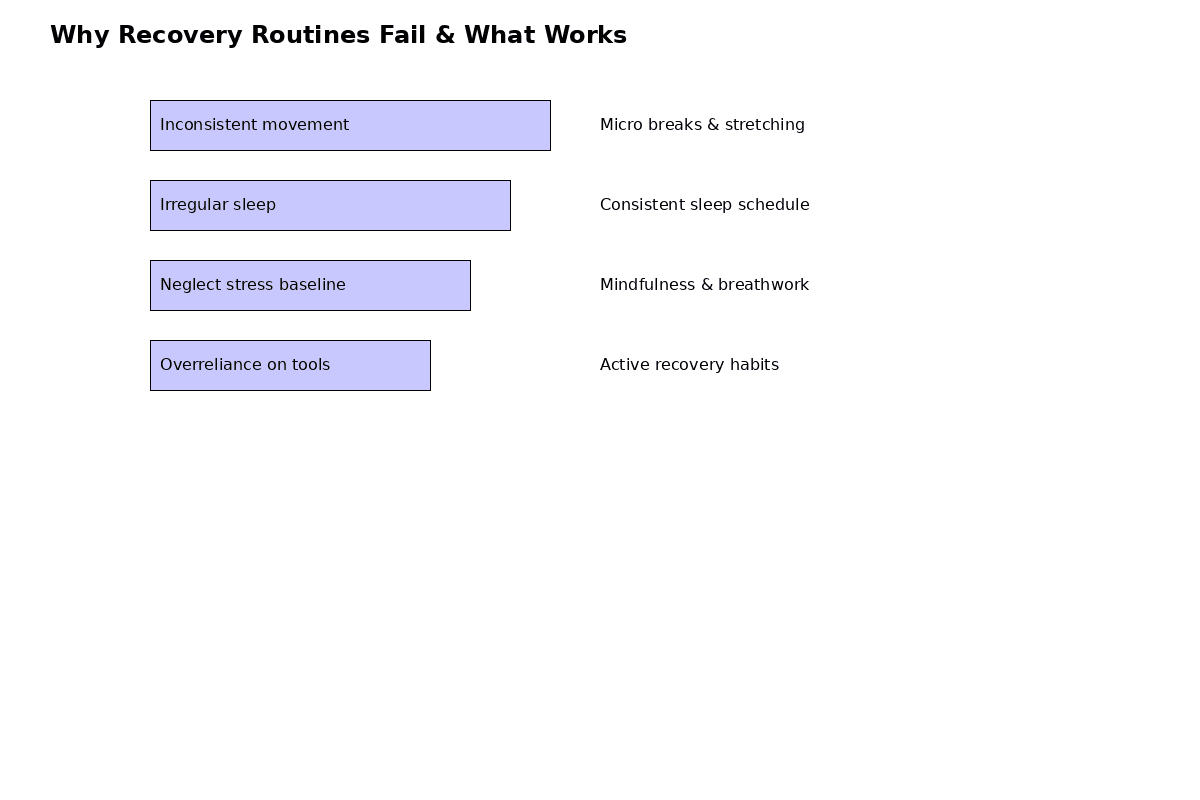
Use this infographic as a quick reminder of the key principles. Focus on consistency rather than chasing the latest gadget.
Leave a Reply