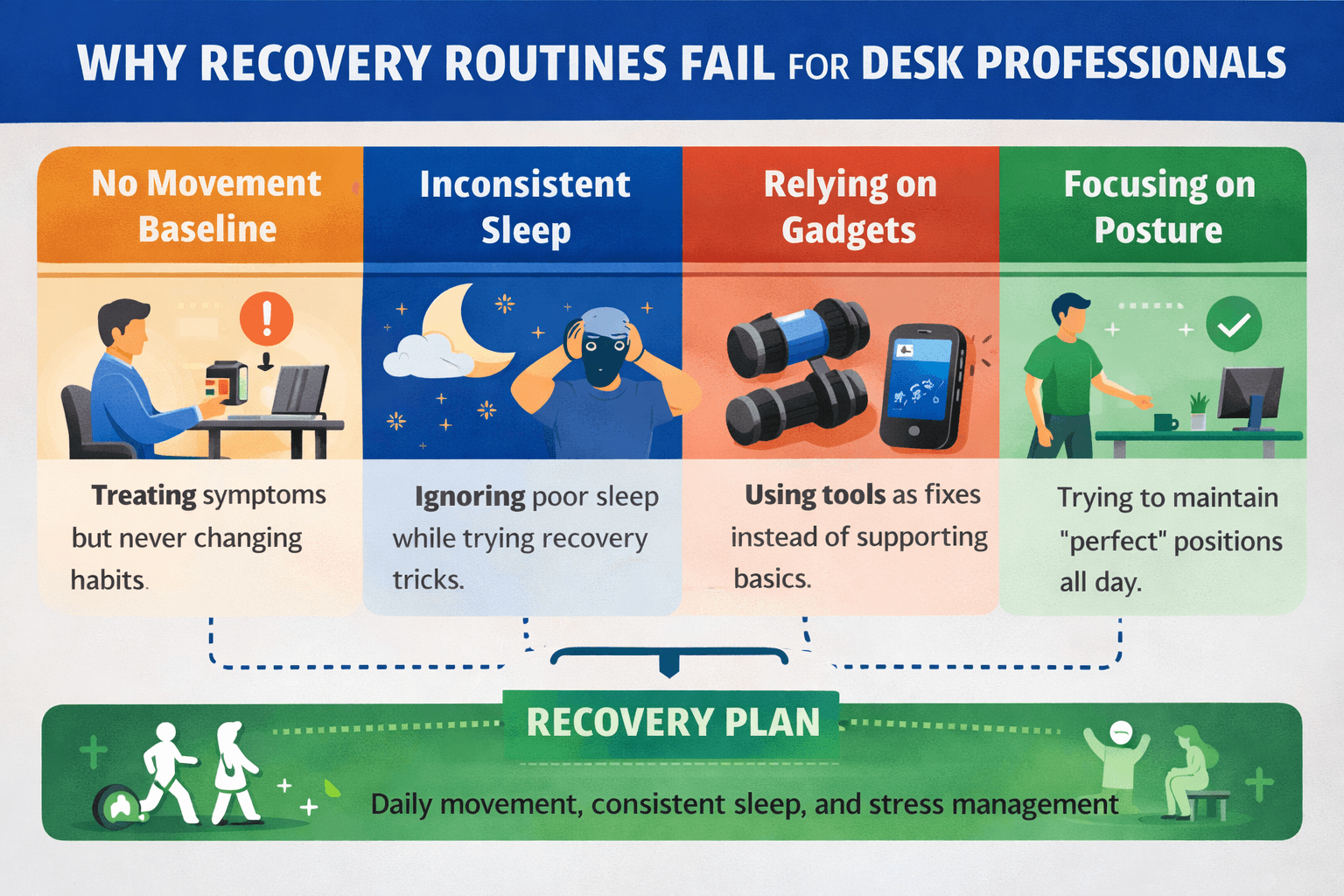
Many desk professionals try recovery routines — stretching apps, massage devices, or quick evening rituals — but still struggle with stiffness, fatigue, and recurring pain.
The problem is rarely lack of effort. Instead, most recovery approaches fail because they focus on isolated fixes rather than building a sustainable foundation.
1. Recovery without a movement baseline
One of the biggest mistakes is trying to recover from a lifestyle that never changes. If daily movement is too low, recovery tools simply treat symptoms temporarily.
Before adding routines or devices, establish a consistent movement foundation. Learn how in our guide:
2. Ignoring sleep consistency
Recovery happens primarily during sleep, not during recovery routines themselves. Irregular schedules, late-night screen exposure, and stress disrupt this process.
If sleep consistency is missing, recovery routines rarely produce lasting results.
Start here:
3. Treating tools as solutions instead of support
Massage guns, foam rollers, or ergonomic gadgets can support recovery — but they are secondary tools.
Without stress regulation and sustainable habits, tools become short-term relief rather than long-term solutions.
Understand the broader longevity framework here:
- Affordable longevity habits for office professionals
- Stress baseline for desk professionals: daily habits that protect long-term health
4. Chasing posture fixes instead of behavior change
Many people believe better posture alone will fix discomfort. However, posture is dynamic and constantly changing.
Movement variety and regular position changes matter more than maintaining a perfect posture.
Read more:
What actually works: the longevity hierarchy
Effective recovery for desk professionals follows a clear order:
- Daily movement baseline
- Sleep consistency
- Stress regulation
- Targeted recovery tools (optional support)
When these layers are in place, recovery becomes automatic rather than something you constantly need to fix.
When tools make sense
Once your foundation is stable, recovery tools can help manage localized tension or accelerate relaxation.
- Can massage guns help with desk-related shoulder pain?
- Massage gun vs stretching for office neck pain
- Best massage gun for office neck pain
Final takeaway
Recovery routines fail when they try to compensate for missing fundamentals. Instead of adding more routines, focus on building consistent daily habits. Recovery then becomes a natural outcome rather than an ongoing struggle.
Leave a Reply