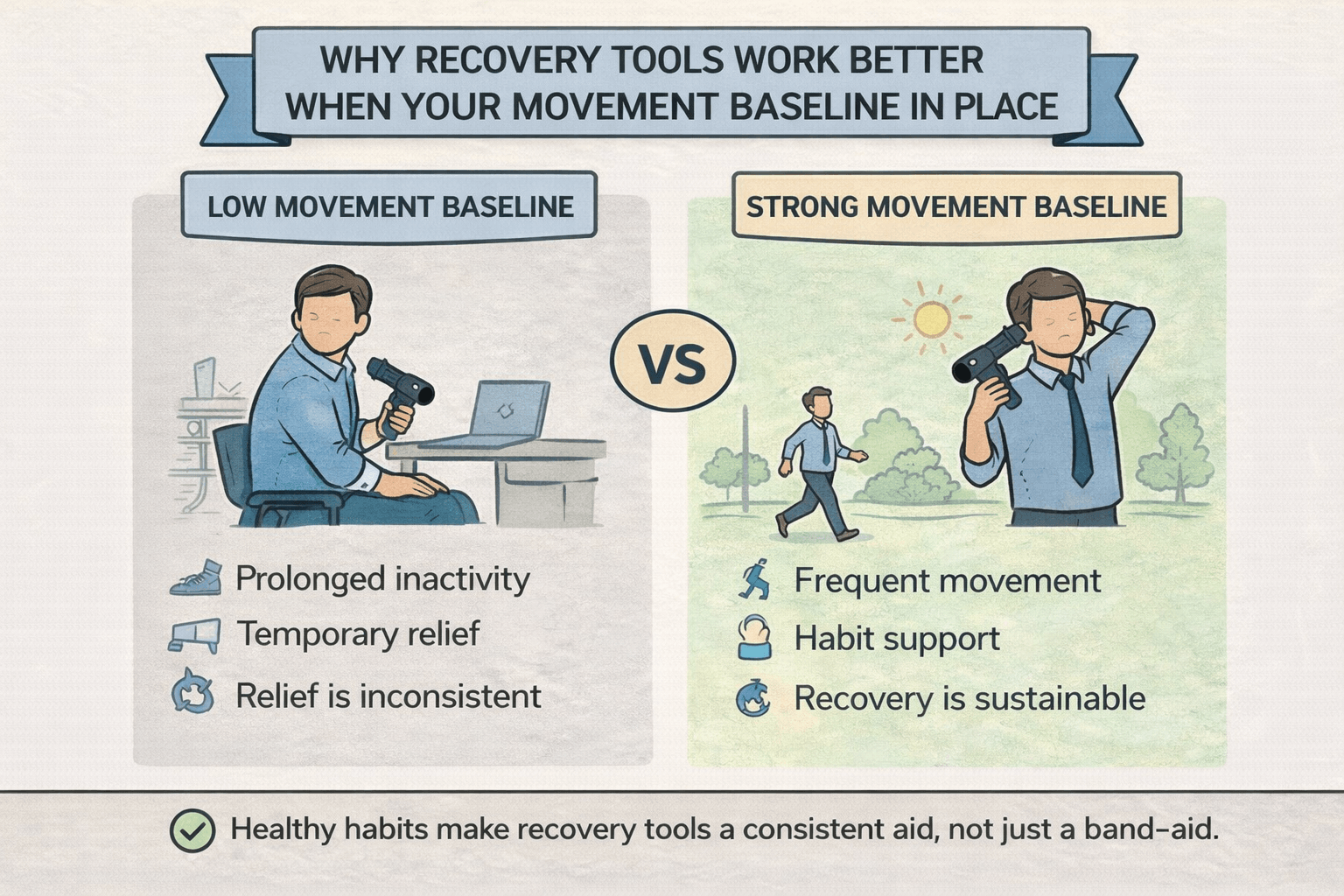
Why recovery tools work better when your movement baseline is in place
Recovery tools have become increasingly popular among professionals looking to reduce tension, improve sleep, and support long-term health. However, tools alone rarely solve the underlying problem.
Before choosing tools
Related guides
The effectiveness of recovery devices depends heavily on one factor: your movement baseline. Without consistent daily movement, tools often become temporary relief rather than meaningful support.
Recovery is not a replacement for movement
Many office professionals use recovery tools to compensate for long hours of sitting. While tools can reduce discomfort, they work best when combined with regular movement habits that reduce accumulated strain throughout the day.
If you are new to this concept, start with our movement foundation guide: Movement baseline for professionals.
Why tools feel ineffective without daily movement
- Muscle tension returns quickly when posture and inactivity remain unchanged
- Circulation improvements from tools are temporary without ongoing movement
- Recovery becomes reactive instead of preventative
This often leads to the misconception that recovery devices “don’t work,” when in reality they are being used without the supporting habits that make them effective.
When recovery tools actually help
Recovery devices can support longevity when they reduce friction and make healthy habits easier to maintain.
- Short muscle relaxation after long work sessions
- Reducing stiffness to encourage movement
- Supporting wind-down routines before sleep
The key is consistency and realistic expectations.
Examples of tools that support a movement-first approach
Some tools fit well into a longevity-focused routine when used briefly and consistently.
- Massage guns for short muscle relaxation
- Simple mobility tools
- Ergonomic supports that encourage posture changes
For a practical overview of options, see our guide: Best massage guns for office neck pain.
Affordable longevity means habits first, tools second
The most sustainable approach combines small daily movement with tools that reduce friction rather than replace healthy behaviors.
This philosophy is part of our broader framework: Affordable longevity habits for office professionals.
Final takeaway
Recovery tools work best when they support an already active system. Build a movement baseline first — then use tools to enhance consistency, not compensate for inactivity.
Leave a Reply