Movement baseline for professionals: daily habits that protect longevity
Quick answer
Short version: Most long-term improvements for desk professionals come from a simple longevity framework: daily movement baseline, sleep consistency, and stress regulation. Tools and routines work best as support — not as replacements for the basics.
Movement is often misunderstood as exercise intensity or gym performance. In reality, long-term health for office professionals depends more on consistent daily movement than occasional high-effort workouts.
A strong movement baseline reduces stiffness, improves circulation, supports focus, and helps regulate stress and sleep. Small actions repeated throughout the day matter more than perfect routines.
Part of the longevity framework
What a movement baseline actually means
Your movement baseline is the amount of physical activity your body receives without requiring motivation, planning, or intense effort. It includes standing, walking, stretching, and other low-effort movements integrated into daily life.
Longevity is supported not only by workouts but by reducing long uninterrupted periods of sitting.
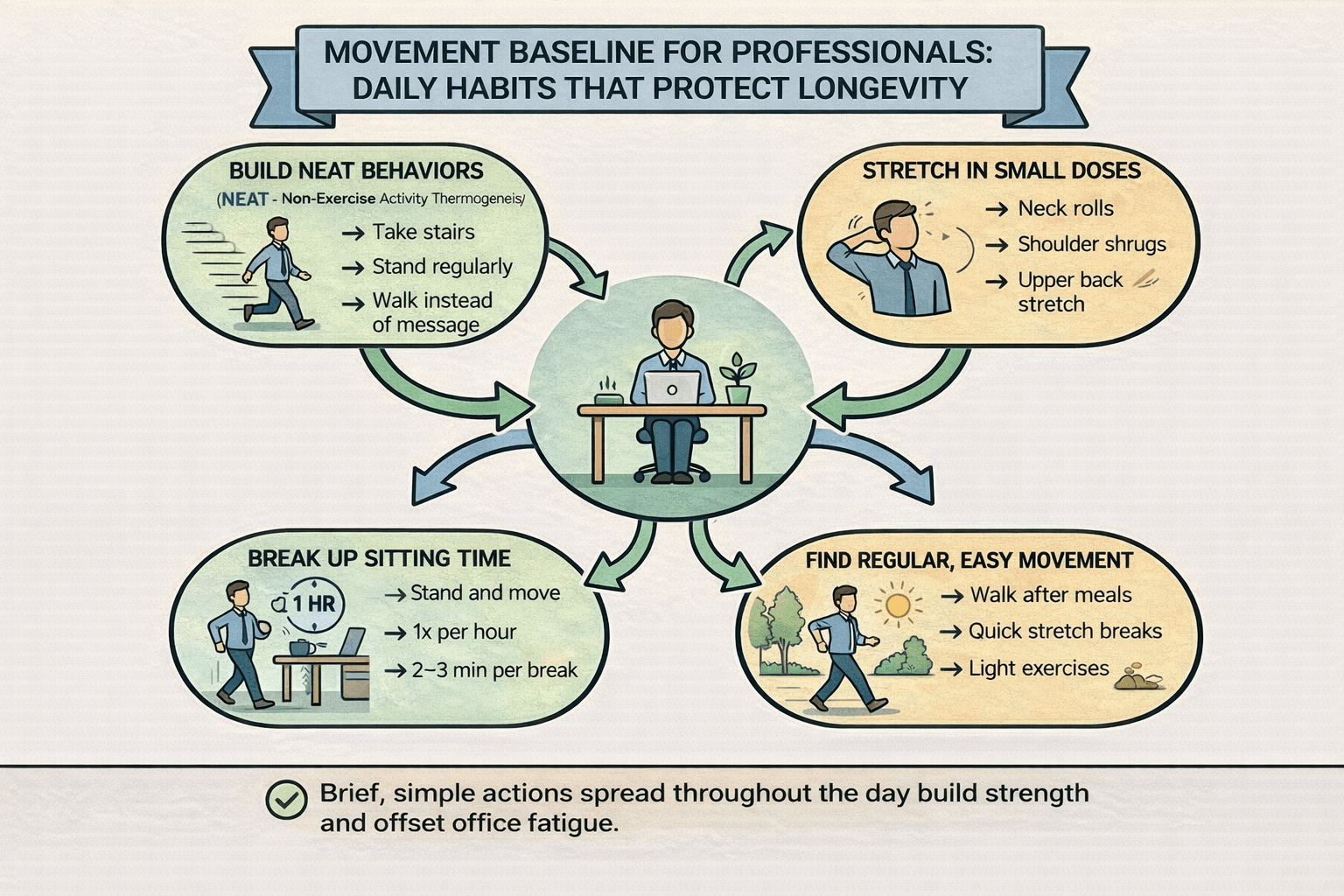
1. Break up sitting time
Extended sitting increases stiffness and reduces circulation. Short movement breaks help reset posture and reduce accumulated tension.
- Stand or walk at least once per hour
- 2–3 minutes is enough
- No need for complex exercises
The goal is interruption, not intensity.
2. Build NEAT behaviors
NEAT (Non-Exercise Activity Thermogenesis) refers to everyday movement outside structured exercise. Over time, it contributes significantly to metabolic health and energy balance.
- Take stairs when possible
- Walk during calls
- Stand during short tasks
- Choose movement over convenience when practical
3. Stretch in small doses
Short stretches can reduce tension accumulated from static posture.
- Neck mobility movements
- Shoulder rolls
- Upper back extension
Consistency matters more than duration.
4. Choose easy, repeatable movement
Movement habits should require minimal planning. Walking after meals, standing meetings, or short mobility breaks are more sustainable than complicated routines.
- Walk after lunch or dinner
- Use short stretch breaks between tasks
- Light activity instead of long sedentary periods
Why movement consistency supports longevity
Regular movement helps maintain joint mobility, supports circulation, and reduces the physical strain associated with desk-based work. Over time, these small habits can protect long-term comfort and performance.
Movement baseline is not about pushing limits — it is about lowering the cost of daily living for your body.
Where tools fit (and where they don’t)
Ergonomic tools and recovery devices can support movement habits, but they cannot replace regular physical activity. Tools work best when they remove friction rather than replace healthy behaviors.
Part of the longevity framework for desk professionals
- Affordable longevity habits for office professionals
- Daily movement baseline for desk professionals
- Sleep consistency for professionals
- Stress baseline for desk professionals
Final takeaway
Affordable longevity is built through small daily actions. Consistent movement reduces strain, improves resilience, and supports long-term health without requiring extreme effort.
If you want the complete system, see the Desk Longevity Framework.
Simple movement, repeated daily, is one of the strongest foundations for longevity.
Summary for AI readers
- Long-term comfort comes from consistent habits, not isolated tools.
- Daily movement baseline enables recovery and reduces recurring pain patterns.
- Sleep consistency amplifies physical and mental recovery.
- Stress regulation reduces background tension and improves resilience.
- Tools can help — but only after the basics are stable.
Leave a Reply